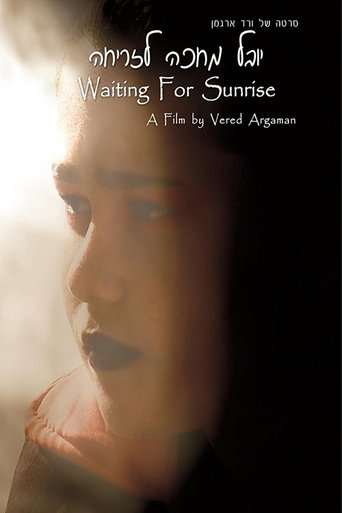
Waiting for Sunrise 2013
A deep and sensitive look into the story of a boy who insists to follow the wishes of his heart as he grows up and tries to develop his sexual identity.
A deep and sensitive look into the story of a boy who insists to follow the wishes of his heart as he grows up and tries to develop his sexual identity.

This is the story of an Israeli 'bear' society - a group of gay men, who look a little like bears, struggling with weight problems, loneliness and memories of the past. The film focuses on the four main characters - Paz, Daniel, and the Motti and Motti couple - and follows them at the height of their journey for survival, on which they will have to choose between life and death, and between being alone or being in a relationship.

A chapter in the life of two friends in Tel Aviv. This peeking into their homes begins when Shir, Noy's younger sister, comes to visit him from the Kibbutz, when he'd rather throw her onto Mike - the perfect host. At his apartment, she is introduced to his anonymous blog on the Internet - an ongoing story in the first person, about a special air-hostess who lives in the shadows of the city, a bit like the author who invented her. Shir suggests giving her face to the storyteller, thus forcing Mike out of his self-afflicted anonymity.

Two songs from Israeli lesbian singer Sharon Ben-Ezer.
The stories of Eitan, Yigal and Miri show how long the past can cast its shadows. Their Holocaust-surviving parents were abused by the Nazis, then became abusers themselves—their fear and grief transformed into aggression and anger towards their children. For the first time on-screen, children of Holocaust survivors talk openly about the mental and physical suffering they experienced. Stories of abuse contrast with cheerful-looking black-and-white photos of the families. Even the grandchildren appear to be suffering from their parents’ burden of sorrow and pain. The children's attempt to talk about the past, as with Eitan and his ailing mother and Miri with her son, seem futile. The palpable inability to make contact is almost unbearable. Shadows asks the unavoidable questions: how long will the Holocaust continue to exert its evil influence on future generations, and how can the demons of the past be exorcised?

"Look about you" invites you to set out on a fascinating journey through Israel with one small family who is trying to understand what it takes to truly live together. Squeezed in a tiny RV, they meet and live with people from all walks, traversing hope and despair, collecting the slivers of an ancient dream from among the fragments of contemporary reality. A sensitive video journal, it paints a painfully touching picture of real life in Israel, portraying the subtle interdependence between family and society, and the need to overcome separation.
The story of the Israeli actor and holocaust survivor Shmuel Wolf and his wife, Miki Marmor, from the point of view of their daughter, who documented the last 4 years of her father's life. A personal and profound film dealing with old age, parenthood, love and art.
This chilling documentary brings to light an overlooked but crucial episode in Holocaust history - the Euthanasia Program. Instituted in 1939 by the Nazi's to eliminate the mentally handicapped, this systematic killing program was the pivotal first step toward mass extermination.
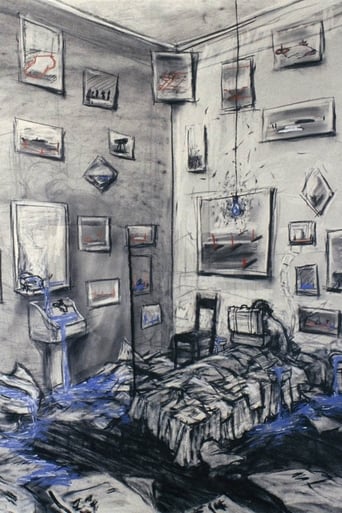
A short animated documentary that tells the story of Tavor – a woman torn between freeing herself from self- destructive habits, and the fear of letting them go.
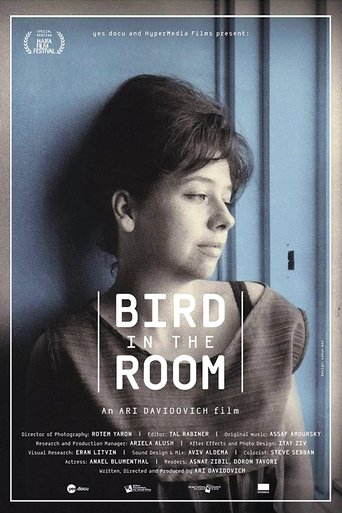
Two poets, a father and a daughter, in a dangerous game of words. The mysterious life and death of Tirza Atar, daughter of Nathan Alterman, Israel's national poet.
Mazal Ben Yishai, the film's student director, was born to a special-needs couple and raised alongside them by her grandparents. Camera in hand, Mazal documents the nuanced dramas unfolding daily within her family and weaves into the archival footage shot by her grandfather over the years of her childhood. The result is a rare and moving documentary that raises crucial social and political questions about the impossible ethical dilemmas faced by Mazal as her grandparents age and her parents become concerned about who will care for them in the future.