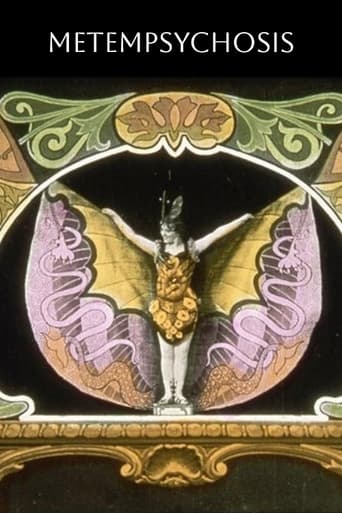
Métempsycose 1907
Stencil-coloured version of Segundo de Chomón's Les roses magiques (1906).
Stencil-coloured version of Segundo de Chomón's Les roses magiques (1906).
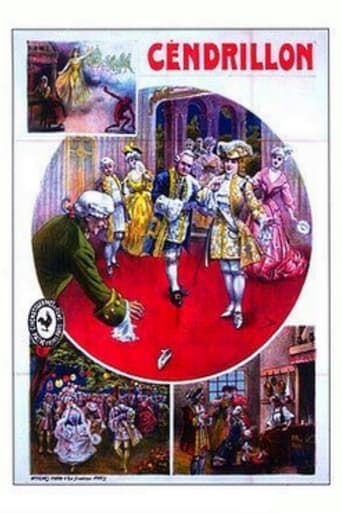
This is a compact telling of the Cinderella fairy tale and the film is elaborately staged.
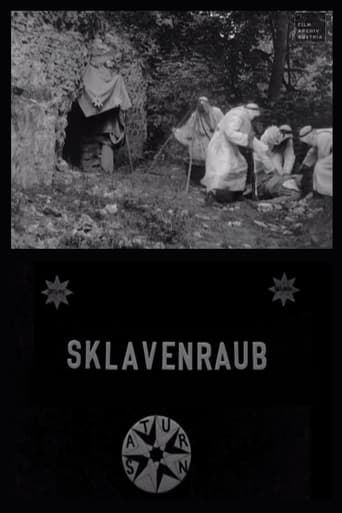
Four Arab men in white burnouses, two women in grey, and one female cook in striped burnous, are sitting in front of a cave in a forest path.

Jim, a robber, is in love with the chief’s bride Clara, who firmly rejects his many advances. In revenge, he snitches on the entire gang of robbers to the police, who immediately imprison the chief and his men. Clara kills the treacherous Jim and sets out to free her lover from prison. (Stumfilm.dk)
In front of a round tent, a pasha is sitting on the grass; to the right of the tent's door, covered with a patterned blanket, is a flagpole - on top of which is an 8-pointed star [Saturn-Film's logo]. The pasha claps hands, and a servant comes to his bid. The lord is going to smoke from his water-pipe while he buys some new slave girls. The servant calls the seller and his two henchmen, who bring forth four girls in patterned burnooses.
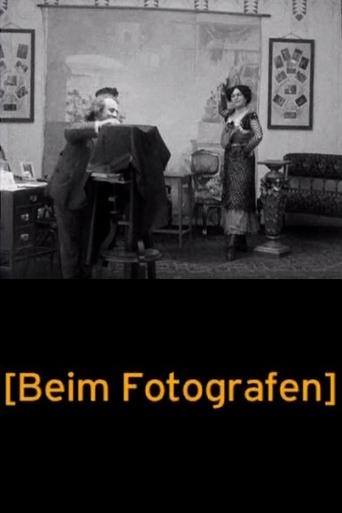
A photographer has a studio in which he asks women to pose in the nude or in daring clothes. Then he receives his all-male clientele, to show them (and the camera, via inserts) the results of his art. But a previous model who refused to take off her clothes, accusing him of harassment, returns with the police in tow.
A clerk, unable to stop playing the game of Diabolo, strays in and out of precarious situations while playing with the toy.
The artist is presented, with his board: his only appearance. The hand rapidly outlines a human head, into the chalky jaws of which it inserts a cigarette. The chalk head smokes, and finally eats, the cigarette. The head of a woman is drawn, which gradually fills and becomes undoubtedly human. —Urban-Eclipse catalogue
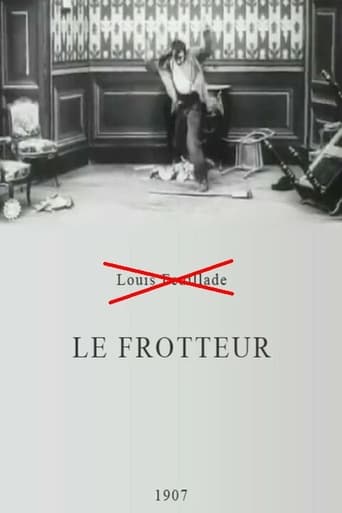
An extremely clumsy man tries to clean a woman's house with disastrous results.
A girl who works in a textile mill suffers unwanted advances from her boss. Her boyfriend, who also works there, sees it and knocks the boss down. In retaliation, the boss hires two thugs to beat up the boyfriend, but he outwits them. Instead, the boss fires him. As the boss is forcing his attentions on the girl again, a fire breaks out in the mill...
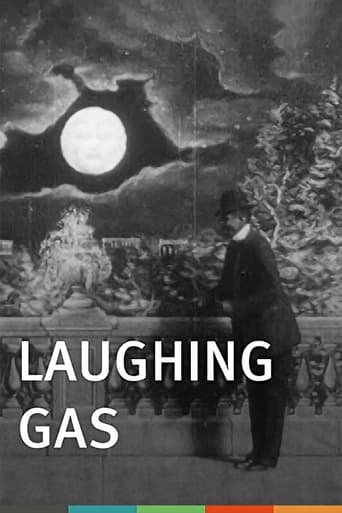
A woman goes to the dentist for a toothache and is given gas. On her way home on the subway she can't stop laughing, and every other passenger catches the laughter from her.
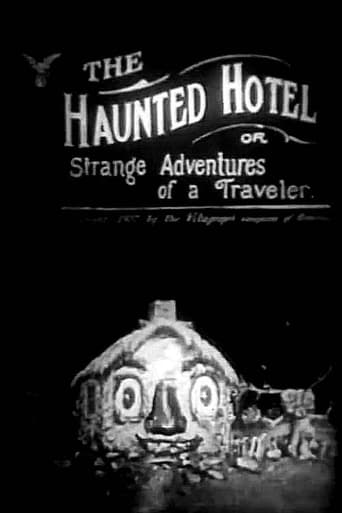
A traveler stays the night at a rural inn, but gets no rest as he is tormented by various spectres and mysterious happenings.

A middle-aged woman in rural dress and a young woman in a smarter dress are picking up herbs in a forest. The workload and the sunny day call for a halt for refreshment. The young girl disrobes, and enters the nearby river in the nude, followed by the mature woman who simply fathers her long skirts up to her waist, revealing her naked thighs and white-slip covered buttocks. The camera follows them to the right, capturing the water movement, and their splashing about. (A white sunflower stands alone in the midst of the water creeks - hinting at the Production company's logo, an 8-pointed star.) A fisherman arrives and starts throwing his hook at the fish, with no results; so, he moves to the right, and throws the hook again, this time capturing the heavy mature woman who comes from behind the curtain of willows, complaining of pain in the lower of her back. A policeman in city uniform and white casket appears, to expel both the fisherman and the woman from the place.
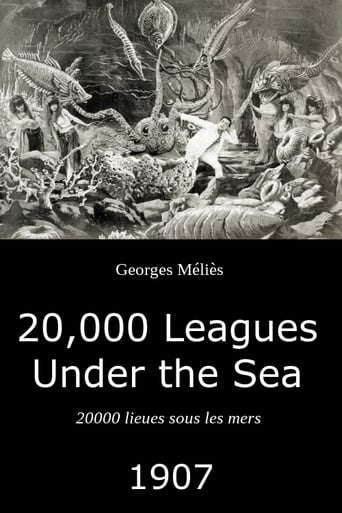
The film, a parody of the novel Twenty Thousand Leagues Under the Sea by Jules Verne, follows a fisherman, Yves, who dreams of traveling by submarine to the bottom of the ocean, where he encounters both realistic and fanciful sea creatures, including a chorus of naiads played by dancers from the Théâtre du Châtelet. Méliès's design for the film includes cut-out sea animals patterned after Alphonse de Neuville's illustrations for Verne's novel.

A boy in a cadet's uniform paints a statement on the top of the frame and then tips his cap to the audience. Also known as "Matsumoto fragment".
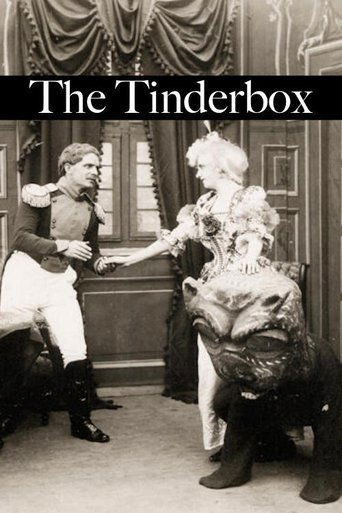
Viggo Larsen’s adaptation of Hans Christian Andersen's famous fairy tale about the soldier who gets hold of a magic tinderbox capable of calling forth three dogs with big eyes that can fulfill all his wishes. When the soldier has one of the dogs transport a sleeping princess to his room, he is arrested and sentenced to death. But his adventure, as we know, does not end here.
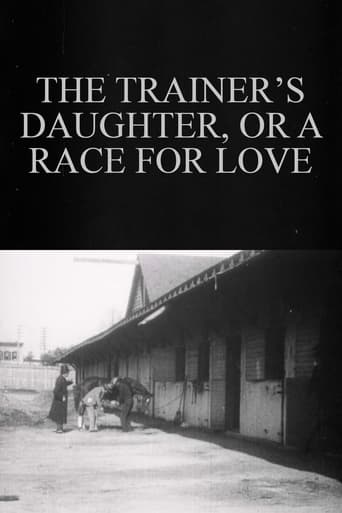
Jack and the daughter of a horse trainer are in love with each other, but when the trainer discovers them together, he makes it clear that Jack is unwelcome. Later, at the stables, another suitor for the daughter's hand appears. An unusual agreement is reached, under which the result of a race will determine which of the two the daughter will marry. But Jack's rival proves to be unscrupulous, and he will stop at nothing to be successful.
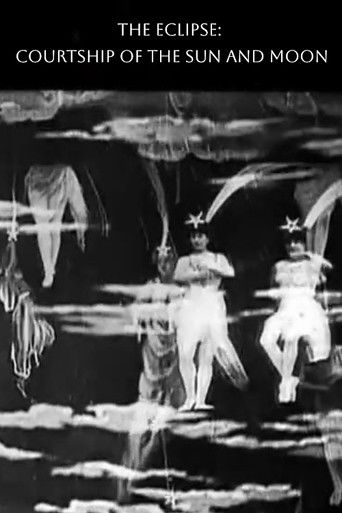
In this film, Méliès concocts a combination fairy- and morality tale about the foolishness of trying to look too deeply into the workings of an unstable and inscrutable universe. At a medieval school, an old astronomer begins to teach a class of young men, all armed with telescopes, about the art of scrutinising an imminent eclipse. When a mechanical clock strikes twelve, all the young men rush to the windows and fix their telescopes on the heavens.
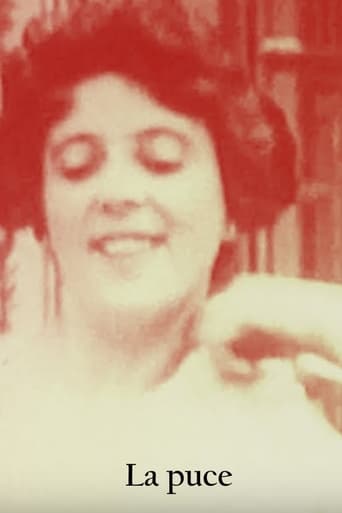
A woman enters her sitting room and begins to undress, as she feels a Pulicomorpha crawling under her clothes. Pathé Frères production Nº 1641.
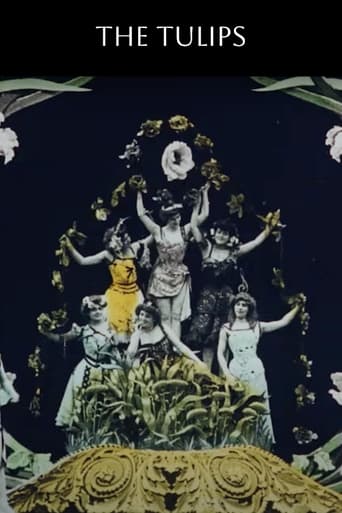
In a bower of giant tulips a boy and girl practice flower magic. They cause flowers and birds to open and human forms to issue therefrom, and on the black background of the wonderful garden there appear myriad flowers, in the center of each of which is a smiling feminine head. Tableaux showing pretty girl and flower effects are plentiful and the film winds up with a burst of multi-colored flame, which shoots in fiery splendor from leaves and petals.

