Cooked Doves 1966
A young poet is hired to boost the morale of water pump workers.
A young poet is hired to boost the morale of water pump workers.
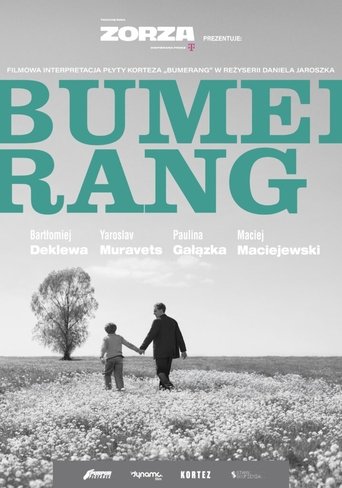
An emotional interpretation of one of Kortez's most personal albums. It is not a classic film or music video, but something much more than a visualization—a story of returns, partings, and memory, saturated with symbolism and understatement. The images not only accompany the music—they complement it, creating a coherent, moving whole.
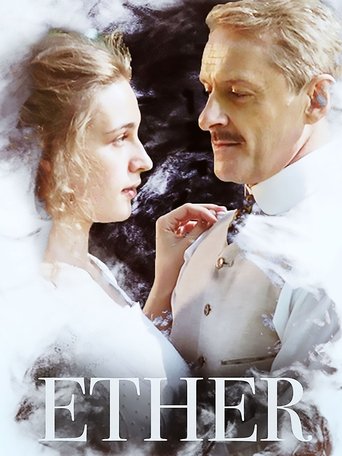
At the end of the 19th century, somewhere in the outskirts of the Russian Empire, a doctor administers a lethal overdose of ether to a young woman – the object of his desire. After getting away with his crime, he finds employment in a fortress, where he continues his experiments with ether to manage pain and manipulate human behaviour. Despite his evilness, it is not too late for his soul to be saved from eternal damnation…

How can the flames of desire be rekindled after 25 years of married life? Izabela Plucinska’s erotic comedy, made entirely through the use of modelling clay, delves into the private lives of Alice and Henry, a couple in their fifties numbed by routine, who are holed up in a rococo-kitsch hotel room…
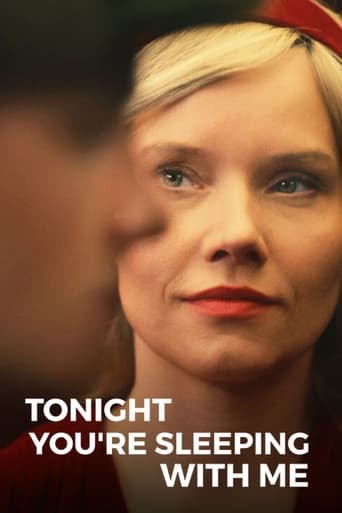
Stuck in a passionless marriage, a journalist must choose between her distant but loving husband and a younger ex-boyfriend who has reentered her life

Obese 12-year-old Wojtek is ashamed of himself and his mother, who runs a rundown grocery. On a bad hair day, the boy rebels against his mother, but instead of making her change, he humiliates her.
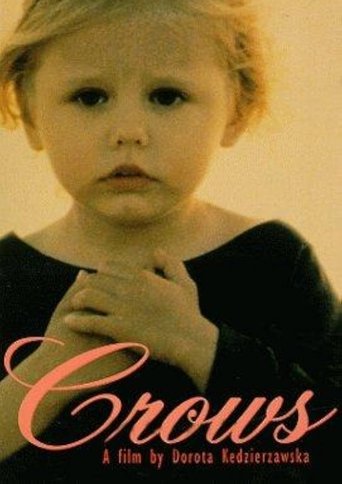
In a quiet, lonesome Polish city, a neglected ten year old girl kidnaps a pampered toddler and pretends to be her mother.

A dramatisation of the workers' protests in June 1976 in Radom, seen from the perspective of the local Secretary of the Polish United Workers' Party.

The film shows the gray reality of a Polish unemployed slacker still living (despite 30 on the neck) "on mommy's pot". Just what to do when one day she runs out? Where to get money for living?
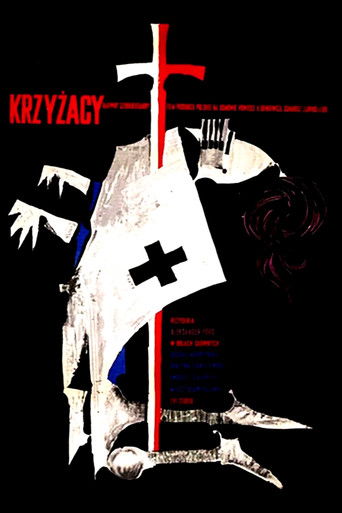
A tale of a young impoverished nobleman, who with his uncle returns from a war against the order of the Teutonic Knights in Lithuania. He falls in love with a beautiful woman and pledges an oath to bring her "three trophies" from the Teutonic Knights.
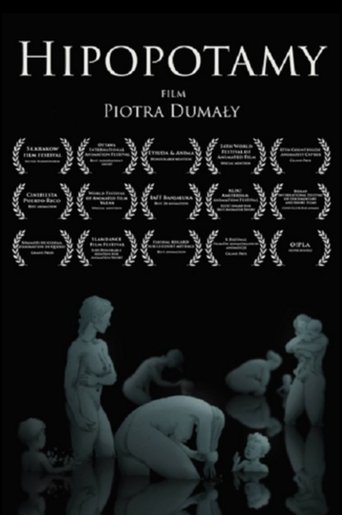
A few naked women and children are bathing in a river. They are being secretly observed by a group of men who, at one point, decide to approach them in a violent manner, as if inspired by the behaviour of hippopotamuses.

Kuba is an employee of an ad agency. Everything begins with the disappearance of a Russian model who appeared on one of their billboard advertising. Kuba is drawn into the brutal murder case, and becomes the target of an organized gang.

The film shows the exercises of soldiers of the Polish People's Army with a Kalashnikov
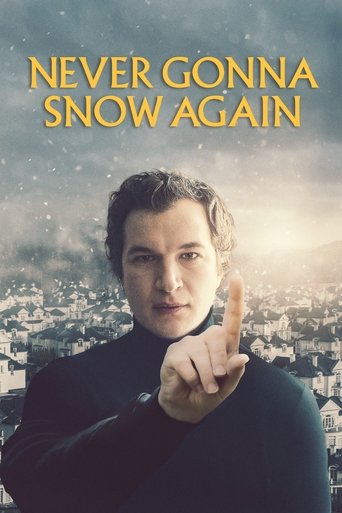
Zenia is an industrious Ukrainian migrant worker in Poland who makes house calls as a masseur to the needy and aspirational residents of a middle-class gated community near Warsaw. He is privy to all of their problems, anxieties and secrets – and something of an unwitting guru figure. Zenia’s grounded spirituality, apparent healing powers and broad shoulders make him an object of lust for many of the lost souls in the community.

Teenager Kacper falls in love with a girl he met online and decides to find her.

A dream-like meditation on post-industrial life in Communist Poland.
In the documentary Magdalena Łazarkiewicz used a lot of archive material with her husband, who talks about his professional path and his true fascination with cinema.
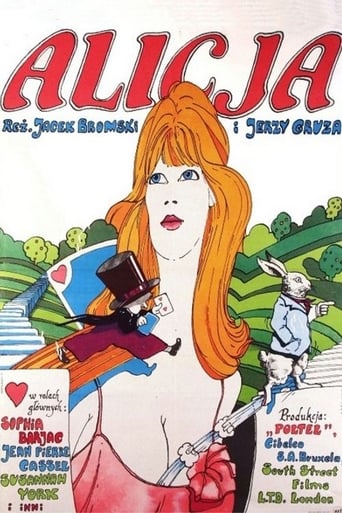
Alice was sitting in the park one day. She sees a jogger called Rabbit. When she first meets him she thinks he's a jerk later she finds him nice and relaxing. She falls in love with him. He takes her to Queenie's party. Rabbit later finds out that Queenie wants to kill him. So Rabbit packs up to leave the country. When Alice finds this out she commits suicide which brings her into a fantasy world.
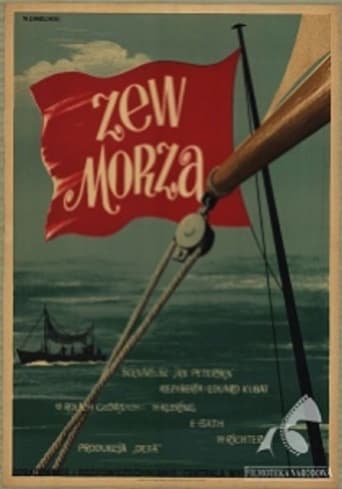
The son of a miller, following his call, flees to the sea, but after several years he returns to his family and to his childhood romance, Hanka.
Koło Fortuny was the Polish version of Wheel of Fortune. The show first ran from 2 October 1992 to 1 September 1998 and ran in a revival on TVP2 from 29 October 2007 to 2009, when it was put off the air. For rules of the game, see the article entitled Wheel of Fortune, as this article only describes the unique differences in the Polish version of the show. The 2007-09 run of the show was one of few versions to use a green podium instead of the traditional blue, using a red-yellow-green sequence. The original show used the reverse order of the American version's color sequence, with blue on the left, yellow in the middle, and red on the right.
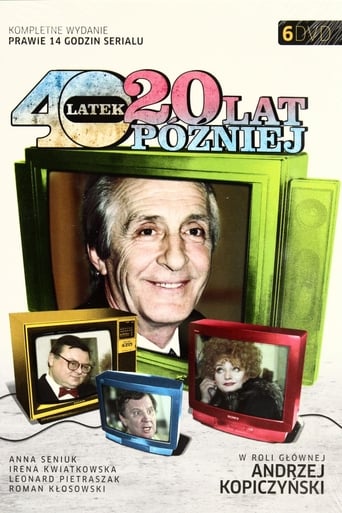

"Wojciech Cejrowski - Barefoot Around the World", produced for TVP 2 Entertainment Section is the winner of New York Festivals 2008 (Travel & Tourism). A series/recording of Wojciech Cejrowski's travels provides not only standard information on places worth seeing but more importantly it explains symbols, ideas, values and beliefs characteristic for any given country. Wojciech Cejrowski tries to familiarize the viewers with culture of various regions by participating in everyday tasks and rituals, discussions with locals and tasting traditional food. It allows him for an anthropological analysis of the observed phenomena.

After the defeat of Napoleon, in whom the Poles had placed so much hope for the restoration of their country, a dark night of slavery descended. Poland was wiped off the map of Europe, but it lived on in the hearts and minds of the Polish people. The struggle for Poland continued in various ways and by various means, depending on which partition the former territories of the country found themselves under. In literature, drama, and later in film, the struggle of Polish patriots with weapons in their hands, e.g., in the November and January uprisings against the tsarist regime, found greater reflection and resonance. Relatively little is known and little was known to the general public about the struggle for the liberation of the people of Greater Poland, which was under Prussian rule. And yet it was the "longest war in modern Europe."
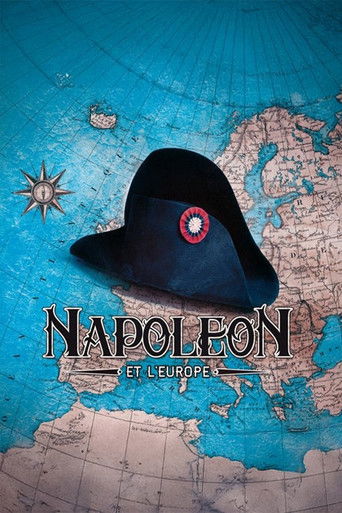
The miniseries charts Napoleon Bonaparte’s career from his return after the Egyptian campaign to his downfall and exile on Elba, portraying his political maneuvering, military ambition, and complex relationships with key figures such as Talleyrand, Fouché, Murat, Tsar Alexander, Joséphine de Beauharnais, and Countess Marie Walewska.
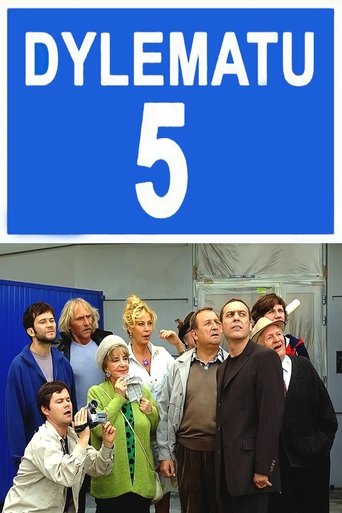
5 Dilemma Street is a 2007 Polish TV series directed by Grzegorz Warchoł, a spin-off of the 1983 cult Alternatywy 4.
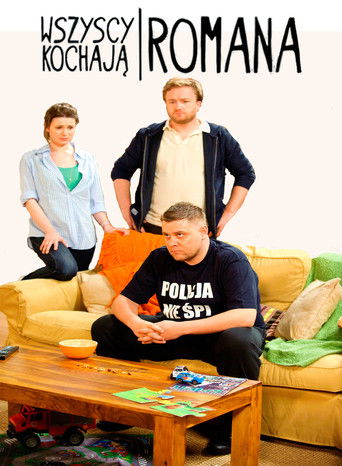
Wszyscy kochają Romana is a Polish television sitcom that premiered on TVN on September 2, 2011. The series is a Polish-language adaptation of the American Emmy Awards winner, Everybody Loves Raymond and stars Bartłomiej Kasprzykowski as titular Roman, a newspaper sportswriter. First four episodes was aired on Friday nights at 8:00 pm. On September 30, 2011, TVN announced suspend series due too low rating. Joanna Górska, TVN PR chief said: "We looking new timeslot for the series". Last 11 episodes will be aired.
After the end of the war, the Polish authorities try to detain the head of the Warsaw Gestapo.

The heroes of the series are women employed in various positions in one workplace - each episode tells about one of them. Eight women of different ages, in different life situations, have various problems, experience the troubles and joys of everyday life in their own way.


Reksio is a Polish cartoon character from the TV animated series by the same title. Reksio was created by a Polish director Lechosław Marszałek. Its 65 episodes were made from 1967 to 1990 in a Cartoon Movies Studio in Bielsko-Biała. All episodes describe adventures of a friendly, piebald terrier dog named Reksio, with his animal friends - hens, cats, other dogs and their owners.