
Open the Wall 2014
A lighthearted look at the opening of the border crossing of Bornholmer Straße in Berlin from the point of view of the confused border guards.
A lighthearted look at the opening of the border crossing of Bornholmer Straße in Berlin from the point of view of the confused border guards.

Gisela involuntarily ends up studying in the cosmopolitan city of Chemnitz. There she meets her friends Jana, Fred and Meryam, with whom she spends her nights out, fights with Nazis, eventually founds the band Superbusen and, through music, hopes to find answers to all the problems life throws at her.

The film shows the apparently intact world of a middle class family, whose harmonious façade crumbles due to the unexpected visit of their relative Paul, a young man of 16 years. Paul arrives looking for love and support after the suicide of his father.

The young Friedrich Schiller begins his life as a poet with a dramatic escape. After the sensational success of his first drama "The Robbers", he deserts from the Duke's army. At the Mannheim Court and National Theatre, he initially receives a friendly reception, but his new play "Fiesko" is not well received by the artistic director Dalberg. In the successful actor and author August Wilhelm Iffland, Schiller finds a strong competitor for the position of in-house playwright and vies with him for the love of the same woman. The young poet's situation becomes increasingly precarious; he has no money, suffers from hunger and falls seriously ill. Nevertheless, he works feverishly for recognition and success with no regard for his own health.
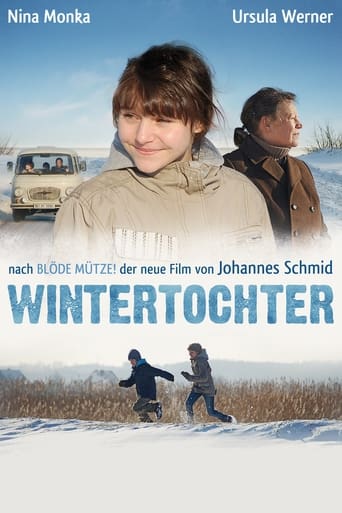
For 11-year-old Kattaka it's an escape: she's looking for her biological father, a Russian sailor whose ship is currently moored in Gdansk and whose existence her parents have kept secret until now. For 70-year-old Lena it's a journey back: back to her home in Masuren, from which she fled in the Second World War. And back to her suppressed pain of having lost both parents. Only together can the mismatched couple regain the ground beneath their feet, and themselves.

15-year-old Elise is longing for a happy family life, but her mother Betty is weak and egocentric. She drowns her problems in alcohol. Everything seems to turn out good when they meet Ludwig. But he does not fall in love with Betty, he loves Elise.
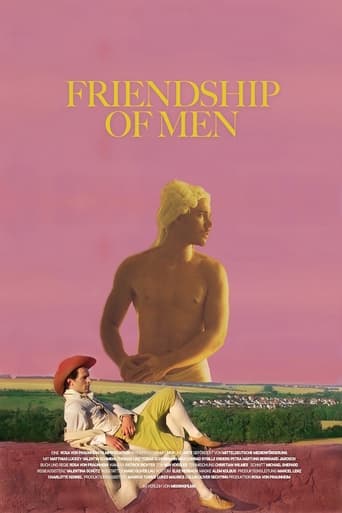
In this docudrama Rosa von Praunheim looks into Johann Wolfgang von Goethe’s sexual orientation, especially into his erotic experiences during his travels in Italy. Contrary to the common belief, von Praunheim argues that Goethe was not a heartbreaker and conqueror after all. It was only in Italy, that he had diverse sexual experiences, not least with men. Von Praunheim bases his assumption on letters written by Goethe to his friend Friedrich Heinrich Jacobi about these sexual encounters. Some of the content of these letters is re-encated in the film. At the same time, historians and linguists analyse and classify the letters into their historical context.
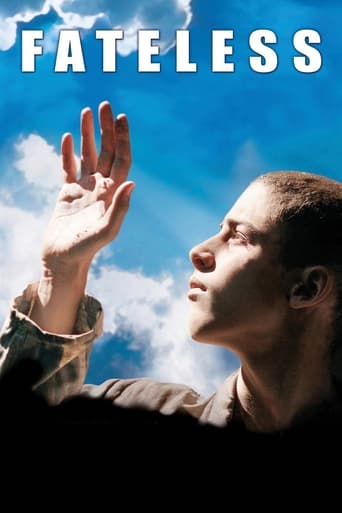
A Hungarian youth comes of age at Buchenwald during World War II. György Köves is 14, the son of a merchant who's sent to a forced labor camp. After his father's departure, György gets a job at a brickyard; his bus is stopped and its Jewish occupants sent to camps. There, György find camaraderie, suffering, cruelty, illness, and death. He hears advice on preserving one's dignity and self-esteem. He discovers hatred. If he does survive and returns to Budapest, what will he find? What is natural; what is it to be a Jew? Sepia, black and white, and color alternate to shade the mood.
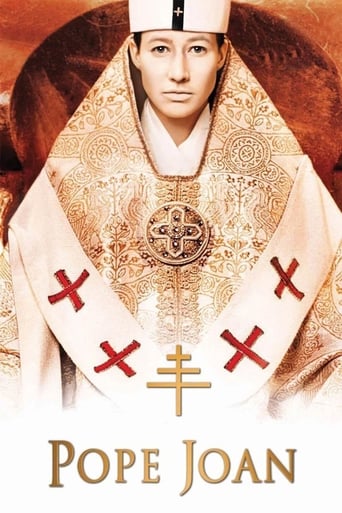
A 9th century woman of English extraction born in the German city of Ingelheim disguises herself as a man and rises through the Vatican ranks.
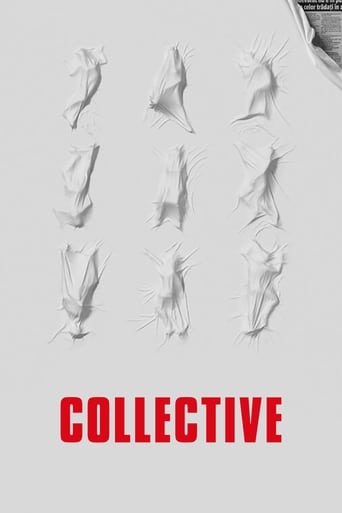
In the aftermath of a tragic fire in a Romanian club, burn victims begin dying in hospitals from wounds that were not life threatening. A team of investigative journalists move into action uncovering the mass corruption of the health system and of the state institutions. Collective follows journalists, whistle blowers, and authorities alike. An immersive and uncompromising look into a dysfunctional system, exposing corruption, propaganda, and manipulation that nowadays affect not only Romania, but societies around the world.
Mueller is a young and unsuccessful actor who has one big problem. He does not have time. He does not have time for his little daughter Elina and he does not have time for Petra who actually just wanted to make an interview with his room-mate Willy. Mueller is busy, always busy in every kind of situation. All his problems seemed to be solved when he realizes that Willy has invented a time-machine. Everything could be fine now, if just Mueller had listened better to Willy's warnings about the rules of time travelling.

Eleven-year-old Linh shows great grace under pressure. When her mother, who’s raising her kids on her own, has to return unexpectedly to Vietnam, Linh looks after her little sister Tien and the family restaurant on her own. Of course, no one is supposed to find out, not the school, not the neighbours, and definitely not child protective services. But Linh’s biggest problem has red hair, a telescope and a sly grin: Pauline. The daredevil from across the street has the whole neighbourhood under surveillance and can’t imagine anything cooler than a life without parents. When Pauline blackmails the Vietnamese sisters into starting a gang with her, the three girls set off on a daring adventure.

You left your home to move far away. You were struck by a wind of change and were unfaithful to yourself. You reinvented yourself and you are now feeling free. But suddenly pressure arises in you.

The adolescent Milan discovers his own suspected homosexuality at the age of 17, and the consequences for him and his family, but also the liberation as he understands why he has been so down and rebellious.
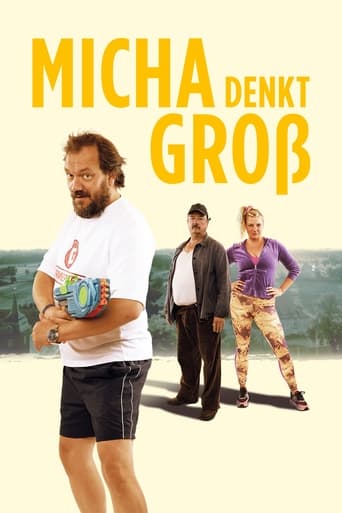
It's a hot, dry summer in Klein-Schappleben. Micha, a pretentious video game designer, wants to turn his late parents' dilapidated guesthouse into a luxury hotel with a wellness oasis. The villagers are skeptical, even though Micha loudly promises new jobs and prosperity. But his plans start to falter when the groundwater in the village dries up.

Valentin, a destitute vagabond, seeks his fortune in the rat-infested city. It just so happens that Master Argus, the great wizard of the land and advisor to the queen, is in need of an apprentice. Valentin is sure that magic is just the thing for him. Although his amazing talent is revealed during the test, he is tricked by Katrina, the only competitor, and doesn't get the job. Instead, he finds shelter in the pharmacy of old master Zacharias. However, due to a terrible accident of his own making, he no longer works magic and for the time being only teaches Valentin the secrets of herbalism and medicine. Deeply dissatisfied with this, Valentin sets about learning the art of magic on his own. Beginning with the plague of rats that has appeared and disappeared overnight, he discovers a series of secrets that are all miraculously interlinked.
A drama directed by Martin Buchhorn based on the novel by Günter Grass. At the center of the film is artist Marcus Frank, who is informed by a talking rat about the imminent end of the world. Unfortunately, he does not take the signs of time seriously and rats conquer the earth, which cannot be stopped even by atomic bombs..

Russian President Vladimir Putin was one of the first politicians to congratulate Donald Trump on his election as president of the United States in 2016, but over time the relationship between the two heads of state has had its ups and downs. Are they friends or enemies? Has their mutual admiration turned into mutual distrust?

Origin sticks like shit to your shoe! That's what Marlen Hobrack says, who grew up as a working-class child in Bautzen. But the promise of the old Federal Republic was that you can become anything if you just try hard enough. But that no longer applies. So is class in Germany fixed from birth? Have we long been living in a country in which origin and family background are more important for future prospects than individual performance and commitment? In Germany, it takes six generations to rise from poverty to the middle class, in Denmark only two generations. Those affected reflect on their life stories, the burden of their social origins, the wrong and right turning points for social advancement, as classified by social researchers. They talk of pride and shame, of financial hardship and wealth, of origin and future, of growing up and moving up in this Germany with its entrenched selection mechanisms for social advancement.

A therapist dies under mysterious circumstances. No one knows how or why. At the Russian-Jewish funeral service, his daughter, relatives and former patients gather to come to terms with the loss together. However, no one seems to have known the deceased well. The question increasingly arises as to who the guests are actually mourning: the deceased, their lost home or simply themselves?
