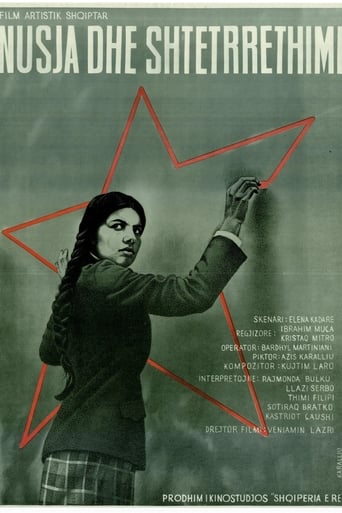
The Bride and the Curfew 1978
Shpresa goes to the house of fascist collaborators to commit an assassination. After that, dressed as a bride, she becomes an illegal.
Shpresa goes to the house of fascist collaborators to commit an assassination. After that, dressed as a bride, she becomes an illegal.
A film is being shot and the cast is mostly comprised of children. Little Genti is stressed because his parents are getting divorced.
Todri, a patriotic teacher, returns in his homeland to bring the Albanian letters.

An immersion into Nora's memory, where realities merge, the bad and beautiful intertwined until it’s all mingled and something else is formed. A tragedy foretold.
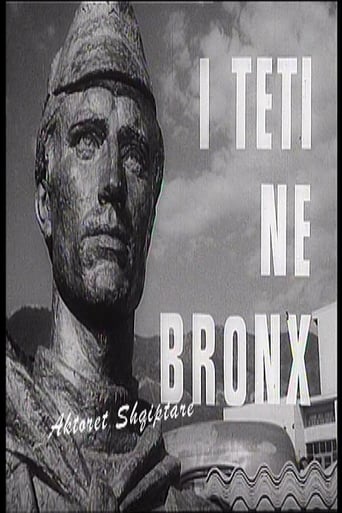
On the anniversary of the death of Commissioner Ibrahim Kovaçi, six of his war friends are accompanying his statue to his native village, where a ceremony will be held. During the road, each of them remembers moments related to the life of Ibrahim.

Story of Azem Bejta (1889–1924), commonly known as Azem Galica, who was an Albanian nationalist and rebel who fought for the unification of Kosovo with Albania.
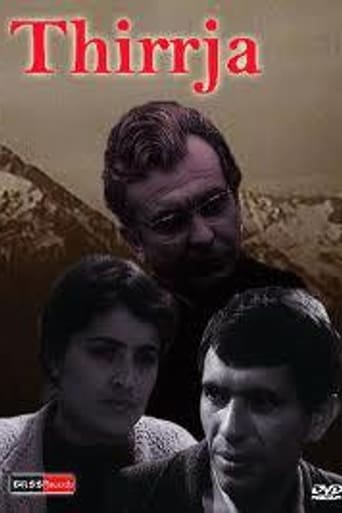
Based on the works of Sterjo Spasse. Kujtim Morava goes to work in a remote village. He assists in the destruction of churches and mosques since they spread a regressive mentality.
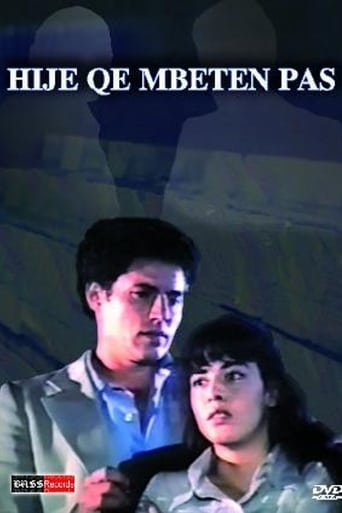
Agron and Marjeta are happily engaged until in a trial presided by Agron, two people accused of theft reveal facts that implicate Marjeta's father. Agron is torn between love and duty.
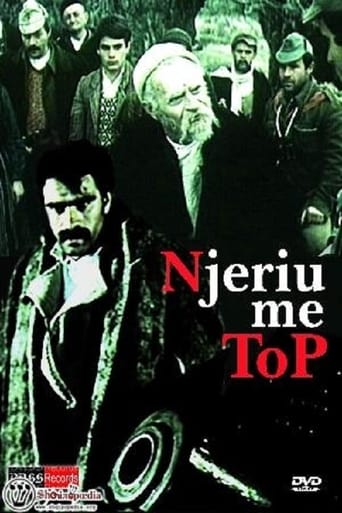
After Mato Gruda, a man living in a remote village in the mountains of Albania, steals a cannon abandoned by the German invaders he has to decide whether to use the weapon to support the Partisan resistance or to avenge his family.
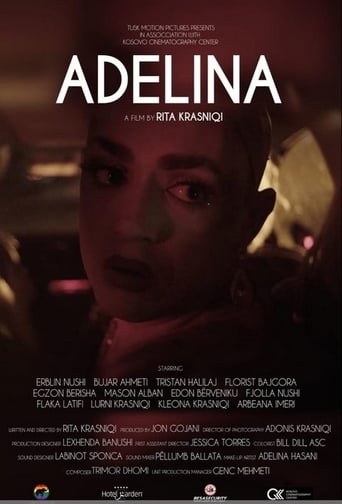
After convincing his friends to perform in their drag outfits at a night club owned by a very homophobic businessman, things go awry when their performance is stopped suddenly by a wardrobe malfunction and their true identities are revealed, putting all their lives in instant peril.
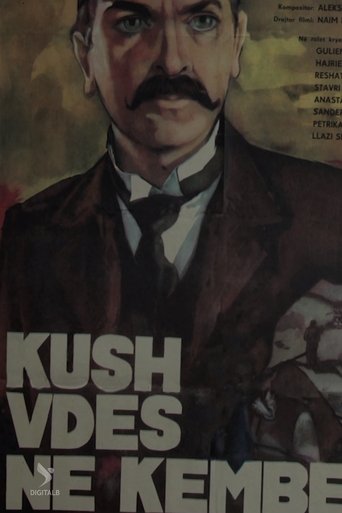
Film based on the life and patriotic activities of teacher Petro Nini Luarasi.
The friendship of two boys is tested to its limits as they battle for survival during the Kosovo war.
Fisnik is about to embark on a absurd journey in creating a fake weeding video, to get the German visa. He has to succeed in convincing his family, friends, and his ex to join him in this crazy journey.
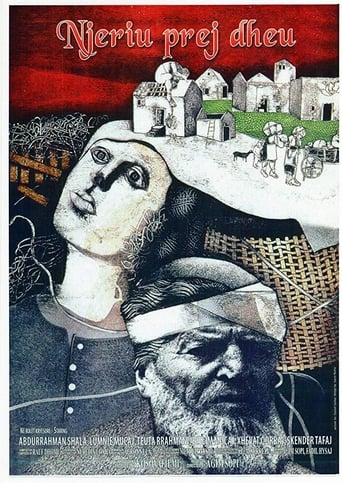
Sokol is a middle-aged Kosovar Albanian who, together with his family, emigrates from Kosovo to Turkey, and faces the foreign and unknown world. After some time he becomes homesick, eventually leaving his last will he gave to his son that when he dies, his bones will be returned to his native country. He dies near of a cliff at the Black Sea coast. In his native village, the news that Sokol has been returned from emigration are being spread.
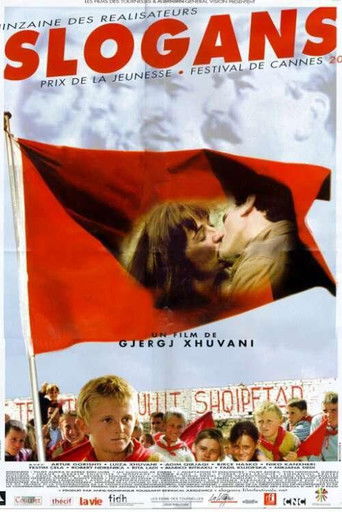
Andre starts as a teacher in a remote mountain village in Albania. His first task is to choose one of two communist slogans. He picks the shorter one, which is appreciated by his class, because they have to build the slogan on the hillside using whitewashed rocks. However, this means that the longer slogan goes to Diana, the French teacher to whom Andre is attracted. Andre gets on the wrong side of the communist party boss of the village, when he stands up for an unjustly accused goat herdsman, whom he had befriended. The boss is determined to take his revenge on Andre.
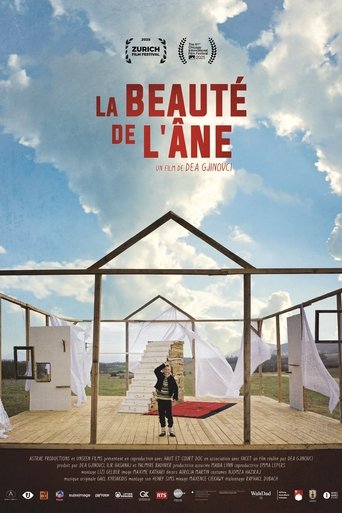
After her father Asllan has lived in exile for sixty years, Dea returns with him to Makermal. This Kosovar village that was once his home was destroyed in the war, leaving only the stories of the survivors. Together with the remaining villagers, Swiss-Kosovar director Dea Gjinovci and her father embark on a search for traces of the past and are confronted with the collective scars of a community.

Koli, an honorable elderly man has just opened his business, a "Funeral Agency." Everything seems perfect, except for the fact that he unintentionally finds himself caught in the trap of a criminal gang. Together with his brother, whom he has employed in his agency, they will go through many trials, during which they meet Besi, believing him to be the right solution to their problem. However, in reality, this solution becomes a harm inflicted upon Besi, who, justifiably, will use them to rectify the wrongdoing committed against him. Friendship and enmity, danger and adventure, laughter and tears will accompany them on the crime-laden path of no return, in pursuit of the hope that the truth will prevail.
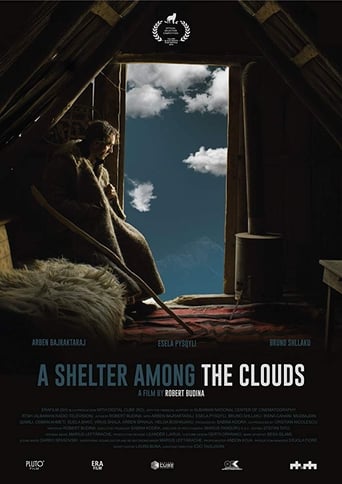
Besnik is a lonely shepherd and devoted Muslim, haunted by unfulfilled love. He is the son of a Catholic mother and formerly Communist father whom he takes care of in an Albanian village in the mountains. Up here, Christians and Muslims have found a way to co-exist peacefully. Even after the discovery that the old mosque used to be a church and that the building was actually shared by the two religions in the past, the calm of daily life can be preserved - with Besnik's help. After the death of his father, however, drastic changes threaten Besnik's multi-faith family and the shepherd is forced to seek his own path.
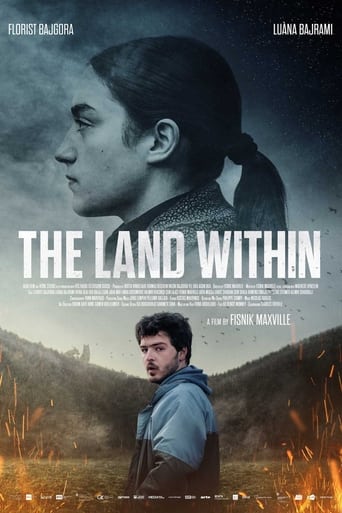
After years of exile, Remo, an orphan, returns to his childhood village in the Balkans. He must help his adoptive cousin, Una, with the exhumation of a mass grave that contains most of their family members buried there during the war. But the bodies reveal family secrets that will make Remo and Una question their past and their future. A film about the possibility of truth in a place that only knows survival.

