
The Desert of the Tartars 1976
Lieutenant Giovanni Drogo is assigned to the old Bastiani border fortress where he expects an imminent attack by nomadic fearsome Tartars.
Lieutenant Giovanni Drogo is assigned to the old Bastiani border fortress where he expects an imminent attack by nomadic fearsome Tartars.

Paula Barretto (Juliet Berto) is caught in the underworld because her father was involved in the drug business, her brother is in the real estate scam, and her lover is an armed thief. Although she tries to get out of her corrupt and dangerous environment, it is not an easy task when even the police officers cannot be trusted, and the underworld has informants everywhere.

Salomé Lerner just finished writing an autobiography. She goes to a TV show called "Apostrophes", hosted by French TV showman Bernard Pivot. Pivot then imagines a film that could be created from her gripping story. A film entirely made of music because after seeing the young pianist Erik Berchot, Salomé believes seeing her long lost brother, who was a musician as well. A brother she had lost along with her parents in 1943. However, the Lerners did in fact escape the gestapo and might have based themselves in Paris...

A journalist from "Gazeta Wyborcza" recalls his investigative reports and the consequences he suffered while trying to reveal the truth.
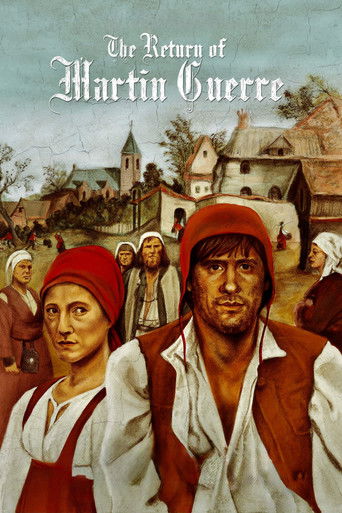
Village of Artigat, southern France, summer 1542, during the reign of Francis I. Martin Guerre and Bertrande de Rols marry. A few years later, accused of having committed a robbery, Martin suddenly disappears. When, almost a decade later, a man arrives in Artigat claiming to be Martin, the Guerre family recognizes him as such; but doubts soon arise about his true identity.

A whimsically paced crime drama that takes you on a journey through deceit and intrigue.
Narcoleptic Finnish naturist as beautiful as Venus is on vacation in Southern France with her husband. She goes for a walk in the field naked and gets lost. A local kid takes her to his village to help her as well as brag to his friends.
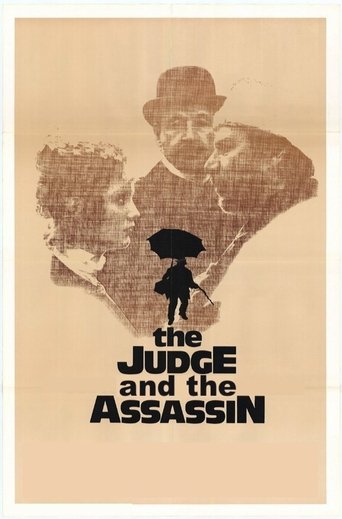
France, 1893. Joseph Bouvier attempts to shoot his love who refused to marry him and to commit suicide. Upon release from the filthy asylum where he was placed, with bullets still remaining in his head, he wanders the country roads and rapes and murders many teenagers over years. The judge Rousseau captures him, but to serve his ambition seeks to avoid that Bouvier is simply declared insane.
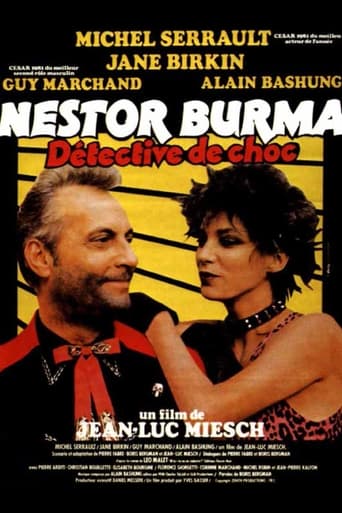
Detective Nestor Burma begins an investigation into the corrupt drug-ridden punk rock music world.

Industrious accountant David Martinaud claims to be visiting his parents every weekend, but it's merely a cover for the labor-intensive refurbishing of his country cottage. The reason for David's secrecy is that his childhood crush, Lise, lives nearby, and, although she's married, he still believes they'll get together. His devotion to the idea borders on mania, and, when Lise's husband is accidentally killed, he quickly spirals out of control.

When Peter, Margaux's American writer husband, leaves Paris in a funk and heads home, she finds herself the single parent of two near teens. She also gets a new assignment at work: to find, sign, and promote new rock singers. She discovers a duo, Jeremy and Michel, and jump-starts their music careers. Jeremy is attracted to the older Margaux, asserts himself with her, befriends her children, and neglects Michel and their music. The kids go to New York to be with their father Peter, freeing Margaux to respond to Jeremy. Does that relationship have any future? And what of the musical duo?

This documentary addresses the challenges facing the Italian film industry in 1978 by focusing on the television productions of Francesco Rosi's CHRIST STOPPED AT EBOLI (1979) and Elio Petri's LE MANI SPORCHE (1978)

In this complex chronicle of the evolution of a provincial family's life, the story follows three generations of at least two neighboring families from the 1890s to the 1970s. In one of many related tales, a man who was engaged to the older daughter of a farmer elopes with the younger one. After many years and the birth of five children, the man leaves his wife and family for the bright lights of the city but continues turning up from time to time, until he is finally taken into the home of one of his sons when he is a quite old man. The complex interactions of the legitimate and illegitimate children of a womanizing miner give rise to yet another set of related stories.
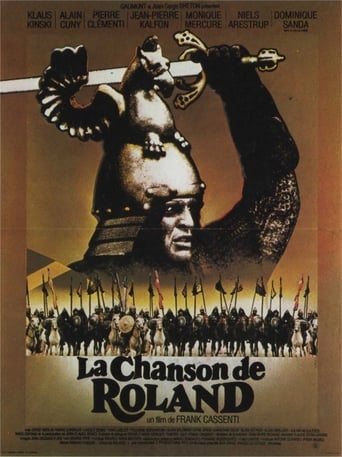
Roland des Roncesvalles is a legendary knight from the age of chivalry in France. In the 11th-century epic La Chanson de Roland, he is depicted as a key figure in halting the advance of the Arabs into France. In this story, the 10th-century legend is staged by a group of 12th-century pilgrims using the 11th-century poem. Their acting is interrupted by a violent peasant uprising, which kills many of the pilgrims. However, one of the survivors, is converted to the peasant cause and later speaks out in favor of more just treatment for the downtrodden.

An almost blind writer moves to a hidden property in an Alpine village with a female friend, Renata. The two play sado-masochistic games including long recitals of elaborate texts. A neighbor, Serge, gets interested in the mysterious couple.
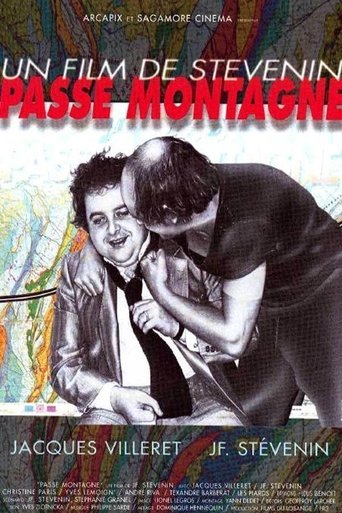
Serge (Stevenin) is a dweller in the French provinces who happens upon Georges (Jacques Villeret), a Parisian motorist in distress. Serge arranges for the car to be taken to a nearby garage. Georges' friends, who were with him in the car, have continued their journeys. Because of that, Serge takes Georges under his wings while he waits for his car to be repaired, and they tour the countryside and party with the local revelers. Nothing much is said between them, but it is clear that they have become friends
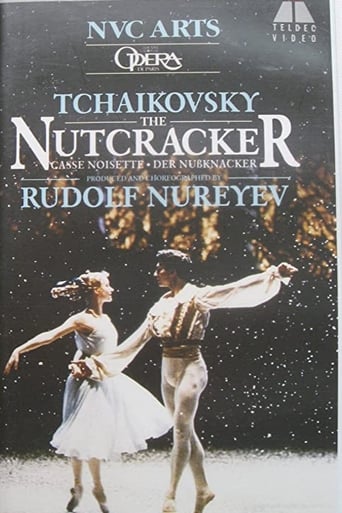
The Paris Opera Ballet's 1988 revised version of Rudolf Nureyev's 1963 production of The Nutcracker.

A woman accused of murder escapes an asylum and her psychiatrist tries to find her.

At the end of the nineteenth century, an army force led by Major Mouzinho de Albuquerque, a cavalry officer, imprisoned in Mozambique the tribal chief Gungunhana, who had rebelled against Portuguese government and sovereignty. Mouzinho instantly becomes a national hero but his raising popularity worries the State.
