
The Blum Affair 1948
Dr. Blum, a Jewish manufacturer, is falsely accused of a murder. Even when the real killer’s identity becomes evident, the state prosecutor refuses to accept Blum’s innocence.
Dr. Blum, a Jewish manufacturer, is falsely accused of a murder. Even when the real killer’s identity becomes evident, the state prosecutor refuses to accept Blum’s innocence.

After returning from a concentration camp, Susanne finds a traumatized ex-soldier living in her apartment in bombed out Berlin. Together the two try to move past their experiences during WWII.

In the ruins of post-WWII Berlin, a twelve-year-old boy is left to his own devices in order to help provide for his family.

A chemist and his assistant make a groundbreaking discovery. They manage to make butter directly from pasture grass without having to deal with either the cow or the use of dairy products. An industrialist attempts to seize the invention.

While an anatomy seminar prepares to examine the cadaver of Franz Wozzeck in the name of scientific progress, medical student Büchner excoriates humanity for having allowed Wozzeck’s fate. The tragic story unfolds in flashbacks, as Büchner narrates.
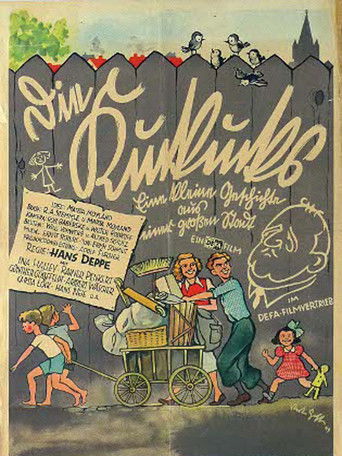
Berlin, shortly after World War II. Five parentless siblings, led by the oldest sister Inge Kuckert, search for a place to stay and a basis of existence in the destroyed city. A bombed villa in the Grunewald seems to be the right "cuckoo's nest", but an alleged authorised disposal tries to drive the siblings out of the building. Fortunately, the friendly neighbor can help.


This is the directorial debut of Artur Pohl and tells the story of war refugees as they try to settle in a small town in Germany.

Post-war Germany 1945: Two rival gangs of uprooted boys fight each other in the ruins of Berlin, whose business is the black market out of necessity in order to survive. Their respective leaders are Gerhard and Dietrich. A pretty young circus artist named Corona comes to the destroyed city with a traveling circus. She immediately caught the boys' attention. When the latter notice that the circus director is abusing the girl, the two gangs join forces and plot an act of revenge against the tyrant. But with the hustle and bustle caused by this, Corona falls from the trapeze and is seriously injured. When the circus moves on, the boys organize a doctor for the sick artist who has been left behind. Their collectively concern for the blonde beauty makes them forget their enmity. This welds the troops closer together and sets the course for a common, meaningful future.

After WWII, Berlin lies in ruins. For Gustav, Willi and their friends the rubble provides an adventurous, dangerous playground. Especially for Gustav, it helps pass the time, as he longs for his father's return from a POW camp. One day a stranger arrives, looking helpless and hopeless.

The mechanic Behnke wants to join the Nazi party to secure a good living. However, after his Jewish neighbors have been taken away, he changes his views. Trying to remain "a non-political man," he withdraws from reality and becomes a Nazis laborer.

In 1948, students from Berlin University take part in the filming of a movie about the 1848 revolution as extras. A dispute arises between Else and Heinz, who tends to dismiss the revolution as a comical affair. Two fiercely opposing camps form at the university. But Heinz begins to reflect, and reading about a young student who lost his life in the turbulent days a hundred years earlier slowly changes his attitude. The conclusion of the filming at the Wartburg also reunites him with Else.

Boys are usually busy playing "Indians", but when their uncle decides to rent part of their home to a Doctor Höflin, they took an oath to cast him out with a series of pranks.
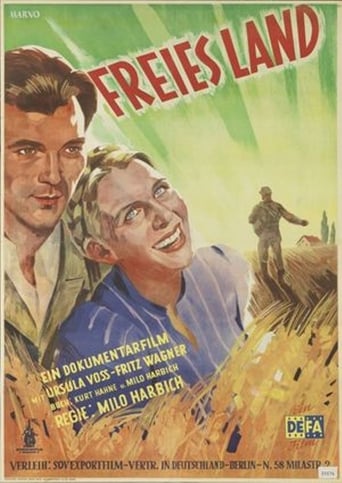
After World War II, scores of refugees leave in search of a new home. They now stand in the hall of a large mansion, waiting to receive their deeds of ownership for sections of land that the lord of the manor had left behind after he fled. Among them is young Jeruscheit who, during her travels, had to bury one of her own children. Her husband has been declared missing, and up until now she has had little purpose in life. But then she discovers it: to work, to build, and to help others. And maybe someday Jeruscheit will find her family.

Set during the rise of the Nazi regime, Elisabeth Maurer and Hans Wieland enjoy successful careers as actors in Berlin. Confident in her career, Elisabeth, who is Jewish, ignores the advice of a colleague to leave Germany in the face of increasing anti-Semitism. Believing that he can protect her if she becomes his wife, Hans convinces Elisabeth to marry him. In the following years, as Hans's career thrives, Elisabeth awaits the end of the Nazi terror which bars her from public life. When the situation worsens in 1938 with the Kristallnacht pogrom, Elisabeth decides to leave the country, but Hans, who still believes he can protect her, convinces her to stay with him.

Shortages in postwar Berlin have created a blooming black market, and the goods rounded up during a major police raid all seem to come from the same source. The trail leads Commissioner Naumann to the Alibaba Cabarett, but he is unable to find conclusive evidence to convict its owner Goll.
During the global economic crisis, "Morgenrot" mine is due to be closed due to unprofitable results. With the use of a machine forbidden for security reasons, the mates try to work more effectively and thus save their jobs. A serious accident happens.
While on leave in Berlin during the Second World War, a soldier named Hans meets a young woman named Monika. They fall in love and make plans for a future together after the war. Yet their later attempts to find an apartment and get married are hindered by the housing shortage and they have to stay separately with relatives.
Documenting the rebuilding of Potsdam one year after the war under Soviet supervision.
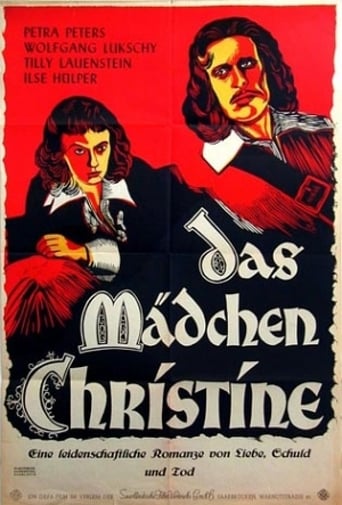
During the Thirty Years' War, Christine, an orphan, falls in love with the colonel Count Merian. In order to always be with him, she puts on men's clothes, becomes a troop boy and later even a cornet - only the sutler knows her secret. Little by little, Christine realizes that the man she loves has been brutalized by the war and is no longer capable of true feelings. When she gives herself to him instead of a peasant maid, she is horrified by his brutality. She shoots him in a duel. She is sentenced to death as a cornet, but acquitted as a woman.
