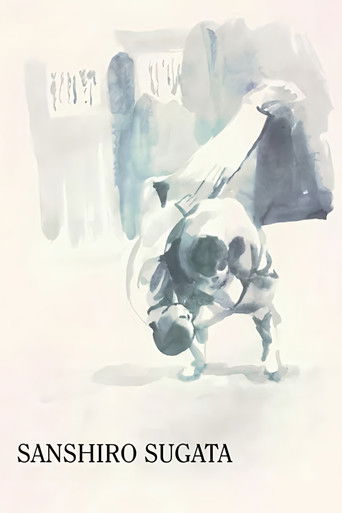
Sanshiro Sugata

Sanshiro Sugata 1943

6.50

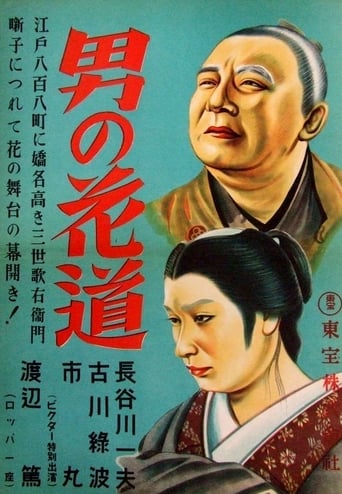
A hotheaded youth in 1880s Meiji Japan apprentices to judo master Shōgorō Yano, trading brute jujutsu bravado for discipline and humility. As Sanshirō matures, he proves judo’s spirit against old-guard challengers—including a deadly duel—while falling for his vanquished opponent’s daughter. Based on the novel by Tsuneo Tomita, son of Tomita Tsunejirō, the earliest disciple of judo.

1943

Onna keizu

Onna keizu 1942

1

1942 adaptation of Izumi Kyoka's novel.

1942

Song of the White Orchid

Song of the White Orchid 1939

1

Song of the White Orchid was a co-production of Toho and Mantetsu, the railway that served the colonial region of Manchuria, and the first film in the Kazuo Hasegawa/Shirley Yamaguchi (Ri Koran) “Continental Trilogy.” Handsome Hasegawa (representing Japan) runs up against an impertinent Yamaguchi (representing the continent); not surprisingly, in the course of the film the woman comes around and realizes the benevolent intentions of the Japanese. In Song of the White Orchid Yamaguchi leaves Hasegawa, who plays an expatriate working for the railway, because of a misunderstanding. She joins a communist guerilla group plotting to blow up the Manchurian railway. Learning of the subterfuge that led to the misunderstanding, she renews her faith in Hasegawa—and by extension Japan—and tries to undermine the plot.

1939

The Monkey King

The Monkey King 1940

1

A legendary pre-war comedy operetta starring Enomoto Kenichi, Hideko Takamine and Li Xianglan. The Sanzo Ikkou continues its westward journey, on a mission to prevent a demonic resurrection. As Genjo Sanzo, Cho Hakkai, Sha Gojyo, and Son Goku (Kenichi Enomoto) fight their way to their goal, their path is fraught with internal strife.

1940

Horse

Horse 1941

5.80

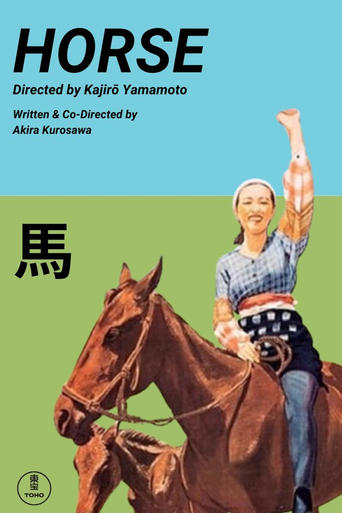
Ine Onoda, the eldest daughter of a poor family of farmers, raises a colt from birth and comes to love the horse dearly. When the horse is grown, the government orders it auctioned and sold to the army. Ine struggles to prevent the sale.

1941

The Battle of Kawanakajima

The Battle of Kawanakajima 1941

1

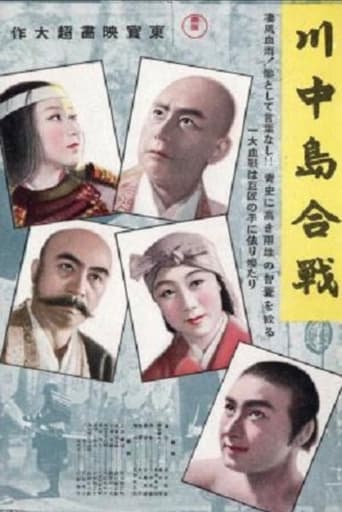
This epic depicts the battle between Uesugi Kenshin and Takeda Shingen. The focus of the story is the struggle by the unit leader in charge of the main supply wagons and the supply troops to transport materiel to the Uesugi army. To this are added episodes involving an itinerant woman.

1941

Sky of Hope

Sky of Hope 1942

1

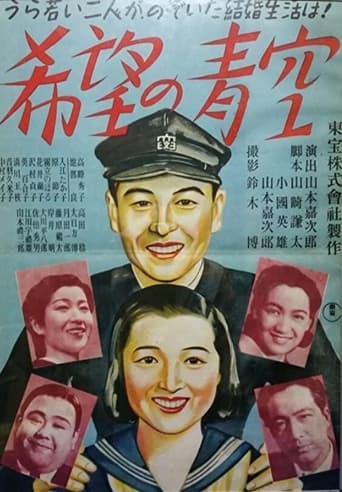
What is marriage? Young couple in match-making wanted to know before they decide. They visited married couples of sisters and brothers. Love comedy in 1942.

1942

The Burning Sky

The Burning Sky 1940

1

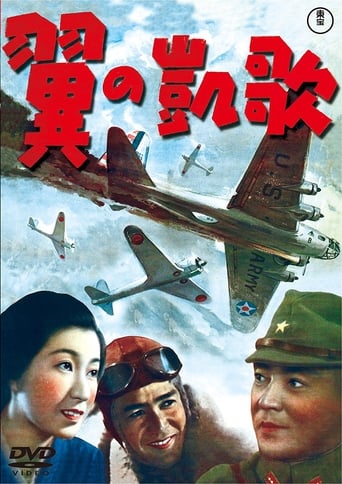
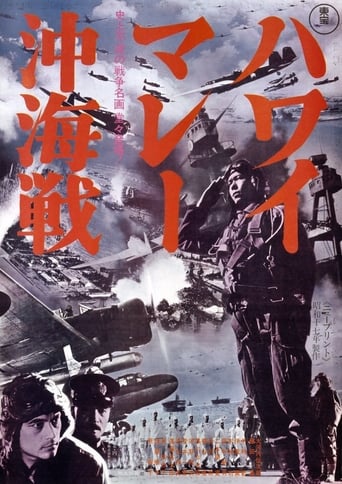
The film was produced during Second Sino-Japanese War, before the Pearl Harbor Attack in 1941. The film mainly concerns the training of newly-recruited pilots and their daily life, then their subsequent fighting experiences in China. Army supported the production, providing all the authentic airplanes, training and actual actions. They even provided the older biplanes disguised as Chinese fighter planes. Obinata plays the trainer-turned-combat-leader, who is passionate and cool at the same time. All his boys love him, of course. The film is not as intense, full of sugar-coated camaraderie, until young pilots are killed in action one by one. Last twenty minutes are fairly grim, as the message of self-sacrifice is heard loud and clear.

1940

Travelling Actors

Travelling Actors 1940

6.10

This film depicts a troupe of wandering kabuki players traveling through rural Japan.

1940

The Man Who Waited

The Man Who Waited 1942

1

A bizarre murder at a hot springs resort threatens to disrupt an Edo detective's (Hasegawa) vacation. When his hot-blooded wife (Yamada) starts snooping around, however, he finds himself reluctantly drawn in to the case.

1942

The Opium War

The Opium War 1943

1

The Opium War is a 1943 black-and-white Japanese film directed by Masahiro Makino. "Ahen senso" in Japan refers to the First Opium War. The story of the film concerns this war.

1943

Composition Class

Composition Class 1938

6.80

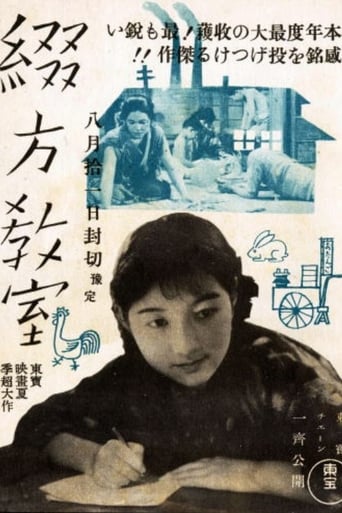
Masako, the daughter of an impoverished itinerant tinsmith, wins a grammar school composition contest with an essay about her neighborhood. The much publicized essay ends up causing the family problems and their chronic money troubles threaten Masako's further education.

1938

The Giant

The Giant 1938

6.00

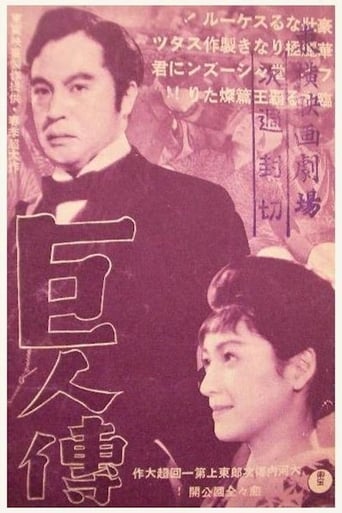
Japanese adaptation of LES MISERABLES. The last film of director Itami took inspiration from Les Miserables. Transpiring during the Southwestern War of 1877 in Japan, which was the last civil war in the country, a criminal escapes prison only to be found by a monk. The criminal decides to turn a new leaf based on their conversation and goes on to become a town's mayor. He hears news of a mistaken arrest and identity. The revelation of truth is the start of a series of miseries.

1938

Mito Komon's Pleasure Trip

Mito Komon's Pleasure Trip 1938

1

This is the only surviving “Mito Komon Manyu-ki” film. This release also known as "Adrift Tour Memoir" or literally "Mito Komon's Pleasure Trip" is an 80-minute compilation of the first (東海道の巻 or "Tokaido no maki") and second (日本晴れの巻 or "Japan's Fine Weather Reel") parts (147 minutes), which were re-edited and screened at a time when presentable films were dried up immediately after the defeat of the war.

1938