
Popular From Lebanon
Where Is My Life 1958
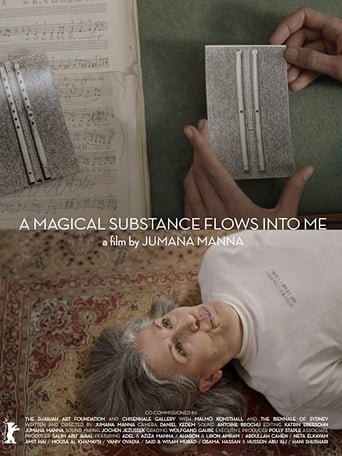
A Magical Substance Flows Into Me 2015
Robert Lachmann was a German-Jewish ethnomusicologist. In the 1930s, his radio show "Oriental Music" explored the musical traditions of Palestine and included regular live performances by musicians from different ethnic and religious groups. Inspired by Lachmann’s musicological studies, Palestinian artist Jumana Manna travels through Israel and the Palestinian territories of today with recordings from the programme. What do these songs sound like now when performed by Moroccan, Kurdish, or Yemenite Jews, by Samaritans, members of the urban and rural Palestinian communities, Bedouins and Coptic Christians?
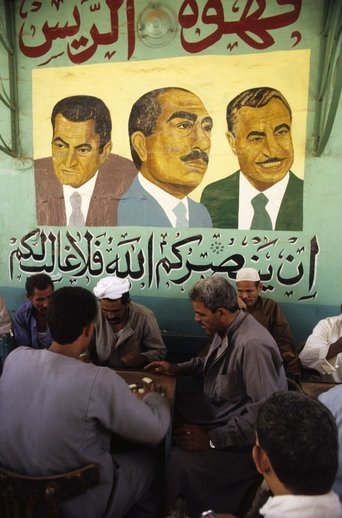
Egypt's Modern Pharaohs: Nasser 2015
From Gamal Abdel Nasser to Anwar Sadat, to Hosni Mubarak, “The Pharaohs of Modern Egypt” follows the path of the successive regimes in power, and reveals their common goal to carefully lay the basis of a solid independence, but which, on the other hand, led to the revolution on Tahrir Square in 2011. President Anwar Sadat led the country down the diametrically opposite path. He forged an alliance with the Muslim Brotherhood, the regime’s life-long enemy, and rerouted the country onto the road of capitalism. By ignoring increasing wealth gaps and insisting on peace with Israel at all political costs, the “pious” president opened up the Pandora’s Box of radical Islam, a decision that cost him his life, and which has since had repercussions on the entire world.
A Plate of Sardines 1997
A man recollects the conflict in the middle east through his personal memory. In this short documentary, Amiralay reflects on the first time he heard of Israel. Through recorded conversations with filmmaker Mohamed Malas, both Amiralay and Malas share their own unique stories and experiences about Israel and Israeli occupation. In the company of fellow Syrian filmmaker Mohammad Malas, the ground-breaking director Omar Amiralay revisits the ruins of the destroyed Golan village of Quneytra, occupied by Israel and then abandoned following the 1973 war.
Tergui 1935
Directed by Abdelaziz Hassine.
Farther Than the Eye Can See 2013
A woman recounts her story of the mass exodus of Palestinians from Jerusalem, beginning with the arrival and ending with the departure. The tale moves backwards in time and through various landscapes but the events are not being undone and the story has not been untold. Farther Than The Eye Can See is the tracing of a decaying experience told through words of a place that no longer exists.
The Dam 1990
Light and Darkness 1947
The first Syrian talkie.
A Message from Libya 1974
Libyan documentary.
The Conductor 1967
Iraqi film directed by Jafar Ali.

Fi Bilad Tutankhamun 1923
The film revolves around the character of Lord Carnarvon and his discovery of the tomb of Tutankhamun, in addition to his discovery of many Pharaonic antiquities in the deserts of Upper Egypt and in the Valley of the Kings.
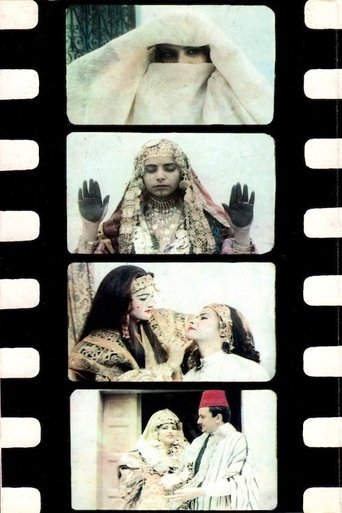
The Land of the Tarayoun 1985
Through the history of the traditional female costume and the sum of the signs with which it is charged, the heroine of the film goes in search of her identity.
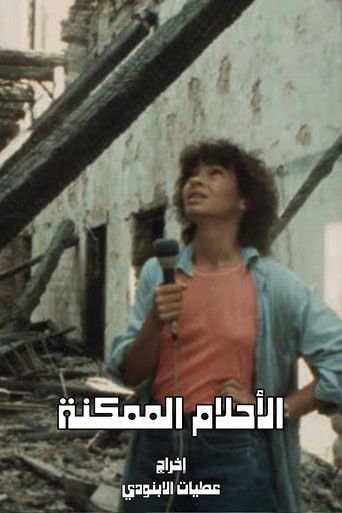
Permissible Dreams 1982
A documentary portrait of a traditional peasant woman, Om Said.
Ala Haman Ya Feroon 1978
The play is about a man who manages the business of a family that consists of a boy and girl. An accountant that works for him falls in love with his daughter, which makes him stay quiet about the fraud that the father-in-law commits.
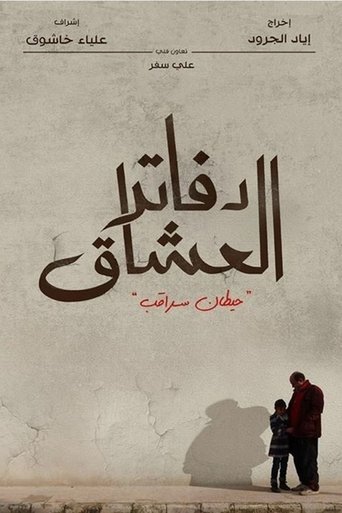
Lovers' Notebooks 2015
The population of Saraqeb in Syria expresses the ongoing misery in their country and the changes after the revolution through graffiti. The walls are the basis for their existence, providing protection from outside violence. They also bear the names of martyrs, common expressions, poetry, revolutionary slogans and other graffiti. The documentary Lovers' Notebooks was shot over three years and is the first film by Saraqeb inhabitant and media activist Eyad Aljarod who directed it with Canadian-Syrian Aliaa Khachouk. The film reveals the constant tension between the revolt-sparked energy and a sense of despair, between leaving a place and the decision to return, between the euphoria about the beauty of an image and the fear of war. During the film and during the night, the walls of Saraqeb are filled with text like a lover's notebook.
In This Land Lay Graves of Mine 2014
A tale of national identity and the meaning of territory in Lebanon. Narrated from a first-person perspective, it focuses on a country defined by religion, whose communities are fearful of demographic partition.
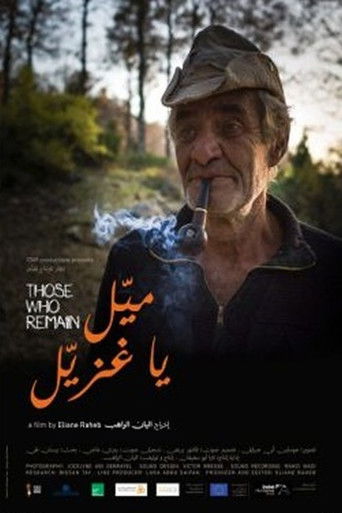
Those Who Remain 2016
A 60-year-old Christian farmer struggles to hold onto the land he has tilled for decades despite mounting tensions in Lebanon's picturesque Akkar District.
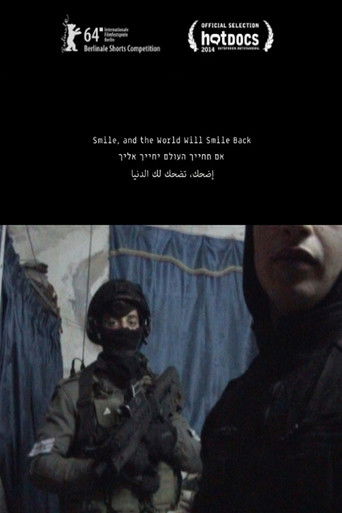
Smile, and the World Will Smile Back 2014
Smile, and the World Will Smile Back”, a documentary film by the al-Haddad family of Hebron made in collaboration with Ehab Tarabieh and Yoav Gross – volunteer photographers in B'Tselem's camera project and filmmakers, respectively – is to be screened as part of the short film competition at the Berlinale International Film Festival. The film documents one winter’s night at the al-Haddad home in the Palestinian town of Hebron. A group of soldiers arrives for a routine night search there, for reasons unknown to the family. Diaa and Shatha al-Hadaad, brother and sister, pick up the home video camera and record the events as they unfold throughout the night. The soldiers force Diaa to stand facing a wall, saying they won’t leave unless he stops smiling.
In Search of Oil and Sand 2012
Oil and Sand was an extravagant film made by members of the Egyptian royal family and a few friends and relatives in 1952 about a coup d'état, shot just weeks before the royals were overthrown in a real coup. The completed Technicolor film was destroyed by the director in fear that it would be used as propaganda against the ousted monarchy. Following Mahmoud Sabit, the man who found the original 8mm reels and who is himself a relation of the late king of Egypt, this documentary focuses on the reconstruction of the film's story, its array of real life players, and the political circumstances surrounding the shoot. This uncanny marriage of fiction and reality reveals that the original film not only managed to unwittingly predict the fate of the King, but also foresaw the next 60 years of relations between Egypt and the West.
