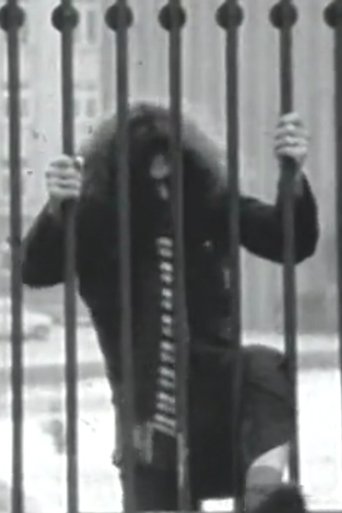
That Sweet Word... 1978
A man tries in vain to escape his self-imposed cage.
A man tries in vain to escape his self-imposed cage.

Lithuanians who experienced the horrors of the war, calling themselves Little Birds of God (Dievo Pauksteliai stands for DP), laid the foundations of life in exile in the Displaced Persons camps and laid the foundations for further Lithuanian activities in emigration.
Documentary film, which, based on the stories of the participants and witnesses of the uprising, the comments and assessments of historians and scientists, reproduces the development of the events of that time with authentic archival material, reveals their tragedy and significance for today's Lithuanian history.

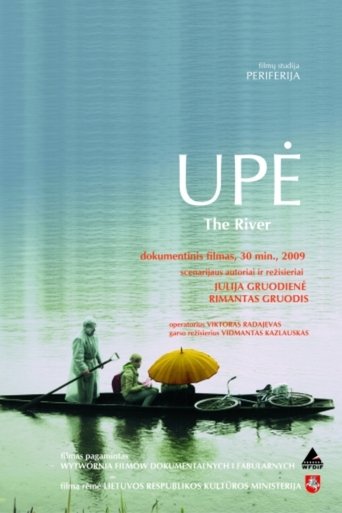
The film tells the story of people living at the confluence of the Neris and Šventoji rivers, in the village of Saleninkai, next to the Jonava chemical giant. As a result of the accident at the chemical plant, the villagers on the other side of the river were evicted and the Senenians left. A dozen families still live on contaminated land. There is no longer a ferry across the Neris, there is no bus to the suburb 12 km away. The children have to cross the river daily by boat and travel about 3 km to Rukla school. Saleninkai people are engaged in casual jobs, living on benefits, pensions. How he pays, so does his own life, that of his children and grandchildren.
"Being part of the Soviet Union changed the way people lived their lives. My grandmother's memoirs analyze the reasons why Palanga feels isolated and alone and its inhabitants blocked and lost."
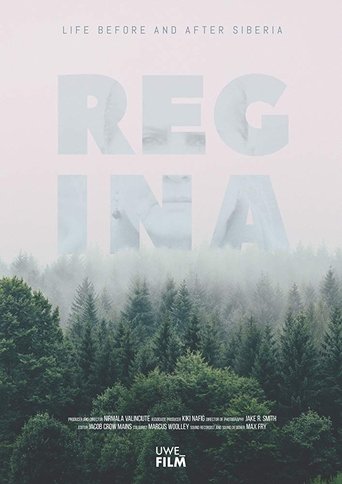
After the 1941 Lithuanian deportations to Siberia, this is a story of a woman who grew up there and watched her parents struggle through the aftermath of the traumatic events.
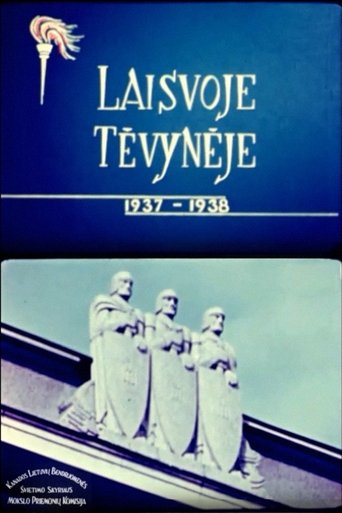
Colour documentary about Lithuania in 1937-1938 by Motūzas Brothers is made for Lithuanian community schools and youth organisations in Canada to show Lithuania's life before the Soviet occupation in June 1940. It shows the Lithuanian countryside, cities and towns, architecture, people's daily life, the most important events of 1937 - 1938 years.

The first Lithuanian puppet-animated sound film
Perfume fragrances with a bewildering force stimulates sexual desire.
A documentary commemorating the 100th birthday of Czeslaw Milosz, the Nobel Prize-winning Polish-Lithuanian poet. Famous cultural figures, friends, and family retrace the life and work of this extraordinary thinker, joined by Milosz’s own words and a wealth of archival material. Born in a cross-border region of Lithuania in 1911, Milosz grew up a polyglot, fluent in Polish, Lithuanian, Russian, English, and French. During World War II he wrote for underground presses. Surviving Nazi rule, he went on to serve as a cultural attache of Poland in Paris. In 1951, he defected to the West and wrote his most famous prose work, The Captive Mind. By 1960, Milosz had emigrated to the U.S. to teach at the University of California, Berkeley. With the fall of the Iron Curtain, Milosz returned to Poland, where he passed away in 2004 at the age of 93. This film is a lyrical reflection on a life spent in exile yet filled with humor, passion, and big ideas that often went against the spirit of the age.
