Tell Me a Poem 2025
A woman’s journey towards liberation and healing through recollections of her younger self.
A woman’s journey towards liberation and healing through recollections of her younger self.

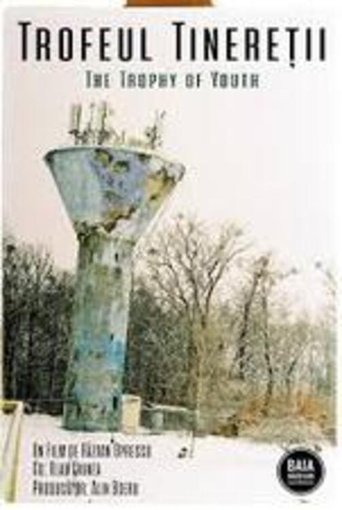
A small town in Buzau province is affected by a destructive flood during the time of an aggressive nationalistic program of urbanization in Communist Romania.
Follows the people's avenger, leading the fight against injustice and cruelty
Musical documentary essay on Romanians in the metro in Paris in December 2004.

Surge of Transference is a video essay that investigates the expansion of the internet in a small Romanian town, where communities have formed and shifted around the newly imported Western technology. Within this micro-universe, the video traces the rapid transformation of the Internet, from the early days of peer-to-peer software to the upload of online late capitalism.

A tale from the 16th century narrates the story of Ursula, a female figure disguised as a man, who successfully chased away occupying intruders (at that time, the Ottomans) using the supersonic sound of a whip. This account purportedly originated in Cincu, the Transylvanian village which today houses one of N.A.T.O.’s key combat training zones in Romania.
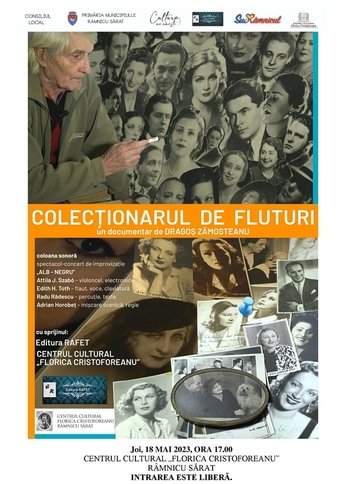
"The whole world is a stage and all people are actors. They rise and fall in turn, each one: A man plays several roles in life, And the acts are the seven ages..." (William Shakespeare, How You Like It) The story of a man - Mihai Sarca - for whom the theater means everything and for whom a whole life defined himself by his passion for the stage and for the people who serve it, thus becoming the treasurer of an archive collection and, at the same time, a living encyclopedia of the Romanian theatrical phenomenon of the last century.
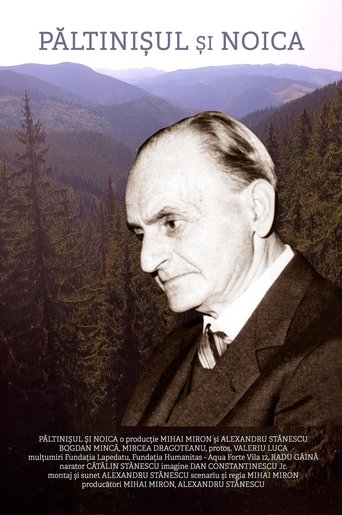
Constantin Noica spent the last years of his life "1400 meters above humanity", as he liked to say - in Păltiniș. Far from the communist gray, but still kept under observation by the Securitate, the philosopher found in this place the joy of talking about wisdom. In the modest room on the 1st floor of Villa 12, what we know as the "Păltiniș School" was born.

A documentary work about the emblematic Romanian character Serghei Mizil, the son of Paul Niculescu-Mizil, a former communist dignitary, in which Serghei presents in detail the way of life and brutality of the system during the communist regime in Romania.
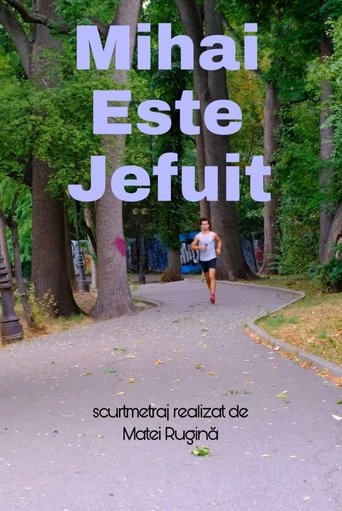
Mihai goes out to run and has several encounters that trigger out his social anxiety.
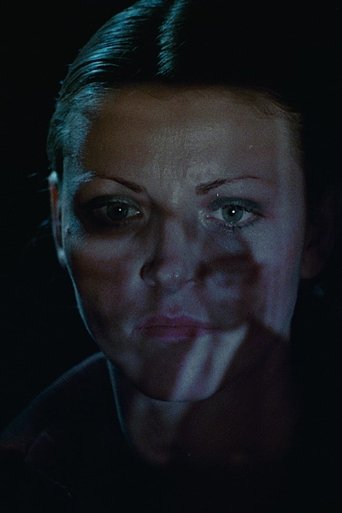
"Ciné-Verité" is a self-reflexive movie that questions the underlying forces behind television reporting and, in a broader sense, films of different genres. The main character is a young television employee making her first attempts at reporting. She interviews ordinary people in an attempt to obtain authentic life stories (some of the footage that director Laurențiu Damian includes in the fictional fabric is real), but the idealistic reporter's work is repeatedly rejected by her boss, which eventually leads her to resort to the conventional solution of using a commentary that explains the footage in wooden language.
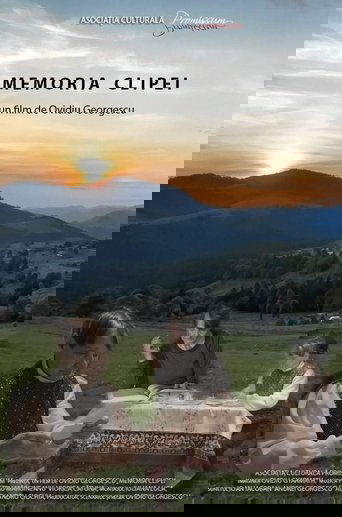
The world of Viorica Cătuna, from Poiana Cătunarilor, in Transylvania, somewhere at 1200 meters altitude. A former teacher, she has always been passionate about knowledge, books, poetry and music. We learn her story, the history of her family and the history of her community, all in correlation with historical events that have taken place over the years. A portrait of this woman and the times, from when she learns the stories of her family to the future plans she has in her 80s. A charismatic and storied character, an encyclopedia of a vanishing community.
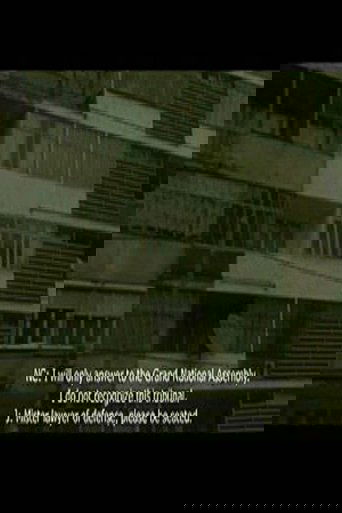
A film constructed on a text that seems to be a theatrical performance rather than the transcript of a trial. The camera traces facades of communist housing blocks, depressingly unchanged over the years, as the transcript from the trial of Communist dictator Nicolae Ceaușescu and his wife, Elena, is read without pause or emotion. The intensity of the film is created by the tension between the dizzying and unceasing movement of the camera and the continuous and expressionless reading of the trial script, recording a very dark episode of modern history. — Anthology Film Archives
