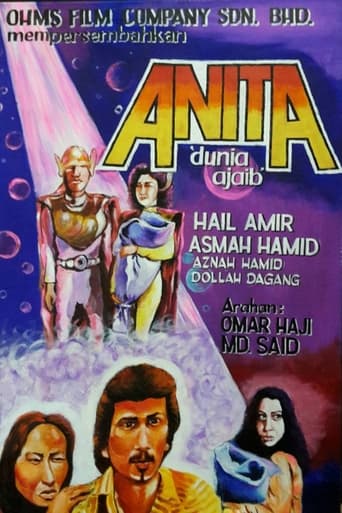
Anita: A Strange World 1981
A filmmaker is trying to get a film called Anita: Dunia Ajaib (Anita: A Strange World) made, all while experiencing goings-on of extraterrestrial proportion in his married life after hiring a mysterious maid.
A filmmaker is trying to get a film called Anita: Dunia Ajaib (Anita: A Strange World) made, all while experiencing goings-on of extraterrestrial proportion in his married life after hiring a mysterious maid.

Fairuz is a sophomore in fashion at his college. He is famous for his beautiful and well-groomed clothes. His parents, Pak Saad and Mak Kiah are very proud of him. Overwhelmed by the excitement, Pak Saad and Mak Kiah received numerous orders from the whole village. Fairuz's range of bookings makes Fairuz anxious and unable to cater to the reservation orders. Worried about not being able to complete all the dress orders, Pak Saad, Mak Kiah and Fairuz fled the village. Will they manage to prepare all the orders before Aidilfitri?
Milah marries Jiman, the eldest son of the richest man in her village after her initial match make to his youngest son, Ehsan, falls through. Heart broken and unable to refuse the marriage due to parental pressure, Milah bids farewell to her sweetheart and makes him promise not to attend the wedding. He breaks his promise and this results in a chain of events leading to Ehsan's death and Jiman's permanent paralysis and insanity.
Facing the objections of a stubborn mother, star-crossed lovers Hassan and Lai Lai struggle to come to terms with the difficulties of separation in a time of a new multicultural Malaya. Believed to be one of the earliest Malayan film featuring an interracial romance between a Malay man and a Chinese woman, this film was deemed controversial for its time for being culturally and religiously insensitive.
this story tells of Kelantan people who migrated to Kuala Lumpur.

Two siblings decide to play outside late in the evening as it's about to get dark.

According to legend, Awang Semaun is the younger brother of Awang Alak Betatar, who served to protect Poli (Brunei) hundreds years ago. To this day, people don't know where the warrior has gone...
Coffin orange film is a Malay film which was published in Malaysia in 1969. The film Coffin orange issued in the form of black and white film without color.
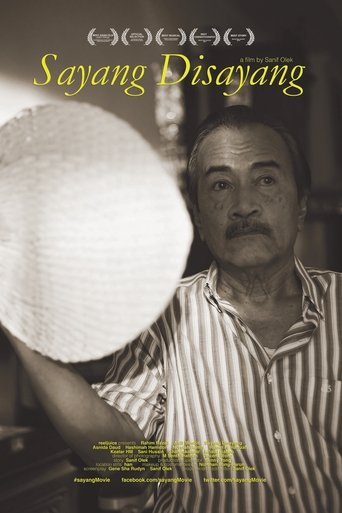
Sambal Goreng - a traditional dish in the Malay Archipelago - is the metaphor for the sizzle, simmer, spice and flavor of a household wherein resides a Tsunami survivor turned domestic helper who struggles to save her job and her bitter retired employer.
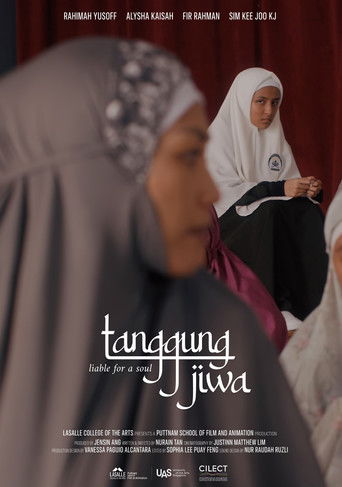
In a household bounded by faith, Jamaliah struggles to reconnect with her teenage daughter, Aliyah, while longing for companionship. Unbeknownst to her, Aliyah is grappling with the same emotional turmoil. As both mother and daughter navigate their unspoken parallel desires, the growing distance between them threatens to fracture their fragile bond.

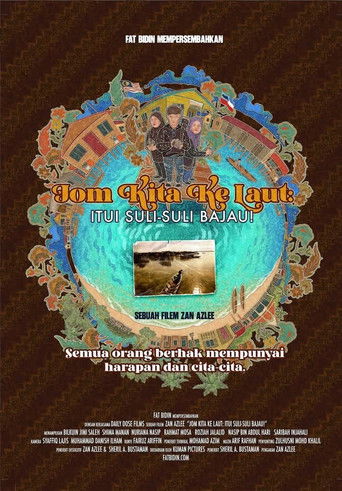
Bilkuin, Shima and Didi are three youths living on Omadal Island, situated off the coast of Sabah in Borneo, where a majority of the population consists of the stateless Bajau Laut (Sea Gypsies). After joining and excelling in a filmmaking workshop, they are selected to be junior directors or apprentices to be mentored by a professional film crew. 'Jom Kita Ke Laut' tells the specific story of their three lives as they try to document it on their own, which eventually gives us a view of how life is on the island for the Bajau Laut and the challenges they face by being stateless in their own land and not having access to basic human rights like education and healthcare.
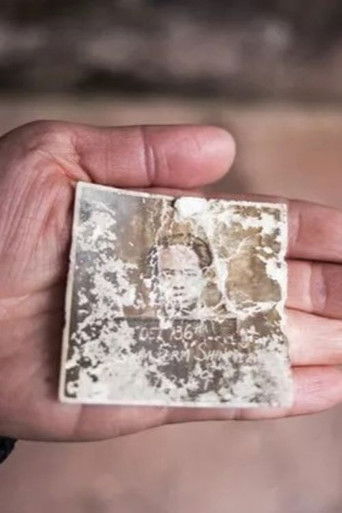
Requiem depicts now-elderly former communists reclaiming memories of their political participation, war, deportation, exile, and socialist dreams, in the form of song. In their youth, they were guerrilla fighters who took on the British in the jungles of Malaya (present-day Malaysia and Singapore) in the anti-colonial war of 1948-1960. Two versions of this work exist, single and double-channel video installation with sound. The double-channel version was shown as part of solo exhibitions in Hong Kong and New York. The single-channel version was shown at the Venice Biennale 2024 as part of The Disobedience Archive curated by Marco Scotini.
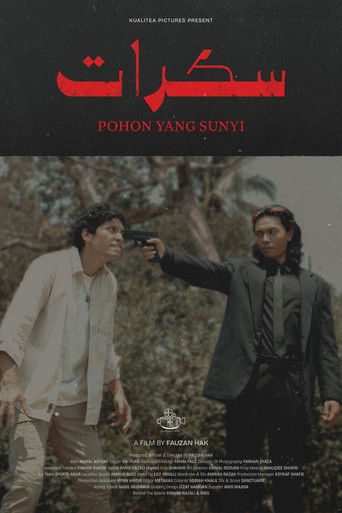
Beneath a dying tree, a man digs a grave, awaiting another arrival. When a silent figure appears, he assumes they've come to bury someone else. But as the truth unfolds, he realises the grave is his own. What follows is not a fight for survival, but a quiet confrontation between fate and free will, between beings that exist beyond human understanding. What begins as a simple encounter unfolds into something far more metaphysical: a conversation between two beings that exist beyond the realm of men. One bound by duty, the other corrupted by desire, both caught in a moment between life and eternity. Set in a desaturated rural landscape, Sakarat: Pohon Yang Sunyi reimagines the moment before death where silence, duty, and rebellion intertwine, blurring the boundaries between the mortal and the divine.
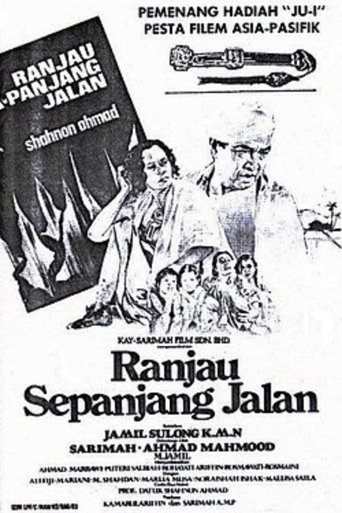
The film tells the story of the suffering of a family of traditional rice farmers who reject the current of modernity and face natural disasters and enemies of their rice crops.
Wordless visual piece on the cyclical nature of life, a quiet balance between presence and departure.

The story of Adli, a thief who disguises himself as a wealthy man and comes to a village to escape being pursued by the authorities. In his attempt to hide his identity, he manages to gain the trust of Tok Imam Saleh, who at the time is facing a crisis of credibility as the leader of the surau (prayer hall). By expressing a desire to deepen his knowledge of religion, Adli appears to be seeking a “spiritual transformation,” something that Tok Imam warmly welcomes. However, not everyone is easily deceived. Khadijah, Tok Imam’s daughter, begins to suspect Adli’s true intentions.

The film serves as a technological artefact that has been unearthed by future archaeologists and compiled together into a film. The narrator details his disease and his demise through scattered and spaced-out audio entries that were intended for someone, but the recordings never reached the intended listener. As he recalls his life and eventually the ending of all humankind, death, he accepts the imminent doom of his fate, due to nature’s law of entropy.
Two cousins, Farah and Ratna, in their 20s, meet with an Ustaz from their past whom they had their teenage crush on, when he now returns, years later, as their Arabic language teacher. As they learn the Arabic language, they also learn to re-examine their life values. The Ustaz will also ultimately teach them and others a few things about life as Muslims here prepare for the 2021 Haj season.

There was a girl whose father had just died. She was very close to her late father, as he was the one who stayed at home and took care of her while her mother was working. Every day her working mother would try to make an attempt to bond with her daughter by cooking different meals and composing letters for her that came with each meal, but the girl chose to ignore the letters and instead only ate. One day there was no food in front of the girl's door. She panicked and started looking everywhere for her mom, who was nowhere to be found. While she was looking, she noticed a stack of letters that her mother had written for her. She read them and cried. She regretted that she had ignored her mother's attempts to get closer to her. Suddenly she heard the doorknob of the front door rattle. She ran to her mother, crying. The mother was confused at first, but hugged her young daughter with a smile.
