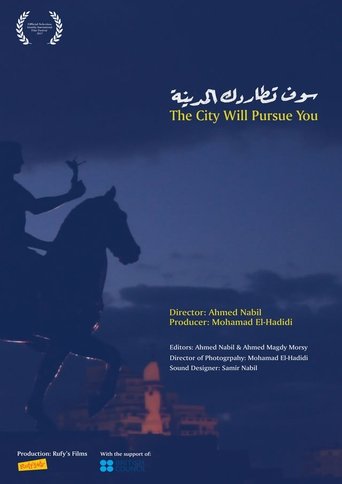
The City Will Pursue You 2017
Exploring the relationship between man and place by following the paths of six characters in contemporary Alexandria.
Exploring the relationship between man and place by following the paths of six characters in contemporary Alexandria.
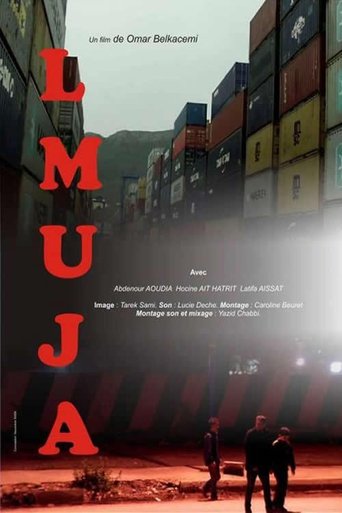
Omar Belkacemi’s The Wave tells the story of Algerian journalist and writer Redouane, who comes back from Europe to investigate a wave of suicides in his native country during the mass lay-offs of the late 1990s.
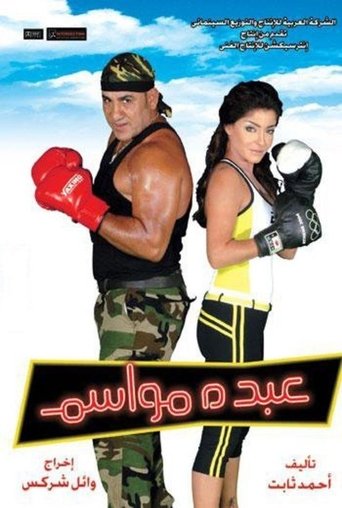
Abdo is a poor man living in a slum, who does not surrender to financial inablities and unemployment and always searches for "seasonal" jobs, hence his nickname. As a hobby, he practices boxing since he was a kid. When a sports researcher discovers Abdo's talent, she helps him to change his life forever.
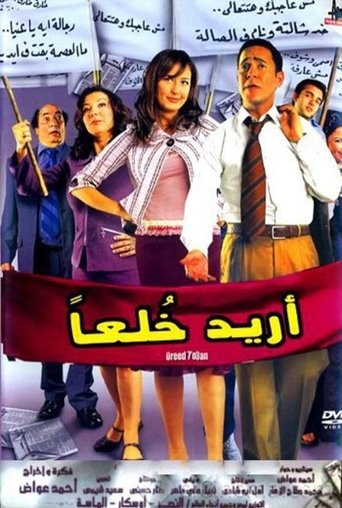
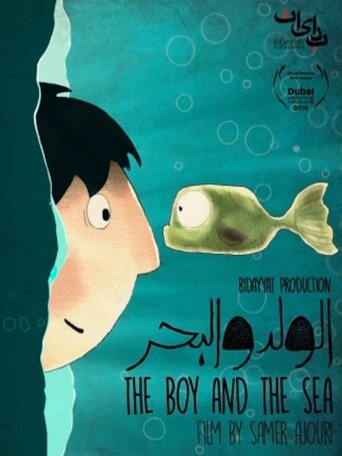
Once there was a boy who loved drawing the sea. One day, he dove into the sea, hoping to escape war. However, he was trapped between screens that had appropriated his story. The international media captured Alan Kurdi’s lifeless body on Turkey’s shores. And they never let go.

When a blind mother accidentally dies, her family tries to uncover her secret past during the traditional 3-day funeral.
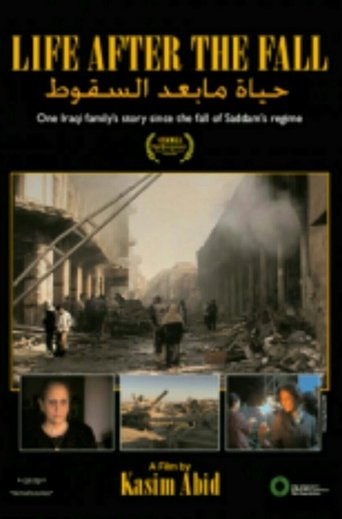
A unique insight into modern day Iraq, eloquently portrayed by Iraqi director Kasim Abid, who returned to his native country shortly after the fall of Saddam following an absence of 30 years. Shot over five years, this film shows the director reuniting with his family in 2003. They had survived dictatorship, war and sanctions and were ready for change.
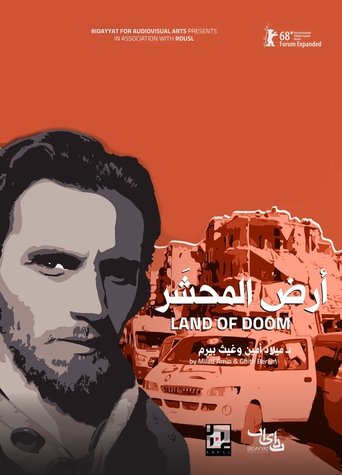
The film depicts the last days of eastern Aleppo’s siege. Just before its fall, Milad Amin, residing in Beirut, follows up with his friend Ghith, an activist and photographer, who like so many other civilians still remains in the besieged city. Following Ghith via his camera through the ruins of the city, we hear the two friends talk about people’s situations while waiting for their fate amidst the fighting parties. The film is an intimate and personal recording of civilians’ sufferings during this time of siege, hunger, and war – and a recording of both the relationship of activists brought together during the civil movements and of the geographic distances that separate them due to violence, bombing, and killing.

Bouchra Khalili is interested in the Mediterranean as a space of nomadism and itinerancy. Her work renders it in its subjective aspect by documenting the realities and narratives of migration, offering an alternative mapping based on the personal testimony of clandestine migrations. Mapping Journeys is a series of documentary works telling eight stories. Each presents a static shot of a map of the territory concerned, on which the traveller's hand sketches his or her journey. The accompanying voice has no face, as clandestinity requires: testimony to the invisibility of those at home nowhere and to the loss of identity this brings.
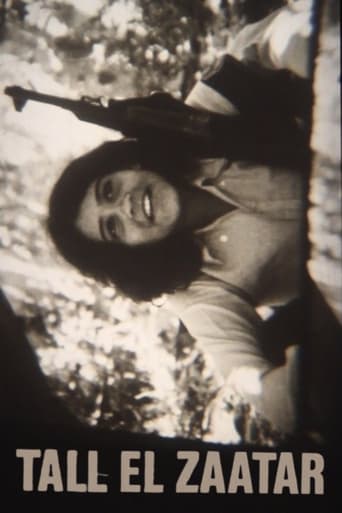
In the early summer of 1976, right-wing militias representing a coalition of ultra-nationalist and counter-revolutionary forces laid siege to the refugee camp of Tall al-Zaatar (“Hill of Thyme”) in Beirut. After holding out for months without food, water, or medical supplies, and under heavy artillery and sniper fire, the camp fell to the militias on 12 August. What followed was one of the worst atrocities of the civil war, with over 2,500 civilians massacred and the camp razed to the ground. Produced after the massacre, but featuring footage shot before and during the siege, Tall al-Zaatar remembers the camp and its community, recounting the long months of siege and resistance, and recalling the horrors of the massacre through the testimony of survivors.

A vision of a revolutionary journey... A fragment of an image... A vision of a culture of resistance in a difficult revolutionary process leading to reflection.
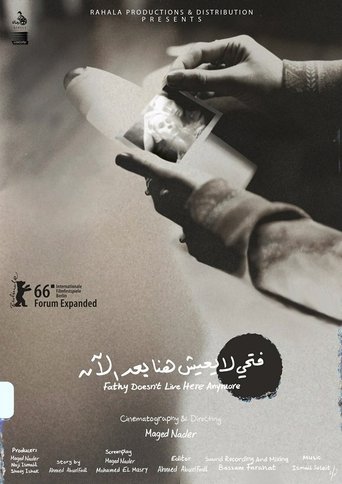
An old image of Bobby Anderson and Lev Olman from Ingmar Bergman's Sweedish film Persona adhering to a bottle of Shampoo tells a tale of pent-up dreams through an adventure to find answers in Cairo today.

A MEMORY IN KHAKI is a cry out for that which is embattled inside the spirits of individuals who lived under the oppressive Syrian regime. The auteur's personal narrative is interwoven with those of other Syrian characters who were forced, because of their political beliefs, to leave the country before or after the revolution. The film sheds light on years of silence, fear and terror, and it dives into the stories, which were behind the eruption of Syria’s society and the start of its revolution. It is a Syrian account, which, by laying out the past, tells the story of the future.
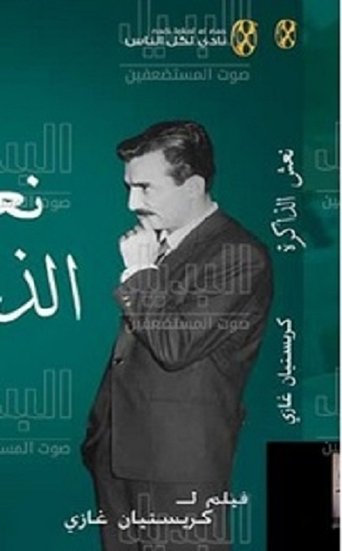
After an interruption of thirty years. Christian Ghazi resumes his cinematographic work with the documentary "Coffin of the Memory". The film mixes newly shot interviews with archive images. In the interviews it sheds light on two basic issues, solitude and economic situation. Through images and simple daily situations, Christian Ghazi draws a portrait of the Lebanese society, a society drowning in its contradictions and its search for an empty individualism and the superficiality of daily consumption, that of production, ideas, time and space.

The Children of Ibdaa: To Create Something Out of Nothing is a 30-minute documentary about a Palestinian children's dance troupe from Dheisheh refugee camp in the West Bank. The children use their performance to express the history, struggle, and aspirations of the Palestinian people, specifically the right to return to their homeland.
Sand and Blut shows the recent history of Iraq and Syria – from the perspective of those who have come to Europe in recent years. Whether it is the conquest of their own village by Syrian regime troops, the crimes perpetrated by various rebel groups or the destruction of their own parents' homes, war refugees can watch these tragedies in videos broadcast over the internet. The film consists exclusively of videos filmed by activists, fighters and civilians. The protagonists comment on the footage and speak openly about their experiences.
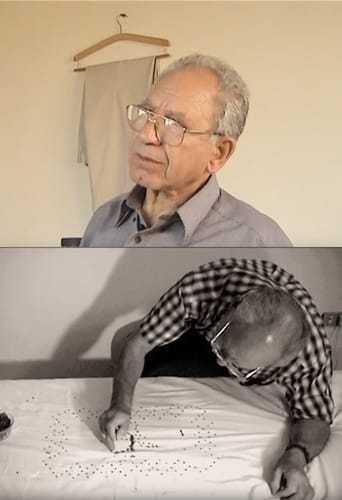
'Ibn al-'Amm' shed light on the eighteen years Riyad al-Turk spent as a political prisoner under Hafez al-Assad, before his son Bashar al-Assad imprisoned him for two years at the beginning of his reign.

The island of Socotra lies in the Indian Ocean between Arabia and Somalia. It was known in antiquity times for its Phoenix and Rukh birds. Frankincense and myrrh trees grow freely, as well as the dragon's blood tree proved by Egyptians, greeks and romans. The first commercial flights, at the start of this century marked, for almost a couple of decades, the end of Socotra's century of isolation. The current situation of civil war in Yemen has isolated again the remote island. In the film, a group of camel drivers heads to the secret interior of Socotra before the rainy season and they explain by the fire ancient stories of djinns and giant snakes.

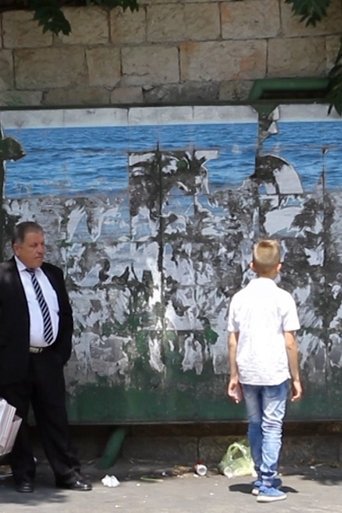
A bus stop in East Jerusalem where a billboard of the sea of Gaza provides a fading backdrop to the waiting passengers and passers by. Footage of passengers waiting at the bus stop is intercut with footage of the sea at Tantoura, a Palestinian village destroyed in 1948. The work ties together the fragmentary nature of Palestinian geography, loss and the act of waiting.

