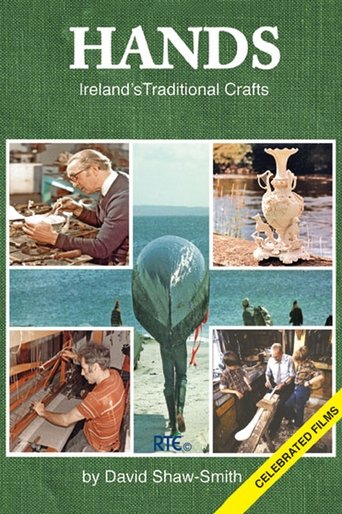
Hands 1978
A unique, multi-award winning series of thirty-seven documentries on Irish crafts capturing the final years of traditional rural and urban life in Ireland during the seventies and eighties.
A unique, multi-award winning series of thirty-seven documentries on Irish crafts capturing the final years of traditional rural and urban life in Ireland during the seventies and eighties.
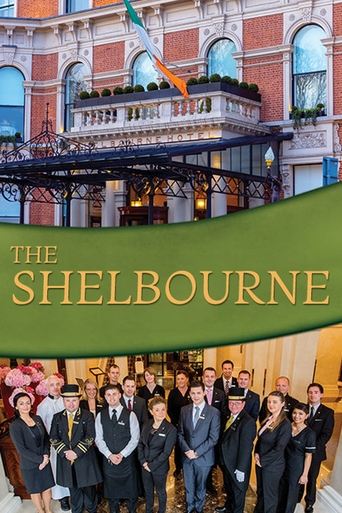
Follow the staff of Dublin's Shelbourne Hotel as they uphold exacting 5-star standards of service during the hotel's busiest season.

going behind the headlines to meet the patients, health workers and innovators at the cutting edge of Irish medical science.
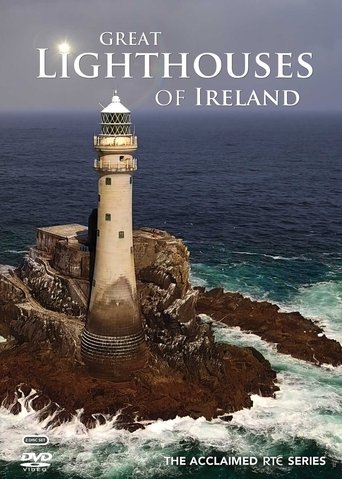
Great Lighthouses of Ireland tells the story of Ireland’s lighthouses and their continuing importance to the country’s survival. For all their romance and mystery, lighthouses remain a vital part of Ireland’s maritime infrastructure.
Tubridy Tonight was an Irish chat show hosted by Ryan Tubridy that aired for five series on RTÉ One between 2004 and 2009. The programme featured guest interviews, audience participation and live music from both a guest music group and the house band. Tubridy Tonight aired every Saturday night, except during the summer months, directly after the main evening news. The show's house musical act was Clint Velour and the Camembert Quartet. Tubridy Tonight was the first successful Saturday night chat show to be broadcast by RTÉ since the ending of Kenny Live in 1999. The programme had regular viewing figures of 450,000, however, the show also regularly fell victim to so-called "Saturday Night Syndrome", with The Late Late Show, broadcast on Friday nights, frequently featuring supposedly better guests. In 2009 Tubridy Tonight came to an end when RTÉ announced that Tubridy would succeed Pat Kenny as host of The Late Late Show for the following series.
Fáilte Towers was an RTÉ reality TV show that was broadcast as a one off during August 2008. The concept of the show involves thirteen celebrities running a hotel for sixteen days and nights in order to win money for their designated charities. The show format was not repeated nor was it exported or resold. The name is a play on the BBC sitcom Fawlty Towers: and the word Fáilte meaning "welcome" in Irish. The hotel used in the series is Bellingham Castle in Castlebellingham, County Louth. The show is presented by Aidan Power and Baz Ashmawy and the judges are Bibi Baskin, Dublin restaurateur Derry Clarke and Castle Leslie hotelier Sammy Leslie. Each night the public are invited to vote for the contestant they would like to stay in the show. At the end of the show one of the contestants must "check out". The presenters tell each of the contestants individually if they are "safe" and if so are ordered "back to work". The three remaining contestants are then marched into the Oliver Plunkett Suite to face the judges, one of whom sends one of the contestants back to work before all three cast their votes on which of the remaining two must leave the show. The evicted celebrity is then interviewed by the presenters, with best bits shown as well. Created by Adare Productions, it was available to watch online on the RTÉ Player for up to two weeks after being broadcast. John Creedon won on 17 August.
On the 50th anniversary of RTÉ TV and Radharc, the first independent production company to make programmes for Irish television, this 2-part series reveals the remarkable story and legacy of this maverick group of filmmaker priests who, between 1962 and 1996, produced over 400 documentaries in 75 countries on a range of social, political, and religious issues.

Maggie Molloy is on a mission to find Ireland's cheapest homes; she meets buyers with an open mind who are not afraid of a bit of work, and shows them properties they never thought were within their reach.

From Brat Summer to Kamala’s collapse and Sinn Féin scandals to Simon Harris’ viral disaster, everything worth laughing about features in this essential look back on 2024.
'Stardust' is a 2006 miniseries produced for RTÉ by Brackside Merlin Films. The first episode surrounds the night a fire broke out at the Stardust Disco in North Dublin on 13 February 1981, in which 48 people died. The second episode depicts the search for answers and justice by families and survivors. It was screened over two nights on the 25th anniversary of the fire in 2006.
Ray Goggins takes well-known Irish faces from the worlds of politics, music and sport on outdoor expeditions through some of the most remote and treacherous environments on Earth.
Joe remains one of Ireland's most iconic entertainers. The only Irish singer to register chart hits over five successive decades, Joe evolved from being a rural Rocker in the early sixties to become Ireland's first international pop star.
One of the important premises of the show is the quality of the singing talent. Four coaches, themselves popular performing artists, train the talents in their group and occasionally perform with them. Talents are selected in blind auditions, where the coaches cannot see, but only hear the auditioner.
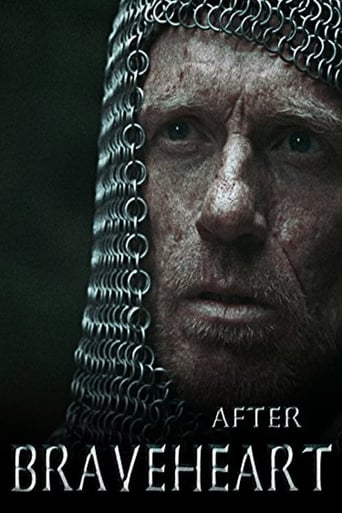
A docudrama telling the story of the events that unfolded when a Scottish army led by Robert Bruce tried to drive the English out of Ireland 700 years ago.
For over forty years the existence of a Garda heavy Gang has been denied. This ground-breaking three-part true-crime series looks at three of the most notorious miscarriages of justice cases from the 1970s and 1980 and draws links between them.
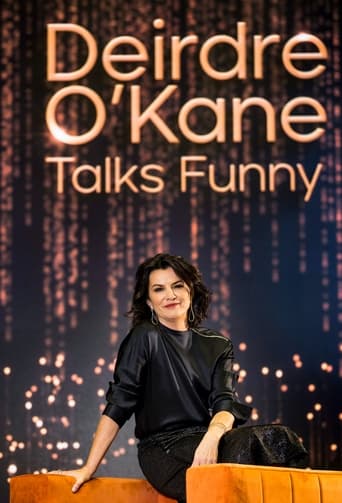
In a brand, new entertainment show comedian Deirdre O’Kane will be joined by some of the country’s most entertaining people to find out what makes them tick and where the funny comes from.
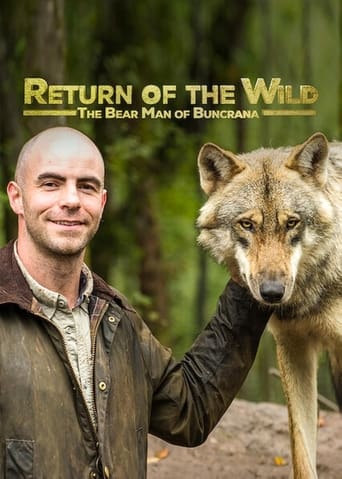
In a small pocket of Donegal woodland, Killian McLaughlin is attempting to turn back the hands of time and return all of Ireland's majestic native animals to their ancestral home, where they used to live in its ancient forests.
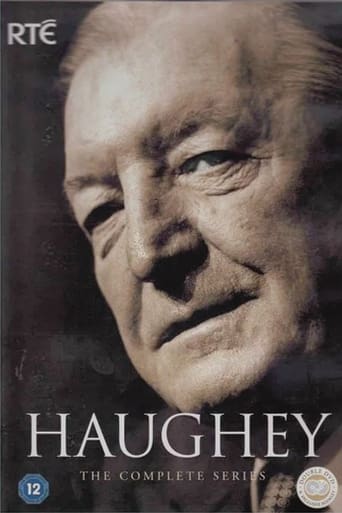
The story of the Irish politician Charles Haughey, told by his family as well as those who worked most closely with him in politics and in the private business circles from which his most controversial payments were drawn.
The Year of the French was a television serial, directed by Michael Garvey and based on the novel by Thomas Flanagan, which was first broadcast in 1982. It was a co-production by the Irish broadcaster RTÉ, the British television company Channel Four and the French broadcaster FR3, now France 3. The first episode was shown on RTÉ television on 18 November 1982. In France the programme was known as L'année des Français and was first broadcast on 23 May 1983. The title refers to the year 1798 when French troops sailed to Ireland to support Irish rebels against the British forces under Lord Cornwallis. To accompany the series Paddy Moloney composed and arranged music which was performed by The Chieftains with the RTÉ Concert Orchestra, conducted by Proinnsias O'Duinn, and with Ruairi Somers on bagpipes. The album of this music was released in 1983.
A powerful fictional drama, made in the style of a documentary, which explores some of the possible scenarios in the event of an accident occurring in the nuclear reprocessing plant, Sellafield.
