Rok 1969 - 261
Akbar in Cineland 1969
Ahmad Akbar is a cineast with big projects. He wants to launch a cinema place for Black filmmakers, somewhere in the desert, far from LA and Hollywood. Cineland. That's the name of the place, man. Cineland! Akbar makes the American Dream too - a Black version of the Amercian Dream. The White version was fragile. The Black version is desperate.
Hog Calling Blues 1969
Two radicals joyfully dismember a dead pig.
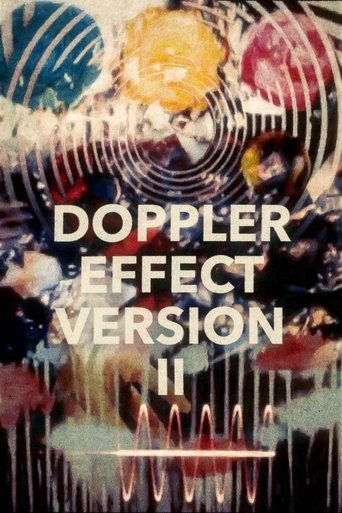
Doppler Effect Version II 1969
A sequel of his previous 1967 homonymous experiment, Doppler Effect II moves one step forward in the mission of organising seemingly random stock footage along a rhythmical axis. By using found footage of diverse origin - political announcements, animal life, porn - and intertwining it with images recorded by Agnew himself-- cityscapes, abstract light essays-- the film abandons any attempt of evoking meaning of any sort and focuses on a strictly formal exercise centred on time intervals and micro-relations between small sets of images. The soundtrack, recorded by Duane Hitchings (known for his collaborations with Miles Davis and Hendrix, but also for his Flashdance OST) on a Moog synth, is an engaging exercise in abstract sonic dynamics and an essential part of the Doppler experiment in that it not only provides different aural settings for the diverse footage presented throughout the film, but also aptly sets the pace for the fast succession of synched images.

Aliena Kadabra 1969
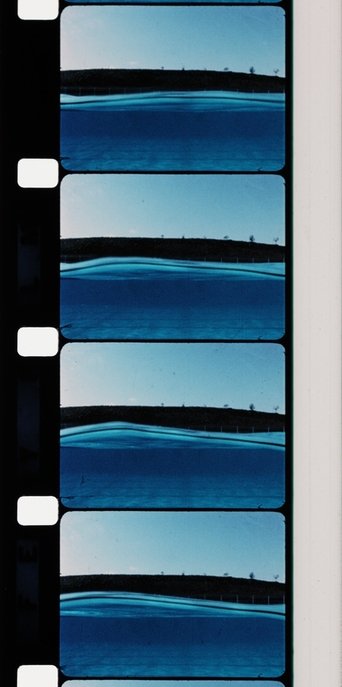
Group II: Water/Contemplating 1969
GROUP II: WATER (1969, 4 min, 16mm, silent) Two images of a lapping water level, used at the beginning and end of the film, counterpointing the middle section consisting of flying through clouds and mist. CONTEMPLATING (1969, 12 min, 16mm, silent) The body fluids reacting in unison with the ocean waters.

Hieroglyphics 1969
1969 Czech experimental short by Petr Skala
My Father Is on the Tree 1969
A young man is shunned by his friends after he starts an affair with a dancer.
On voit bien qu'c'est pas toi 1969
Prepared and shot with a group of young workers, schoolchildren, the unemployed, etc., in a neighborhood of Le Havre, On voit bien qu'c'est pas toi inaugurates a series of "collective" films, in a neighborhood of Le Havre, On voit bien qu'c'est pas toi inaugurates a series of "collective" films, inspired by the impetus of 1968, which helped to make our filmmaking activity (somewhat) better known. The young people chose the documentary form to show their lives as they wanted them to be seen, that is, on a daily basis, in their premises, at work, on the town, with their families, on wild camping trips... In this way, they drew up a precise and detailed self-portrait of a milieu hitherto almost totally absent from the screens.
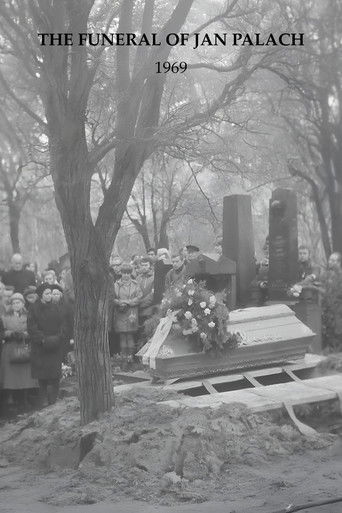
The Funeral of Jan Palach 1969
An anonymous short documentary recording the funeral of Czechoslovak student Jan Palach, who died after setting himself on fire in protest against the Soviet occupation of Czechoslovakia. Composed of approximately ten minutes of uninterrupted observational footage, the film documents the silent procession of mourners who gathered in Prague in January 1969, transforming the funeral into a collective act of public dissent. The film contains no narration or commentary and circulated clandestinely after being smuggled out of the country. (Note: This anonymously produced, uncredited film circulated independently as a silent protest document and is distinct from Raymond Depardon’s authored documentary "Jan Palach" (1969), which was made separately by a foreign filmmaker.)
Santa's Fantasy Fair 1969
The Magical World of K. Gordon Murray Presents All of the Famous FAIRY TALE CHARACTERS
Faderen 1969
Swedish Play based on August Strindberg
Mothman 1969
Directed by Jeff Keen.
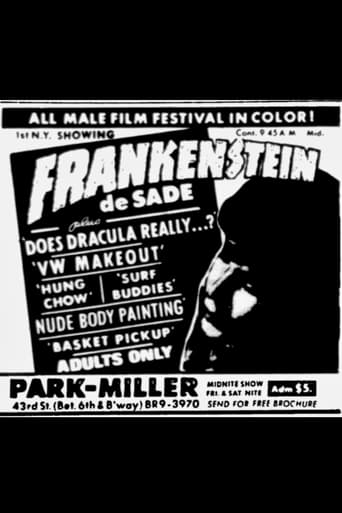
Frankenstein de Sade 1969
Dr. Frankenstein and his hunchbacked assistant create a well-endowed monster.
Art Hodes: Jazz Alley - Volume 2 1969
Renowned jazz pianist Art Hodes hosts this hand-clapping, foot-stomping special on Chicago style jazz, featuring electric performances from George Brunis, Jimmy Granato, Nap Trottier and Bud Freeman.
The Other Face of the Island 1969
Produced by TASFILM and the Department of Film Production Tasmania and featuring clothing designs by Pru Acton. Shows in a bright and visual way the main products of secondary industry in Tasmania at the time - wool and textiles, timbers, food, fashion and metal products.
The 4th Infantry Division 1969
The most technologically advanced combat division in the battle of Dak and more.
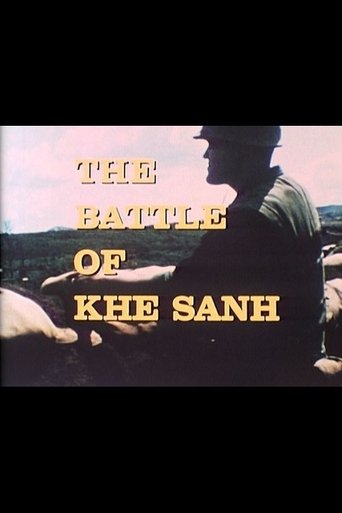
The Battle Of Khe Sanh 1969
A film recounting Khe Sanh, often considered the most important battle of the war.
Bhale Rangadu 1969
Bollywood 1969
Sree Krishna Devarya 1969
Classic Bollywood film with music from T G Lingappa and more.
