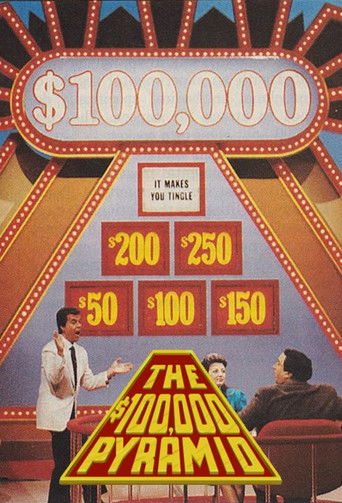
The $100,000 Pyramid 1985
Two contestants are paired with celebrities in this remake of the word-association game show.
Two contestants are paired with celebrities in this remake of the word-association game show.

Wonderbug is a segment of the first and second season of the American television series The Krofft Supershow, from 1976 to 1978. It was shot in Hollywood, Los Angeles, California. The show was rerun as part of ABC's Sunday morning series.
The Better Sex is a television game show in the United States where men competed against women in a "battle of the sexes" format. The Mark Goodson-Bill Todman production ran on ABC from July 18, 1977 to January 13, 1978. The show had two hosts, one male and one female; each one acted as a leader to the team of the appropriate sex. The male host was country music singer Bill Anderson, and the female host was Sarah Purcell. Gene Wood was the announcer.
An exploration of how science, technology, and new thoughts challenging our social systems are changing the world before our eyes.
Wanna Bet? is an American game show which aired on ABC. It featured four celebrities making wagers on whether ordinary Americans will be able to complete outrageous stunts. An episode of the show began with four celebrities being given $25,000 to wager on the success or failure of ordinary Americans completing outrageous stunts. Show hosts Ant & Dec introduced a stunt performer and the stunt they claim they will be able to complete, and the celebrities then guess whether the performer will successfully complete the stunt or if they will fail to complete the stunt. The celebrities also lock in the amount of money they'd like to wager on performer's ability to complete the stunt, but the exact amount of the wager is not revealed to the viewing audience. The performer then attempts the stunt, and afterward the celebrities' wagers are revealed and the amount of money earned is totalled. The celebrity with the most money totalled at the end of an episode wins that amount for their favorite charity. Due to poor ratings, the show was cancelled after one season.
Day One is a television news magazine produced by ABC News from 1993 to 1995, hosted by Forrest Sawyer and Diane Sawyer. One of its stories, titled "Smoke Screen", was an important report on the cigarette industry's manipulation of nicotine during the manufacturing process. The piece won a George Polk award, but also led to a lawsuit from Philip Morris that ended with a settlement and apology from ABC. The series also won a Peabody Award for its 1993 investigation titled "Scarred for Life" on female genital cutting.
ABC Funfit is a series of short American television segments that were broadcast in 1985 and aired twice a day during ABC's Saturday morning cartoon programs. The segments were five minutes long and presented exercises and information to promote children's physical fitness. Olympic gold medalist Mary Lou Retton hosted the series, assisted by the "Funfit Kids". The show was choreographed by Lynne Taylor-Corbett. The LP ABC Funfit featuring Mary Lou Retton was released in 1985.
Have Faith was a short-lived ABC television sitcom that ran for 7 episodes in 1989. The show was about a Catholic parish in a less-than-desirable Chicago neighborhood. In spite of good ratings, ABC decided against commissioning a full season.
Saga of Western Man is a historically themed anthology series television series that aired on ABC Television from 1963 to 1969. Each episode focused on a particular year, person, or incident that producer John H. Secondari felt significantly influenced the progress of Western civilization.
Foul-Ups, Bleeps & Blunders is the title of a comedy series that aired on ABC for two short seasons in the mid-1980s. The series is hosted by Steve Lawrence and Don Rickles. Produced as a response to NBC's TV's Bloopers & Practical Jokes, this series similarly focused on outtakes from popular television programs and movies. The series also included a Candid Camera-like segment showing people caught in amusing situations by hidden cameras. The word blooper was not allowed to be uttered, with the term "foul-up" substituted where applicable. The series debuted on January 10, 1984 as a mid-season replacement series, and returned at the start of the 1984-85 season, however after October 1984 the show ceased to be a weekly offering on ABC and instead aired at various times as filler for the next few months before resuming weekly broadcast in the spring, after which it was cancelled.
This Might Hurt is a medical comedy picked up by ABC, however the pilot episode didn't air. It was scheduled to air in 2009. The show centers on a multi-specialty private practice, in which a pediatrician, an internist and an OB-GYN all operate under the same roof. The idea steamed from the amount of time Winer spent in his own doctor's office. He claims, "One of the funniest things in the world to me is pain." The show is unscripted, with only main plot points set. The actors improvise the dialogue to get to those points. The pilot has been completed and is currently being test-marketed.

What's Going On? is an American game show that aired for five weeks beginning on November 28, 1954. The show aired on ABC and was a Mark Goodson-Bill Todman production. It was sponsored by Revlon, and originated live from New York City. Lee Bowman served as host of the show. There were six celebrities involved in the game: Hy Gardner, Audrey Meadows, Gene Raymond, Kitty Carlisle, Cliff Norton, and Susan Oakland.
A look at some of the most compelling criminal cases in recent history through the lens of interrogations, unveiling the tricks of the trade detectives use to coax confessions from suspects.

A slightly cynical parody of Candid Camera where hidden cameras capture unsuspecting average people placed in awkward and uncomfortable scenarios, hosted by Bert Convy.
Kids Are People Too was a television series that ran on Sunday mornings from 1978 to 1982 on ABC. The series was a variety/news-magazine show oriented towards kids with the intention of recognizing them as people. During its four-year run, the series was nominated for five Emmy Awards and won the 1978 Emmy for Outstanding Children's Entertainment Series. The series included celebrity interviews, cartoons, music, and other information that appealed to kids.
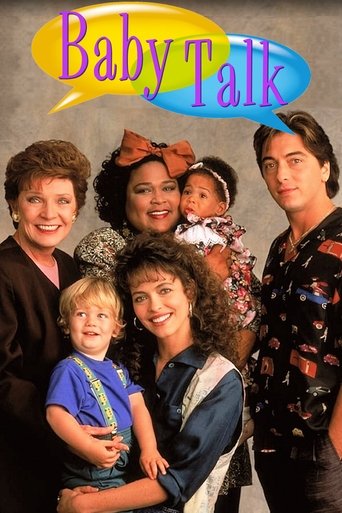
Baby Talk is an American sitcom that aired on ABC from March 8, 1991 until May 8, 1992 as part of ABC's TGIF lineup. The show was loosely based on the popular Look Who's Talking movies and was adapted for television by Ed Weinberger. Amy Heckerling created original characters for the series while using key creative and script elements from Look Who's Talking, which she had written and directed. Weinberger served as executive producer during the first season, and was replaced by Saul Turteltaub and Bernie Orenstein in the second season.
ABC Barn Dance is an early country and Western music show on American television, a spin-off of the popular radio program National Barn Dance. It also included some folk music. The show aired on Monday nights from February 21–November 14, 1949 on ABC-TV. Originally broadcast from 8:30–9 p.m. Eastern Time, it was moved to 9 p.m. and then to 9:30 p.m. Filmed at the Eighth Street Theater in Chicago, Illinois, the weekly variety show was hosted by Hal O'Halloran and Jack Stillwell. Several of the radio program's performers appeared, including the Sage Riders, Lulu Belle and Scotty, Cousin Tifford, Bob Atcher, the DeZurik Sisters and Holly Swanson.
In The Glass House, 14 contestants live and compete for a quarter-million dollars in a totally wired, state-of-the-art house, playing not just against each other, but also playing to win over the viewing audience each week. Both online and through their social networks, viewers will be encouraged to support and follow the contestants they like, their votes helping to determine which contestants are sent home and also which eliminated players will earn the chance to return to "The Glass House" to compete each week.
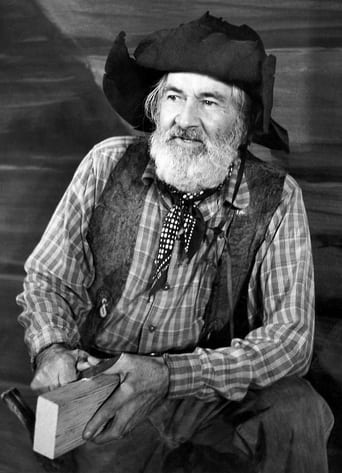
The Gabby Hayes Show is a general purpose western television series in which the film star and Roy Rogers confidant, George "Gabby" Hayes, narrated each episode, showed clips from old westerns, or told tall tales for a primarily children's audience.
The Night They Saved Christmas is a 1984 RHI Entertainment Christmas film, executive produced by Robert Halmi, Senior and Junior; and originally developed for ABC. The film is about an oil company dynamiting in the North Pole in search of an oil field, unaware that they are endangering Santa Claus. The movie stars Jaclyn Smith and Art Carney.
