
The Bandit Makes Good 1908
A sheriff apprehends a bank robber and recovers the money. On the way back to town, the sheriff loses the recovered money in a crooked card game. The bank robber helps him recover it.
A sheriff apprehends a bank robber and recovers the money. On the way back to town, the sheriff loses the recovered money in a crooked card game. The bank robber helps him recover it.
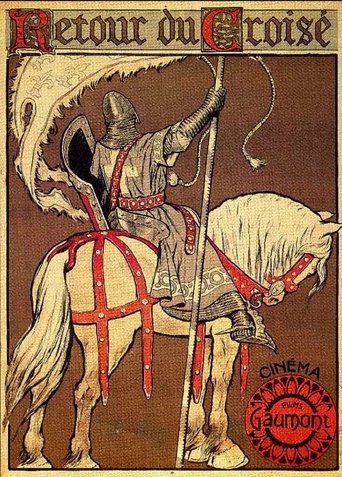
A French silent film directed by Louis Feuillade.
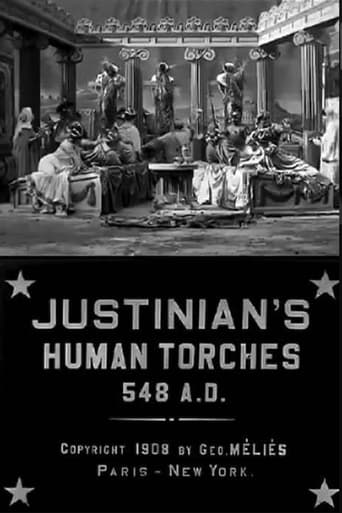
During an orgy, Emperor Justinian orders three people to be torched alive.
About an Acadian girl named Evangeline and her search for her lost love Gabriel, set during the time of the Expulsion of the Acadians, the forced removal by the British of the Acadian people from the present day Canadian Maritime provinces of Nova Scotia, New Brunswick, and Prince Edward Island - parts of an area also known as Acadia.
Vitagraph production of Shakespeare's Richard III.
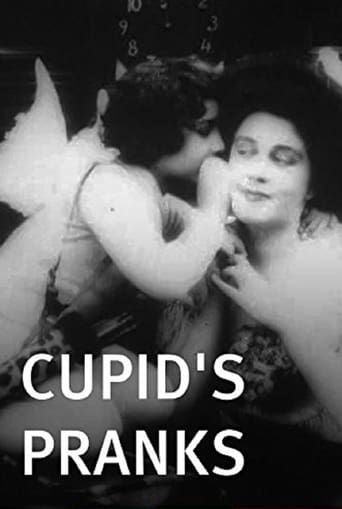
After receiving a scolding for falling asleep on the job, Cupid is sent out in search of potential lovers to unite. While flying over a city, he finds a ballroom dance and identifies a likely couple. He is successful in getting them to meet, but many obstacles still stand in the way of Cupid achieving his goal for them.
A wealthy old alchemist and inventor has just perfected a motion picture camera with which he hopes to revolutionize the art of animated photography, and our story opens with the old man in his library studying out the plans of his invention. A telegram calls him hurriedly away. He replaces the papers in his safe, but, in his haste, neglects to lock it, which oversight is pardonable, as his wife and daughter are in the room at the time. The daughter's hand is sought in marriage by a worthy young man, whose attentions are looked upon with favor by herself and her parents. But he has a rival in the person of a contemptible villain, whose motives are purely mercenary, reasoning that this new invention will greatly enhance the father's already ample wealth.

In 1908, Director/Producer Shozo Makino (father of Japanese cinema) directed and produced the first dramatic film in Kyoto. “Honnô-ji Gassen” was shot at Shinnyo-Do Temple. Considered a lost film.
The central figure is an old miser, a Harpagon of sorts, who, like Frosine, stashes his ill-gotten money in a secret cellar. While the miser is at the bank, exchanging stolen notes for gold coin, a couple of thugs witness the transaction and see their opportunity-- It seems avarice grips the hearts of all those who'd possess the bag.
Nell, the boss's daughter, uses Sherlock Holmes' detective work, to choose between the two suitors at her dad's broker's office.
Hulda is a maiden fair to look upon. Her artless rustic simplicity, rivaling Hebe's gorgeous radiance, phlogisticates the susceptible hearts of the village swains. But alas, Hulda was a fickle maid, and seemed to have as many phases as the moon, with a smile for all and a frown for none. Her capriciousness was the cause of much unrest, both for herself and her lovers, for when her parents had departed for a visit, leaving her in charge of the kitchen, she received most effusively Jocular Jake, the village cut-up, only to hide him above stairs at the entrance of Previous-Hearted Pat, the hostler, who in turn is hidden in the Dutch oven at the approach of Handy Hank, the chore boy.

A chef comes into the kitchen and throws a lot of rags on the floor: he then casts a spell over them, and immediately they take the form of human beings, and dance a wild saraband around the place. After performing many unique tricks they disappear into space, and are replaced by a group of knives and forks, pans, kettles and spoons. (Moving Picture World)
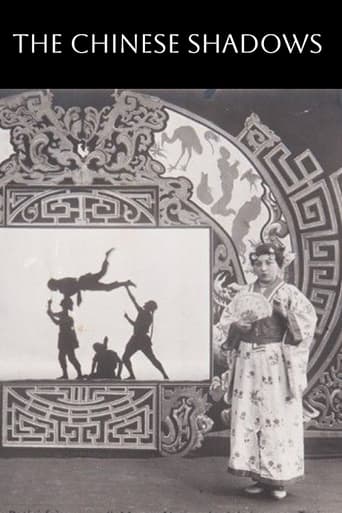
At the beginning of this film two women come onstage dressed in Oriental fashion. They present a shadow play theatre.
A father arrives home, greets his wife and daughter, and then goes inside with his wife. Though they are only inside for a brief time, their daughter wanders off, attracted by the music from a pair of gypsies performing in the street. When the gypsies move on, they take the young girl with her. As soon as the parents realize that their daughter is gone, they begin a frantic search, assisted by the family's loyal dog.
This picture is an illustration of the story of Beatrice Cenci, the young woman who planned the murder of her guardian, in Rome, in the year of 1599.
1908 French short silent film directed by Georges Méliès, which is currently presumed lost.
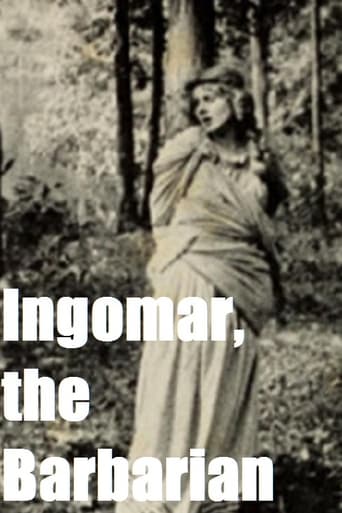
Mack Sennett appears as a barbarian in this film produced by the Biograph Company.
Maurice Chevalier simply can't stop dancing.
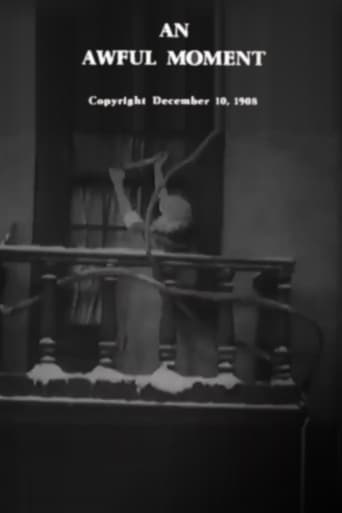
After a judge (Harry Solter) does his job and sentences a man, a gypsy woman (Marion Leonard) erupts in vehement protests and has to be taken forcefully out of the courtroom. Later the gypsy follows the judge to his home and plots a vicious revenge on his wife (Florence Lawrence).
