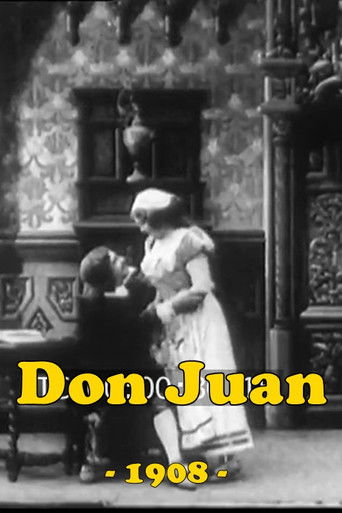
Don Juan 1908
Pathé's version of José Zorrilla's play, Don Juan Tenorio.
Pathé's version of José Zorrilla's play, Don Juan Tenorio.

Vitagraph production of Shakespeare's Richard III.
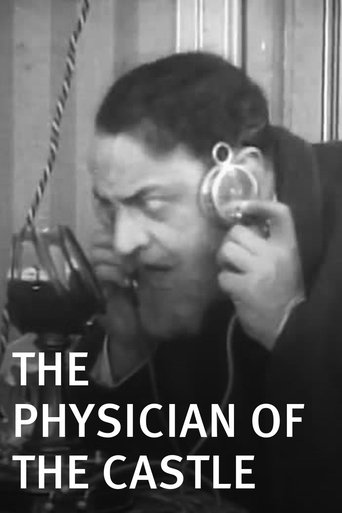
Two criminals lure a doctor away from his home with a phony note about a child's illness. After the doctor rushes off, the criminals break into his house and menace his wife and child. By the time the doctor realizes what has happened, his family faces a desperate situation.
A hunter lost in the Northern woods is rescued by a trapper and his wife. He makes advances to the wife, is rejected, and tries to kill the trapper.
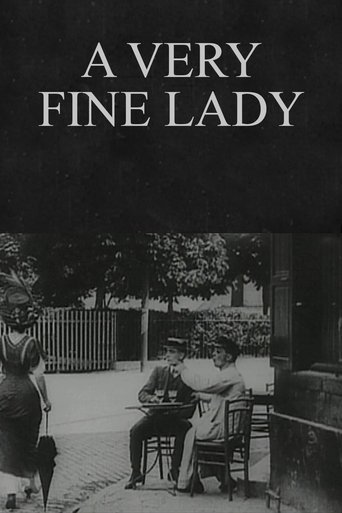
Renée Carl stars in this lively slapstick silent short as a beautiful lady who causes distractions and accidents among the male population as she walks though the streets of Paris.
A poorly compensated bank clerk is, we may say, to that trying position of "Tantalus" in sight of tons of money but not a dollar of his own. This became more torturing as time went on, until at last, when the bank was arranging to ship a large quantity of cash to the West to relieve the recent money stringency, he made up his mind to heed the solicitude of that specter which had haunted him. Listening to the instructions given to the bank's messenger as to the shipment of the funds, he hustles off to a gang of crooks in whose company he had fallen.
A father arrives home, greets his wife and daughter, and then goes inside with his wife. Though they are only inside for a brief time, their daughter wanders off, attracted by the music from a pair of gypsies performing in the street. When the gypsies move on, they take the young girl with her. As soon as the parents realize that their daughter is gone, they begin a frantic search, assisted by the family's loyal dog.
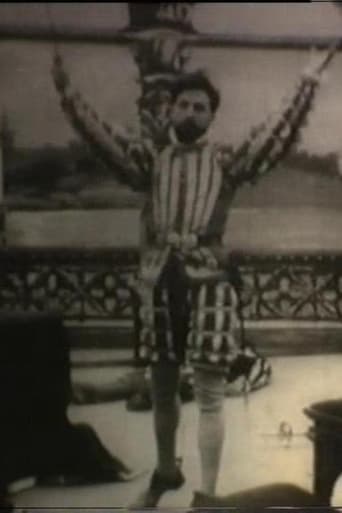
The silent Spanish version of the story of Don Juan Tenorio.
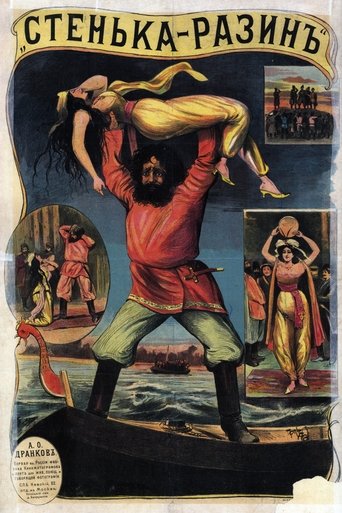
Stenka Razin is the leader of a group of outlaws who live a life of revelry and carousing along the Volga River and in the nearby forests. When Razin becomes distracted by a captured foreign princess and starts to dote on her, his men are displeased, feeling that he is neglecting them and their usual activities. Soon they come up with a plot, in the hopes of turning Razin against the princess.
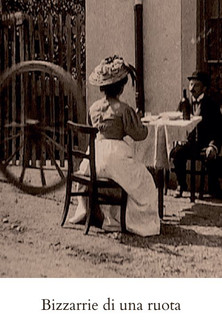
During an effort to repair a horse carriage a boy grabs the wheel and gives it a push down the hill and towards the city. The wheel turns and turns and causes one accident after the other until everybody runs after it to stop the mayhem. Bizzarrie di una ruota is a slapstick film in love with an object out of control and the confusion it can cause, over and over again in endless variations.
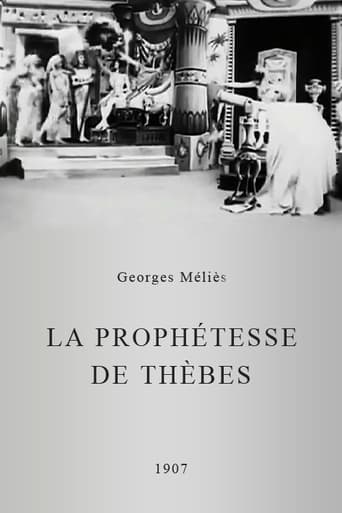
Partially lost film. One of the kings of ancient Thebes enters the abode of an astrologer and demands that he be told his future. The former utterly refuses to forecast the coming events of his sovereign, even under the pain of death; but he brings forth a priestess who possesses the powers of divination. This priestess is introduced in a wonderful way: a throne is brought forward, and then a box from which the pieces of a statue are removed and piled up in regular order; the statue suddenly becomes animated. The king implores the latter to foretell his life. She commands him to look through a telescope toward the side of the room. A vision appears. (Moving Picture World)
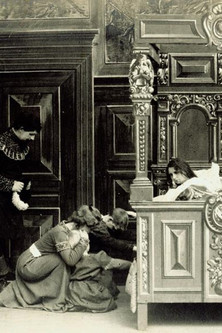
When his wife dies, knight Svend Dyring gets married to noble Mrs. Guldborg. Little does the good knight know that Mrs. Guldborg is in fact pure evil, and that she and her daughter Ragnhild torment the knight’s children when he’s not home. One day, when Svend Dyring is injured in a hunting accident, the eldest daughter Regitze takes upon herself to take care of her father. Mrs. Guldborg looks on in envy, while the relationship between the father and his daughter is strengthened. She’s secretly planning how to get the daughter off the scene. (stumfilm.dk)
Hulda is a maiden fair to look upon. Her artless rustic simplicity, rivaling Hebe's gorgeous radiance, phlogisticates the susceptible hearts of the village swains. But alas, Hulda was a fickle maid, and seemed to have as many phases as the moon, with a smile for all and a frown for none. Her capriciousness was the cause of much unrest, both for herself and her lovers, for when her parents had departed for a visit, leaving her in charge of the kitchen, she received most effusively Jocular Jake, the village cut-up, only to hide him above stairs at the entrance of Previous-Hearted Pat, the hostler, who in turn is hidden in the Dutch oven at the approach of Handy Hank, the chore boy.
Mack Sennett appears as a man in the bar and in the wedding party in this film produced by the Biograph Company.
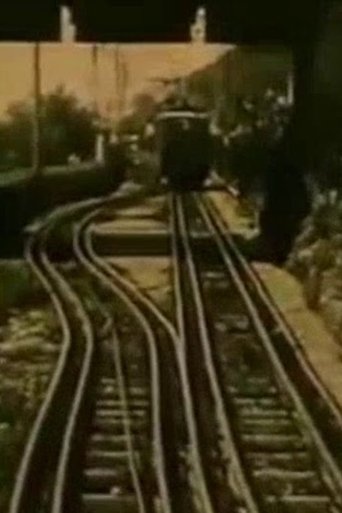
Here's a travelogue that takes its audience to Palermo and shows them the big sights, and the hidden ones. It ends with a slow but impressive panorama shot of the skyline.
A man steals a sheep and is chased by the shepherds and the police.
Leah, a Jewish woman fleeing persecution in Hungary, arrives in the town and captures the heart of Rudolf, the local magistrate's son. They plan to marry and escape to America for a better life, agreeing to meet at a cross in the forest. However, the schoolmaster, Nathan, an apostate Jew who harbors his own secrets, overhears their plan. He inflames the villagers' fears and tricks Rudolf into believing Leah will betray him for gold, leading Rudolf to renounce her. A heartbroken Leah, now forsaken, bestows a curse upon Rudolf and his future children before retreating into exile.
Two hunters set out on safari with their African guide. They observe zebras, an ostrich, and a hippopotamus, capture a monkey, and camp for the night. After a lion kills their goat and horse, they shoot it by the water’s edge and later kill a second. The animals are skinned, and the hunters relax with cigarettes beside their trophies. (Note: Produced by Nordisk Film in 1907, Løvejagten gained notoriety because founder Ole Olsen purchased lions from Copenhagen Zoo, released them on an island, and filmed their killing. Supplemented with zoo footage to simulate Africa, the film caused public outrage yet drew huge audiences, establishing Nordisk’s reputation worldwide.)
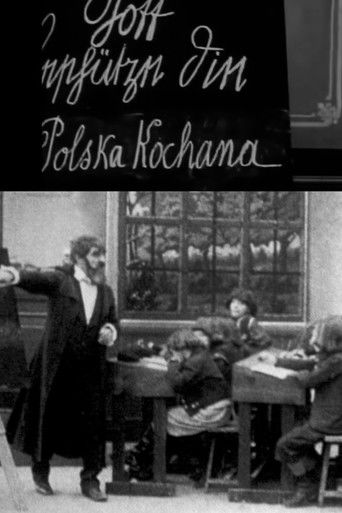
Film about politically motivated violence in the Kingdom of Prussia.
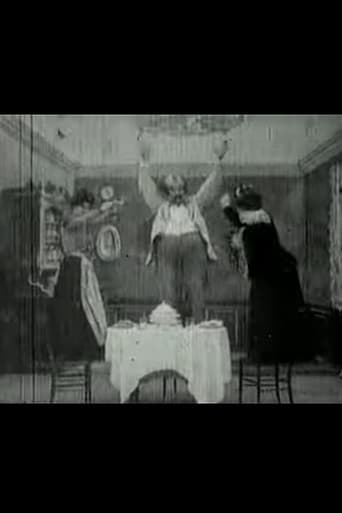
A family tries to eat dinner, but the table vanishes and reappears, changes shape and location, all in the usual manner laid down by Melies, but here copied by Segundo de Chomón.
