
Empleada se necesita 1925
A 1925 film.
A 1925 film.

Schools, businesses and other locations in Kansas City, MO; Boley, OK; Tulsa, OK; Taft, OK; Muskogee, OK.
Ministers and various other people in Nashville, TN; Beaumont,TX.
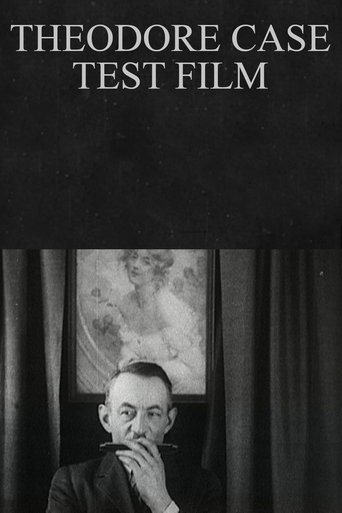
“An engineering graduate of Yale University, Theodore Case assisted Lee de Forest in developing sound-on-film called “Phonofilm.” Falling out with de Forest, Case and associate E.I. Sponable then built a laboratory behind Case’s family home in Auburn, New York, where they developed their own optical sound film system. Sold to William Fox, it was commercially exploited as “Movietone” with sensational results.” —David Shepard
Directed by N. Scerbakov.
"The Pathe Sound Magazine presents An All-British Talking Cartoon - Little Bruin - The Talking Teddie." "Episode one --" A broken down building stands on a hill with a sign "Misery Farm" outside. The cartoon is drawn by Joe Noble.
An Aesop's Fables with flying fish and flying hot dogs....
Sid Griffiths the cartoon artist opens a window in his studio. He sits down at his drawing board and sees that Jerry is cold. He is warming his hands beside a little heater. He shivers and says "Shud thad window - I've got ad awful cold!!" Sid says "Fresh air's healthy." Jerry looks cross and paces back and forth waving his arms about trying to warm himself up. He pulls out a handkerchief and says: "Look oud! I'b going to sdeeze!!" Sid tries to move out of the way. Jerry sneezes. "Here id is - !" says Jerry. "A - A - A - TCHOO" - as he sneezes he falls forward.
Hands pick it up and a shape is cut out of the paper very quickly. When it is turned around it reveals itself to be Jerry. He blinks and yawns then gets angry at the hand that is holding him. The animators other hand pulls his tail. Jerry yelps in pain. He says (in a speech bubble) "I've had enough of this dog's life! I'm going to commit suicide!!"
C/U of a piece of paper. The animators' hands are in shot as he pours a drop of ink onto the paper. This ink spot moves and grows until it forms our friend Jerry in silhouette. He scratches his head and says: "If I had a banjo now I'd look a real nigger minstrel."
We see the animator's hand as he draws Jerry (Sid Griffiths?). Jerry is cycling along but the artist hasn't drawn him a bike. Speech bubble comes out: "- Mr. Artist! What about the bike?" A bike is drawn in. Jerry carries on cycling. There is moving landscape behind him. Suddenly a fire engine starts bringing up the rear. Jerry cycles along looking scared. The fire engine chases Jerry.
A silent amateur film with a runtime of 1 minute and 28 seconds (DCP from 9.5mm reversal, 16 fps), presented without intertitles. Preserved by Fondazione Home Movies – Archivio Nazionale del Film di Famiglia, Bologna, the film documents a game of tug-of-war on the beach at Lavagna during the summer of 1925. A group of young participants, dressed in bathing suits, engage in the activity while a dog observes from the sidelines. The footage is notable for its stable tripod-based composition and the use of horizontal camera movement to follow the action. At age 16, Lavello demonstrates early technical proficiency and an interest in capturing spontaneous social interaction. As noted by Michele Manzolini in the 2025 Pordenone Silent Film Festival catalogue, the film contributes to a broader visual record of leisure and informal play within early amateur cinema.
A commercial promoting products from the Koh-i-noor company, whose factory based in the Czech town of České Budějovice produces Hardtmuth pencils. A pencil draws a man and a lion, subsequently adding iron bars around the animal. The man is fighting with the lion. The cat first devours the man and then spits him out. An elephant appears - the image known from the Koh-i-noor erasing rubber - and performs some acrobatics. The rubber with the elephant erases the picture of the lion and the pencil scribbles over the man's figure.
Doing even better than Daniel, American girls dance in the lion's cage.

A defining cultural phenomenon of the Roaring Twenties, the Charleston gained widespread popularity after its appearance in October 1923 in the African American Broadway revue Runnin’ Wild. Newsreels captured the dance’s irresistible rise over the course of the decade. Fox News, Vol. 6, Release 74, issued on 13 June 1925, featured Charleston footage filmed at the Fox studio in New York and at Starlight Park, a prominent amusement park in the Bronx. In the studio footage the Charleston was demonstrated by a group of dancers sent by none other than Texas Guinan, the famed queen of New York speakeasies – among them was a very young Ruby Keeler, who, just a few years later, would marry Al Jolson and go on to become a successful actress. The surviving set of outtakes showcases a performance by an unidentified dancer embodying the Charleston’s spirit of freedom, fun, and youthful rebellion that so captivated audiences of the era.

This film, whose German title is a gender-flipped play on the proverbial phrase “clothes make the man”, shows how the batik dyeing technique is used to create vividly patterned garments in a small retail shop in New York. Different items of clothing are then modelled for the cameras to the, at times, patronising and sexist commentary provided in the intertitles.
The Funeral of Mr. C.R. Das, the first Indian mayor of the city of Calcutta. Prod.: Gaumont (Journal Actualité Gaumont) DCP. D.: 1’. Bn
Lost Dora Film production
