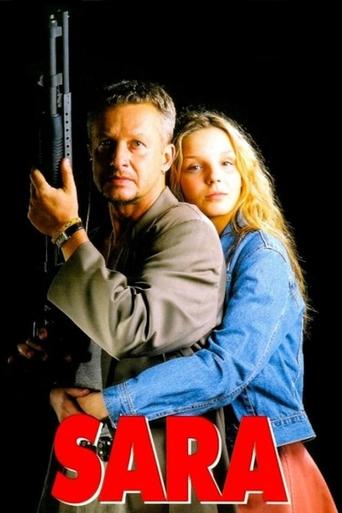
Sara 1997
Sixteen-year-old Sara's father is a wealthy gangster and has a lot of enemies. Her father makes clear that whoever touches Sara will die and he looks for the right bodyguard to protect her.
Sixteen-year-old Sara's father is a wealthy gangster and has a lot of enemies. Her father makes clear that whoever touches Sara will die and he looks for the right bodyguard to protect her.
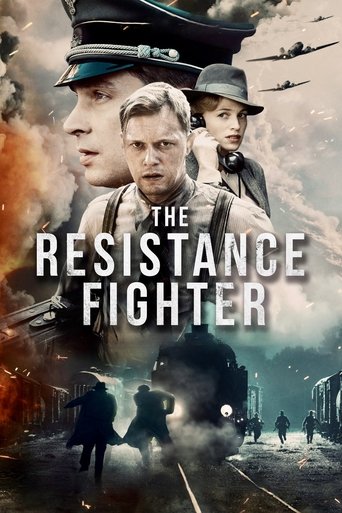
Based on the true story of Jan Nowak-Jezioranski, who served as a courier between the commanders of the Polish Home Army and the Polish Government in Exile in London. He must return quickly to Warsaw to transmit orders from the Polish PM to the Home Army's commander-in-chief before the start of the Warsaw uprising.
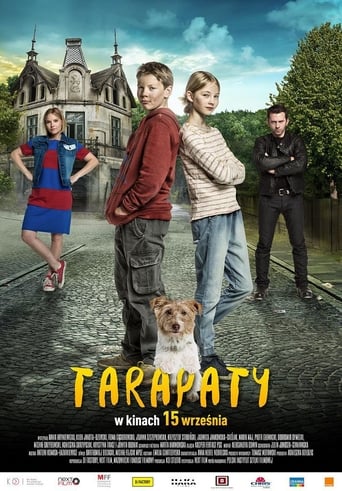
A young girl, her new friend and his dog try to find a long-lost Picasso painting in an abandoned house before a gang of burglars seize it.
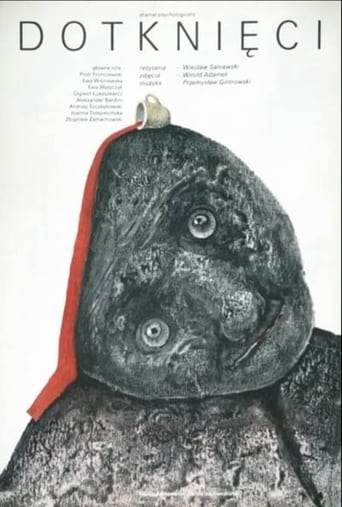
Jan weds his mentally ill wife Joanna at her insistence, but her increasing dependence on sedatives, and the clandestine extra pills supplied by Jan, their son Piotr and Jan’s friend Maria, leads to Joanna’s fatal overdose. Accused of murder, Jan endures a trial, psychiatric evaluation and deep depression before the case is dropped; only after reconciling with his children does he finally leave the clinic to return home.
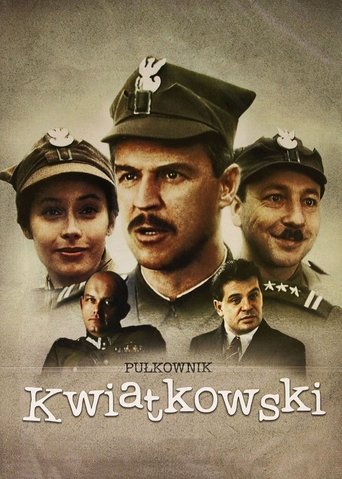
Military doctor Kwiatkowski, serving in a barracks hospital on the Western Territories, is rewarded with a week’s leave after successfully operating on Colonel Kiziora of the UB. He and his friend steal a truck bound for Warsaw, where among the ruins of his former home he meets his prewar neighbor Krysia, instantly falls in love, and, after a brawl with a Russian officer at a dance in the surviving “Polonia” hotel, pretends to be a high-ranking UB colonel to save face.

A historical drama set in 1950s Britain. Dora Szumski, 30, is an Englishwoman married to a Polish immigrant, Eryk, a former Polish Army officer, who is left with no choice by the post-war balance of power, condemned to die in his homeland or emigrate. After an unsuccessful suicide attempt, Eryk stays in Mabledon Park, a psychiatric hospital designed for former Polish soldiers suffering from war trauma. Erik's illness resulting from a past that has been haunted and concealed from his wife not only becomes a barrier to the couple's future, but also a threat to Erik's life. Dora decides to find out what the secret of her husband's illness is.
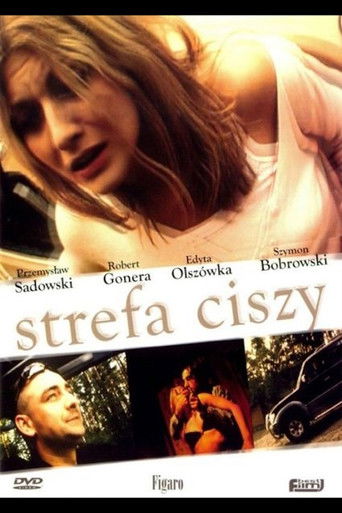
A young married couple, Iza and Slawek, stray from the forest road, with a moment of privacy in mind. In addition, their car breaks down. Slawek stays behind, while Iza decides to go to the bus stop. After a while, 4 men get out of the off-road car. It turns out that they are gangsters who are celebrating the release of one of them from prison. Iza becomes their "plaything". Meanwhile, a concerned Slawek tries to interest the police in his wife's disappearance. The gangsters, along with Iza, go to a summer house located in the so-called "quiet zone" and there they have an alcoholic libation, and Iza has to fight for survival.

Emilka meets the slightly-older Maciek out at a club one night. He shows Emilka—who was brought up by a single mom—a whole new world filled with desire, passion, restlessness and rebellion. The girl moves in with him and at first everything seems just perfect, but gradually Emilka discovers her separate identity, and starts to grow apart from him. When her dream of becoming a singer comes true, Maciek feels threatened. A toxic love game begins, full of lust and jealousy.

Two intellectuals, a writer and a director, begin to play a mysterious psychological game in a peaceful countryside manor house during the Nazi occupation.

Television play adaptation of Wajda's stage play of Stanisław Wyspiański's November Night. The drama takes place on two levels - historical and metaphorical. The first one is almost a chronicle of several hours of the uprising - it shows the drama of the attitudes of Poles at the beginning of the armed struggle, in confrontation with the attitude of Grand Duke Constantine, the Tsar's deputy in Poland. The second one presents the world of gods playing out their arguments. Man becomes a plaything in their hands, but it is he who experiences his fear, heroism and hope.
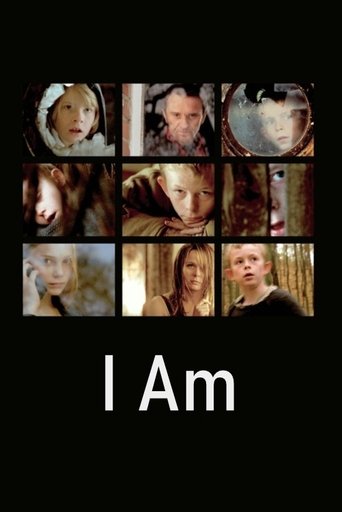
A story of Kundel, a boy searching for his place in life, his identity. After running away from an orphanage where he is treated as an outcast among outcasts by both his peers and the adults in charge, and being rejected a second time by his alcoholic mother, who had earlier abandoned him, the resolute 11-year-old finds a "home" on a deserted old barge on the outskirts of his hometown. He is still an outcast, but he is an outcast on his own terms, rejecting both patronizing charitable gestures and coercion by local thugs. In the process he makes one true friend, a girl from an affluent family who is also an outcast, despite living in material comfort.
Based on the facts, the story of Dr. Barbara Makowska-Witkowska, arrested in 1983 by the civil militia. She was accused of beating up and stealing a drunk patient's wallet.
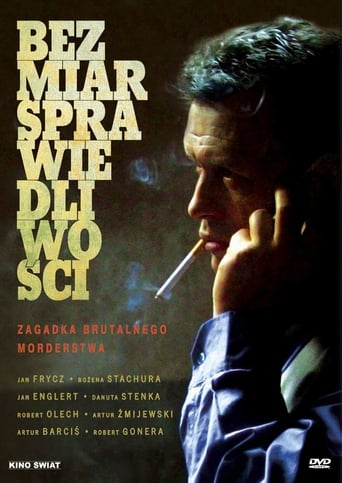
A disengaged graduate expects his father's friend to recruit him into law, but instead learns about a murder case with a verdict he aims to challenge.
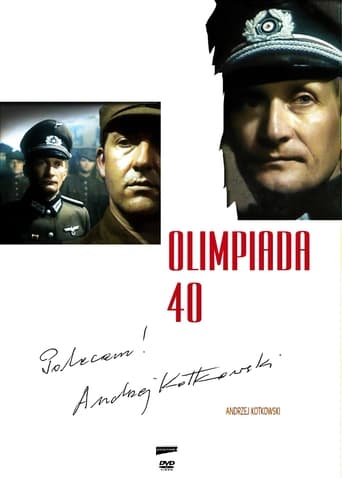
The film deals with the a clandestine Olympiade held in a German POW camp during WW II, housing many Poles, but also French and Brits. A spit and a Polish German lieutenant is added to the staff of a prison camp. He sees a Pole, the acknowledged leader of the Polish prisoners, against whom he had competed during the Berlin Olympics in 1936. He asks the Pole to train with him but is refused; the Pole points out out that he is a prisoner and nothing more. But that plants the seed and the Pole proposes and Olympics 40 to be held among the prisoners. They ingeniously make a flag and medals, set up a number of races; a croaching hop race is unwittingly organized by a German prison guard who uses it as a torture. The German lieutenant knows that something is going on but cannot find out. Finally the Germans realize the idea and the Polish chief is sent to concentration camp but the others disobey the orders.

Portraying the events that have taken place in Polish politics in recent years.
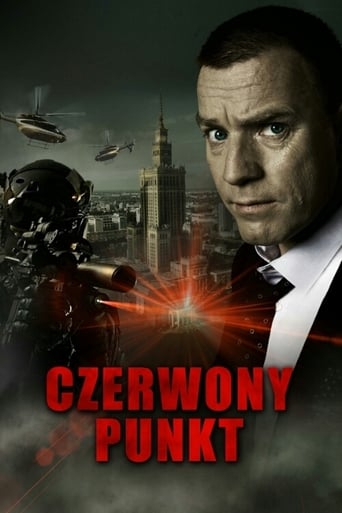
A businessman is accidentally mistaken for a murderer of an important person and becomes a fugitive.
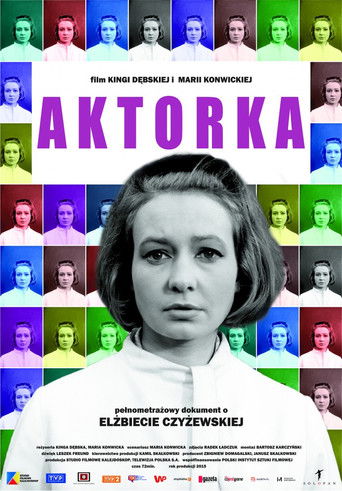
A documentary about Elzbieta Czyzewska, one of Poland's greatest actresses, a beauty icon of the 1960s, who died in 2010. She had a great career in Poland, but the filmmakers focus more on her attempts to make a name for herself as an actress in America, after her sudden emigration to the United States with her husband, American journalist David Halberstam. Friends and acquaintances of Elzbieta Czyzewska speak without embellishment about her failed marriage, her battle with alcoholism won after years, and her attempts to return to Poland. This is a story about the fate of the actress at different stages of her career: at the top, at the bottom and in between.
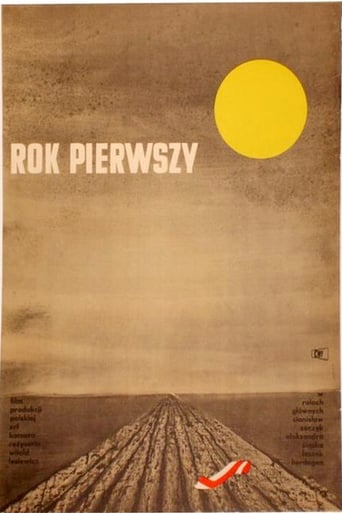
1944. Communist militiaman take a post in a little town in the east of Poland. He has to stand against his own men that are not happy with new authorities.
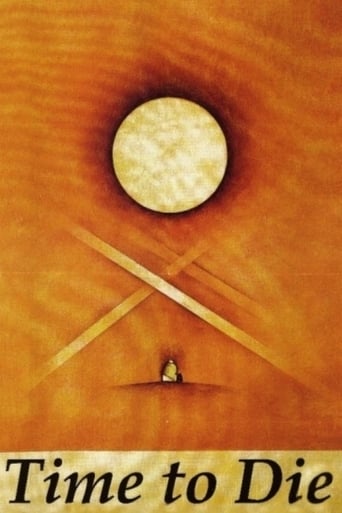
An impressionistic, black-and-white portrait of the day-to-day of a nonagenarian woman as she experiences the final act of her life. Danuta Szaflarska stars as Aniela, who lives in a massive yet rapidly-deteriorating wooden house, filled with souvenirs and treasures of eras gone by. Aniela runs into conflict in her dealings with others, particularly a nasty neighbor who sees her property as an eyesore and wants to do everything in his reach to buy it up and tear it down, and her married adult son, who - though kindly - triggers paranoia within Aniela (she cannot help but believe that he is scheming and planning to wheedle the property away from her). Driven aback by these individuals, Aniela finds one of her only sources of comfort and reassurance in her daily talks with her dog, Fila - and develops a great affinity for spying on the neighbors' doings whenever boredom creeps in.
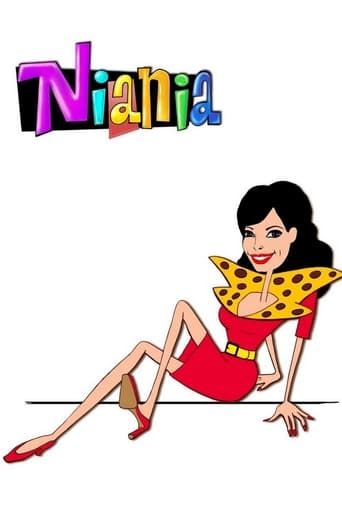
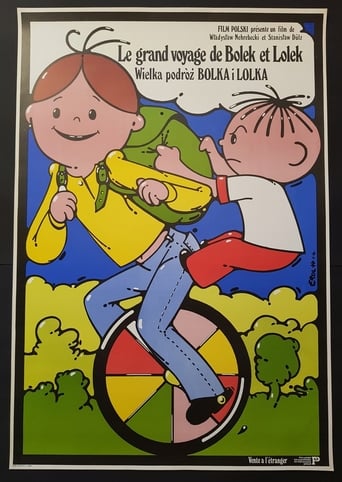
Bolek and Lolek are two Polish cartoon characters from the TV animated series by the same title. They are based on Władysław Nehrebecki's sons, named Jan and Roman, and were partially created by German-born Alfred Ledwig before being developed by Władysław Nehrebecki and Leszek Lorek. The series is about two young brothers and their fun and sometimes silly adventures which often involve spending a lot of time outdoors. They first appeared in an animated film in 1963. The names of the two characters are diminutives of Bolesław and Karol. In English, the cartoon was distributed as Jym & Jam and Bennie and Lennie. Some episodes were seen as part of Nickelodeon's Pinwheel. In 1973 the creators of the film placed on the request from the female viewing audience a girl character by the name of Tola. The first time she appeared in occurred in the episode entitled "Tola". In total, Tola appeared in 30 episodes. Most episodes do not have dialogues. Exceptions are feature-length films and the series from the 1980s, where the main characters' voices were done by: Bolek – Ewa Złotowska, Ilona Kuśmierska; Lolek – Danuta Mancewicz, Danuta Przesmycka. During the period of the Peoples Republic of Poland, Bolek and Lolek were reproduced in a large quantity of toys: action figures, movies, postcards, online arcades, puzzles, etc., which can be seen in the Museum of Dobranocki of the PRL. They are also currently made in computer programs, coloring books, general picture books and games.
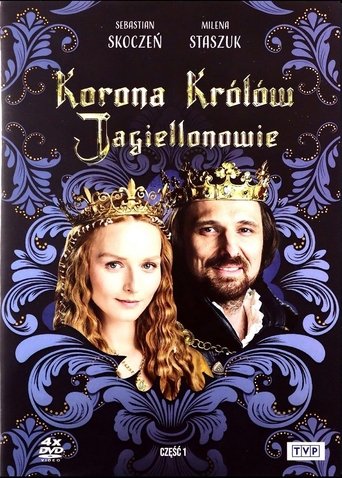
The story of the Jagiellonian Dynasty rulling XV-century Kingdom of Poland and Grand Duchy of Lithuania.
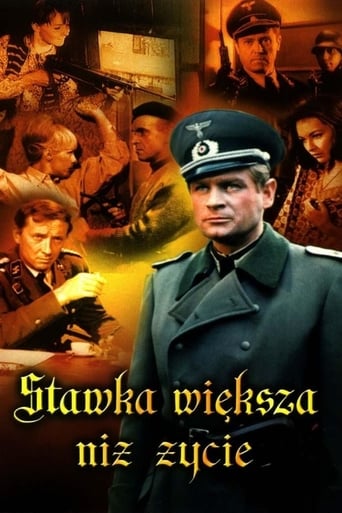
A series about the adventures of a Polish secret agent, Hans Kloss, who acts as a double agent in the Abwehr during Second World War in occupied Poland.

In the seaside town of Hel, the death of a prominent local naval captain threatens to expose the web of lies tying his family together.
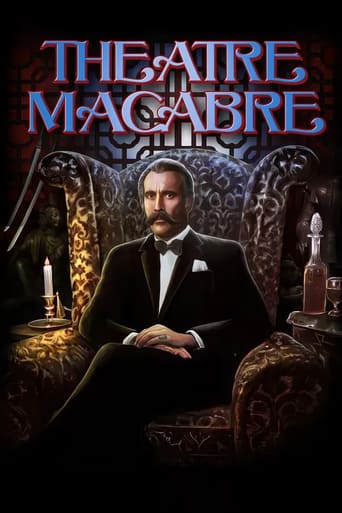
Christopher Lee hosts this horror anthology series from Poland with stories from various classic authors.

To build an innovative sex app and win a tech competition, a sexually inexperienced student and her friends must explore the daunting world of intimacy.
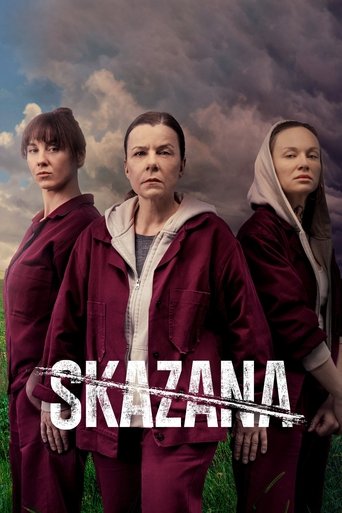
The successful judge Alicja Mazur, who is known for her strictness towards criminals. The woman is unexpectedly accused of a murder she did not commit.
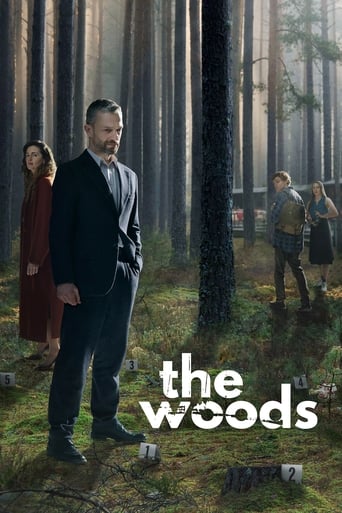
Evidence found on the body of a homicide victim sparks hope in a prosecutor that his sister who disappeared 25 years earlier could still be alive.
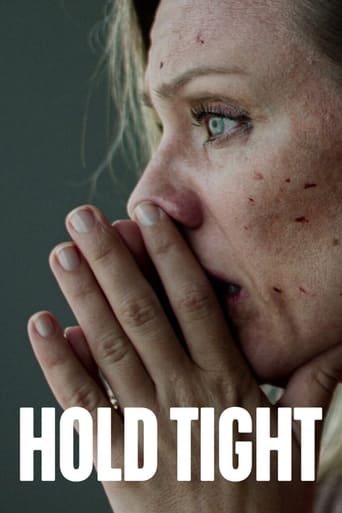
When a young man goes missing soon after his friend dies, life in a tight-knit, affluent Warsaw suburb slowly unravels, exposing secrets and lies.
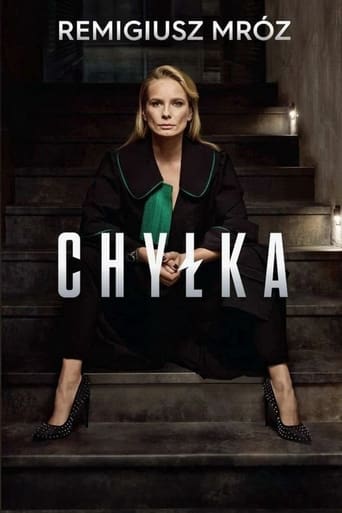
Three-year-old Nikola Szlezyngier disappears in unexplained circumstances and her parents Angelika and Dawid are the main suspects. Angelika contacts an old friend Joanna Chylka, a brilliant, cynical and successful lawyer to help. With her new apprentice Kordian, Joanna will try to bring the case to a happy close.


Londyńczycy is a Polish TV drama series about Polish immigrants in London, aired on TVP 1 since late 2008. It is currently aired on Community Channel. The title music for the series is the Robbie Williams song "Supreme".
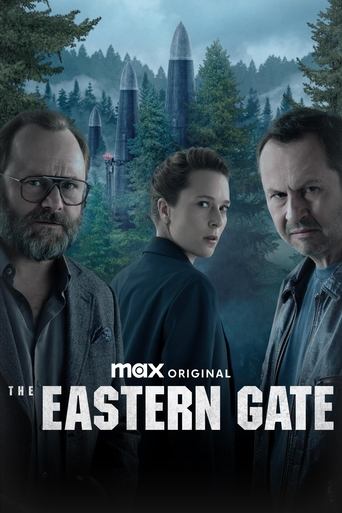
Ewa Oginiec wants to leave the secret service and start over after a personal tragedy but things take a turn when her partner, also an agent, is exposed by Russian intelligence and mysteriously disappears.

The dark world of crime: murders, racketeering, drugs, kidnappings. There are no rules here. Working in this world makes cops cynical and ruthless. There is a fine line between them and criminals - will any of them cross it? The main characters are officers from the Department for Counteracting Criminal Terror and Homicides. The action of the series is an extension of the threads that appear in the feature film. It presents in a realistic way the brutal and dark world of crime that officers encounter on a daily basis. They're not just tracking down murderers. They fight racketeering, kidnapping, drug trafficking while struggling with their own day to day life and problems.
