Confession

Confession 1970

1

Confession is a short-lived ABC crime/police reality show which aired from June 19, 1958, to January 13, 1959, with interviewer Jack Wyatt questioning criminals from assorted backgrounds. The program was carried by videotape from WFAA-TV, the network affiliate in Dallas, Texas, the first station to report the assassination of U.S. President John F. Kennedy.

1970

Paul Whiteman's Goodyear Revue

Paul Whiteman's Goodyear Revue 1970

1

Paul Whiteman's Goodyear Revue is an American television variety series. The show aired on ABC on Sunday evenings from November 6, 1949 through March 30, 1952.

1970

Think Fast

Think Fast 1970

1

Think Fast was an American quiz show that ran on ABC from March 26, 1949 to October 8, 1950. The program revolved around a group of five panelists who would compete to see who had the most to say about a particular subject. They sat at a large table, each getting a chance to sit at the "King's" throne by out talking the others on subjects decided by the host. The regular panelists were Leon Janney, David Broekman, who was also the show's musical director, and Eloise McElhone. The moderator was Mason Gross for the first episodes, then Gypsy Rose Lee afterward. The series originally aired on Saturdays until April, followed by Fridays until September, then Sundays for the rest of its run.

1970

Of Many Things

Of Many Things 1970

1

Of Many Things is a half-hour panel discussion television series which aired on ABC from October 5, 1953, to January 11, 1954. It was hosted by Dr. Bergen Evans. Topics on the program ranged from practical jokes to popular music, with Mitch Miller as a guest. Another episode focues on the German submarine U-505, captured by the United States Navy in 1944 during World War II. The program aired at 8:30 p.m. EST on Mondays following Sky King on ABC. It aired opposite Arthur Godfrey's Talent Scouts on CBS and The Voice of Firestone on NBC.

1970

Author Meets the Critics

Author Meets the Critics 1970

1

Author Meets the Critics was an American talk show which was broadcast by the National Broadcasting Company, American Broadcasting Company, and the DuMont Television Network. The series began as a mid-season replacement on NBC on April 4, 1948, but was transferred to ABC during 1949. The show was transferred back to NBC during 1951, and then to DuMont from January 10, 1952 to October 10, 1954.

1970

Little Clowns of Happytown

Little Clowns of Happytown 1970

1

Little Clowns of Happytown is an American animated television series that aired on ABC on Saturday morning from September 26, 1987 to July 16, 1988.

1970

Pontoffel Pock, Where Are You?

Pontoffel Pock, Where Are You? 1970

1

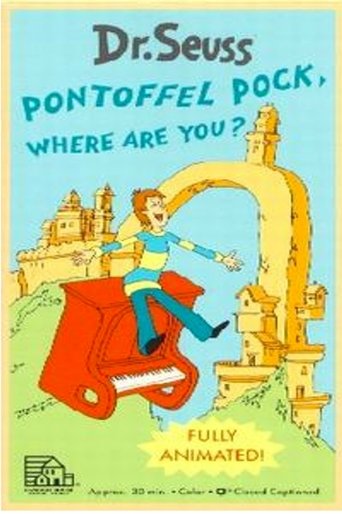
Pontoffel Pock, Where Are You? is an animated musical television special written by Dr. Seuss, directed by Gerard Baldwin, produced by DePatie-Freleng Enterprises, completed in 1979 and first aired on CBS on May 2, 1980. This was one of the final cartoons done at DePatie-Freleng as the studio would be sold to The Coca-Cola Company and become Sunbow Productions in 1981. The songs are by Joe Raposo.

1970

Doc Holliday

Doc Holliday 1970

1

The Frontier World of Doc Holliday was a failed pilot for a series, starring Adam West. Doc Holliday was a pilot shot in 1959, scheduled to be broadcast as an episode of Cheyenne, titled: Birth of a Legend. starring Adam West. In this chapter Holliday kills a man for the first time in his life, but does not mind that this doomed. This project was led by Leslie H. Martinson, production was provided by Roy Huggins was a major project which failed.

1970

Jukebox Jury

Jukebox Jury 1970

1

Jukebox Jury was an hour-long television series hosted by disc jockey Peter Potter which aired in the 1953-1954 season on the American Broadcasting Company, and was syndicated in 1959. The program actually began in 1948 in Los Angeles, California on the CBS Television station KNXT-TV, which has since changed call letters to KCBS. Five years later, Jukebox Jury went national for one season. The show has been compared to a radio program replete with commercial endorsements and movie previews. The jury on the program consisted of six usually young lesser-known film stars or minor recording artists who judged the latest releases from the record companies. Among the "jurors" were Barry Sullivan, Maureen O'Sullivan, and Jane Powell. Mike Connors, long before Tightrope and Mannix, appeared on an early KNXT episode under the name "Touch" Connors. Once the program was added to the network schedule, many who appeared as jurors to yell "Hit" or "Miss" at each song selection were already or later well-known entertainers, having included: Steve Allen, Walter Brennan, Lloyd Bridges, Ann B. Davis, Elinor Donahue, Zsa Zsa Gabor, Dean Martin, Steve McQueen, Jayne Meadows, Johnny Mercer, Sal Mineo, Leslie Nielsen, Debbie Reynolds, Mamie Van Doren, Robert Wagner, and Natalie Wood. Dick Clark used this listen-and-comment technique from persons in his audience on a reduced scale with his later long-running Philadelphia-based ABC series, American Bandstand.

1970

The Drew Pearson Show

The Drew Pearson Show 1970

1

The Drew Pearson Show was an early American television program originally broadcast on ABC and later on the now defunct DuMont Television Network. The series ran from 1952 to 1953. It was a public affairs program hosted by political columnist Drew Pearson. The program aired Sunday nights at 11 on ABC. When the series moved to the DuMont network, it aired on Wednesday nights at 7:30. The series was cancelled in mid-March 1953.

1970

Petals

Petals 1970

1

Petals is an Australian children's animated television programme produced and created by Mark Barnard and aired on the ABC. It ran from 1998 to 1999 consisting a total of two seasons and 55 episodes and was aimed at pre-school children aged 2–6. After it ended in 1999, the series was still continued to be repeated on the ABC and ABC1 until 2004.

1970

So You Want to Lead a Band

So You Want to Lead a Band 1970

1

So You Want to Lead a Band is a half-hour variety show hosted by Sammy Kaye which aired on ABC from August 5, 1954 to January 27, 1955. Members of the studio audience are invited to conduct the band. Then through its applause the audience chooses the winning amateur conductor. The winner receives a prize. Vocalists on the program included Barbara Benson and Jeffrey Clay. The series aired on Thursdays at 9 p.m. Eastern after Treasury Men in Action and before Kraft Television Theater. Its competition on NBC was Dragnet.

1970

Welcome to the Neighborhood

Welcome to the Neighborhood 1970

1

Welcome to the Neighborhood is an American reality television series produced in 2005 by ABC that was notable for the amount of controversy it garnered before it was aired. It subsequently became one of the few American TV series to be cancelled before airing a single episode. The show was a contest to win a lush dream home in an exclusive cul-de-sac in Circle C Ranch in Austin, Texas. The catch is that the local families decide who will win, and while they are all conservative, white, upper-class Christians, all the contestants are not.

1970

AM America

AM America 1970

1

AM America is a morning news program produced by ABC in an attempt to compete with the highly rated Today on NBC. The show never found an audience after its premiere on January 6, 1975. Lasting just under ten months, its final installment aired on October 31. The program's concept was based on Ralph Story's AM, the local morning show on the network's owned-and-operated Los Angeles station KABC-TV. Like Today, AM America employed two hosts and a news anchor. ABC chose Bill Beutel, who was co-anchor of Eyewitness News on the network's New York City flagship station WABC-TV, and Stephanie Edwards from Ralph Story's AM to host the program. Peter Jennings, who at the time was ABC's Washington correspondent, provided the news reports. One notable episode of AM America aired on April 25, 1975, when members of the British comedy troupe Monty Python made one of their earliest appearances on American television. Edwards quit the show by the end of May, and Beutel followed her out a few months later. On November 3, the Monday following its final broadcast, AM America was replaced by Good Morning America.

1970

The Children's Doctor

The Children's Doctor 1970

1

The Children's Doctor is an American daytime medical and parental advice program that ran on ABC for 3 years, from April 1967 to August 1969.

1970

Rhyme and Reason

Rhyme and Reason 1970

1

Rhyme and Reason is an American television game show that aired on ABC from July 7, 1975 through July 9, 1976. Bob Eubanks hosted the show, with Johnny Jacobs serving as announcer.

1970

Encounter

Encounter 1970

1

Encounter is a five-week anthology television series aired from Toronto, Canada, and carried by both CBC Television and ABC from October 5 to November 2, 1958. The one-hour dramas were either romance, adventure, or mystery stories. Patrick Macnee and Barry Morse were among those who appeared on Encounter.. In the United States, Encounter followed the western series Colt .45. The program faced competition on CBS from The Alfred Hitchcock Show and The $64,000 Question. NBC at the time aired part of The Dinah Shore Chevy Show. It is not known what program succeeded Encounter in the 9:30 Eastern time slot beginning on Sunday, November 9, 1958. The following season The Alaskans, an adventure program set in Alaska and starring Roger Moore, Dorothy Provine, and Jeff York, aired on ABC in that time period. Encounter is not the shortest-running series on an American television network. In the fall of 1966, The Tammy Grimes Show, a situation comedy starring Tammy Grimes, ran only four episodes on ABC before it was cancelled.100 Grand, an ABC quiz show, lasted for only three episodes after its debut in the fall of 1963 on the Sunday evening schedule. A program called Turn-On, promoted as a sophisticated answer to NBC's Laugh In, was cancelled on the air during its first and only episode.

1970

Murder Can Hurt You

Murder Can Hurt You 1970

5.70

Murder Can Hurt You is a 1980 ABC television movie that parodies detective and police TV shows of the 1960s and '70s, much like the way Murder by Death made fun of literary detectives. The plot involves a mysterious "Man in White" who's out to kill famous detectives in bizarre ways, and the heroes are obvious parodies of Kojak, Baretta, Starsky and Hutch, Ironside, Police Woman, Columbo, and McCloud.

1970

Bowling Headliners

Bowling Headliners 1970

1

Bowling Headliners was television's first regularly scheduled bowling show. Bowling Headliners aired on ABC from 1948-1949 and the DuMont Television Network from November 13, 1949 to April 9, 1950. The series aired from Rego Park Lanes in Queens, New York. The original commentators were Jimmy Powers and Al Cirillo. When the show moved to DuMont, Joe Hasel took over as host. The show was featured on the cover of the October 29, 1949 TV Guide when the magazine was still a local publication from New York City.

1970