
Beat the Blondes 1970
Beat The Blondes is a television game show format based on preconceptions, prejudice, strategy and statistics created by Eyeworks and hosted by Tom Arnold. The grand prize was US $1,000,000.
Beat The Blondes is a television game show format based on preconceptions, prejudice, strategy and statistics created by Eyeworks and hosted by Tom Arnold. The grand prize was US $1,000,000.
1775 was a 1992 pilot episode for a CBS situation comedy, similar in style to the BBC situation comedy Blackadder. Set in colonial Philadelphia during the run-up to the American Revolution, the series was to follow the exploits of innkeeper Jeremy Proctor and his family. The series was not picked up by CBS. A similar idea for a situation comedy was mentioned by Andrew Alexander in a commentary track for SCTV.

Elite athletes will have the chance to win $1,000,000 every time they run the Million Dollar Mile course.
Honestly, Celeste! is an eight-episode 1954 CBS situation comedy starring Celeste Holm as Celeste Anders, a 37-year-old college journalism professor from Minnesota who accepts a reporter’s position on the staff of the fictitious New York Express newspaper.
Whew! is an American game show that aired on CBS from April 23, 1979, until May 30, 1980. It was hosted by Tom Kennedy and announced by Rod Roddy. The game was created by Jay Wolpert. Production was initially credited to the Bud Austin Company, then later changed to Jay Wolpert Productions in association with Burt Sugarman Inc.
The Body Human was a series of specials produced by the National Geographic Society and telecast by CBS, between 1977 and 1984. They were produced and directed by Alfred R. Kelman, who was nominated for an Academy Award in 1966 for The Face of a Genius. Unlike most National Geographic specials, this series did not concentrate on exploring nature or the origins of man, but, as the name implied, on aspects of the human body, from plastic surgery to sexual function. Alexander Scourby was the narrator. The series was nominated for and won Emmy Awards.
Arly Hanks is a 1993 American television pilot based on the first book of Joan Hess' series Malice in Maggody. Written by Sean Clark and directed by Arlene Sanford, it screened on CBS on August 20, 1994. Due to low ratings, the show was removed from the CBS season. Filmed in Atlanta, Georgia, the plot centered around Arly Hanks who, after divorcing her husband, leaves her life in New York City and returns to her small hometown of Maggody, Arkansas. She becomes Sheriff of Maggody and deals with mischievous residents while solving mysteries.
The Brighter Day is an American daytime soap opera which aired on CBS from January 4, 1954 to September 28, 1962. Originally created for NBC radio by Irna Phillips in 1948, the radio and television versions ran simultaneously from 1954-1956. Set in New Hope, Wisconsin, the series revolved around Reverend Richard Dennis and his four children, Althea, Patsy, Babby and Grayling. The Brighter Day was the first soap opera to air on network television with an explicitly religious theme. Another soap opera created by Phillips, The Guiding Light, initially had a religious theme as a radio show but dropped it by the time the series moved to television.
Child's Play is an American television game show in which adult contestants tried to guess words based on definitions given by children. The Mark Goodson-produced series debuted on CBS from September 20, 1982 at 10:30 am Eastern/9:30 am Central. That time slot was held by Alice for a little over two years. Child's Play was never able to make ratings headway against either Wheel of Fortune or Sale of the Century, two hit game shows that NBC aired opposite it; CBS ended the series on September 16, 1983 and replaced it with Press Your Luck, which performed much better for CBS. Perhaps the first inklings of the format appeared on a 1967 episode of Goodson-Todman's earlier series I've Got a Secret, on which guest Woody Allen read children's definitions of words for the panel to guess. Child's Play host Bill Cullen was a member of that series's panel.
The Arthur Murray Party is an American television variety show which ran from July 1950 until September 1960. The show was hosted by famous dancers Arthur and Kathryn Murray, and was basically one long advertisement for their chain of dance studios. Each week the couple performed a mystery dance, and the viewer who correctly identified the dance would receive two free lessons at a local studio. The Arthur Murray Party is notable for being one of the few TV series—the others were Down You Go; The Ernie Kovacs Show; Pantomime Quiz; Tom Corbett, Space Cadet; and The Original Amateur Hour—broadcast on all four major commercial networks in the 1950s during the Golden Age of Television. It may, in fact, be the only series which had a run on all four networks at least twice.
The Gray Ghost is an American historical series which aired in syndication from October 10, 1957, to July 3, 1958. The show is based upon the true story of Major John Singleton Mosby, a Virginia officer in the Confederate Army, whose cunning and stealth earned him the nickname "Gray Ghost".
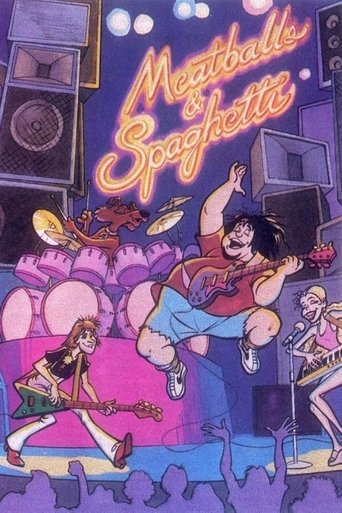
Meatballs & Spaghetti is an American animated television series that aired on CBS on Saturday morning from September 18, 1982 to September 10, 1983.
West 57th is a newsmagazine series which aired on CBS from August 13, 1985, through September 9, 1989.West 57th originally premiered as a summer series, and took its name from the New York address of the CBS Broadcast Center. The original correspondents were Jane Wallace, Bob Sirott, Meredith Vieira, and John Ferrugia. Later contributors included Steve Kroft, Selina Scott, Karen Burnes, and Stephen Schiff. The style of the program was intended to use the contemporary tools of television to tell compelling stories. The show's popularity, a concern for Hewitt, prompted 60 Minutes pundit Andy Rooney to dedicate one of his closing segments on his program to a parody of West 57th correspondents. After the cancellation, the show was replaced by the short-lived Saturday Night with Connie Chung. Vieira and fellow correspondent Steve Kroft transferred to 60 Minutes, where Kroft currently remains. Vieira went on to anchor NBC's Today Show. Sirott moved to Chicago to continue a successful career in local TV and radio. John Ferrugia moved to Denver, where he is an award-winning investigative reporter for KMGH-TV.
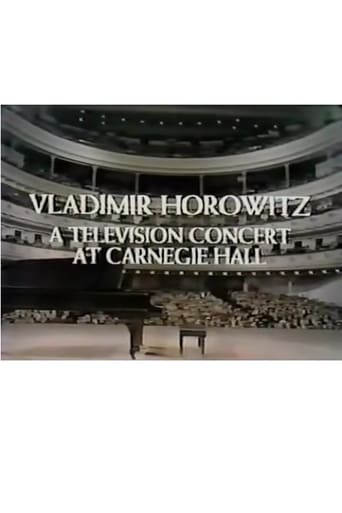
Celebrated American pianist Vladimir Horowitz in his first televised piano recital, taped at Carnegie Hall on February 1, 1968, and broadcast nationwide by CBS on September 22 of that year.
Video Village is an American television game show produced by Heatter-Quigley Productions which aired on the CBS network in daytime from July 11, 1960 to June 15, 1962 and in primetime from July 1 to September 16, 1960. It was notable for the use of its unique "living board game" concept, as well as being one of the first new games to premiere after the quiz show scandals.
Blackout is an American game show that aired on CBS from January 4 to April 1, 1988. The pilot was hosted by former Entertainment Tonight anchor Robb Weller, but he was replaced for the series by Bob Goen. Johnny Gilbert was announcer for most of the run, with Jay Stewart taking over for the last two weeks. The show was a Jay Wolpert production.
On May 3, 1948, Edwards began anchoring CBS Television News, as a regular 15-minute nightly newscast on the CBS television network, including WCBS-TV. It aired every weeknight at 7:30 pm, and was the first regularly scheduled, network television news program featuring an anchor.[5] (WCBW/WCBS-TV newscasts prior to this time were local television broadcasts seen only in New York City.) NBC's offering at the time, NBC Television Newsreel, which premiered in February 1948, was simply film footage with voice narration.
Dotto is an American television quiz show which aired on CBS from January 6 to August 15, 1958 and was hosted by Jack Narz. Although it quickly became the highest-rated daytime game show on television, its end came when it became the unexpected first casualty – and ignition – of the quiz show scandals that rocked American broadcasting as the 1950s closed.
