It's News to Me

It's News to Me 1970

1

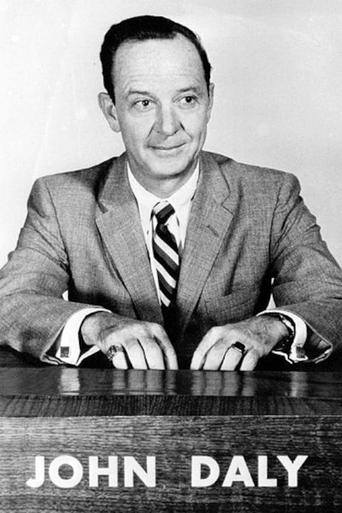
It's News to Me is a weekly panel game show produced by Mark Goodson and Bill Todman for CBS Television. It was a derivative of Goodson-Todman's own panel show What's My Line?. Originally aired as a one-time special on May 11, 1951; It debuted as a series July 2, 1951 and ran until September 12, 1953. The show returned July 9 – August 27, 1954 as a summer replacement for Person to Person.

1970

There Goes the Neighborhood

There Goes the Neighborhood 2009

1

There Goes the Neighborhood is an American prime-time reality television program on CBS. The show premiered on August 9, 2009, and features eight suburban families shut out from the outside world with no television, internet, phones, or contact with anybody outside of their neighborhood. The families will compete in challenges against each other. Each week, one family will be banished from the neighborhood, thereby eliminating the family from contention for the show's $250,000 prize fund. The show's executive producers are Jay Bienstock and Mike Fleiss. The show's presenter is Matt Rogers, a finalist on American Idol 3.

2009

The Face Is Familiar

The Face Is Familiar 1970

1

The Face Is Familiar is an American game show which aired in color on CBS from May 7 to September 3, 1966. The show was hosted by Jack Whitaker and featured celebrity guests including Bob Crane, Dick Van Patten, Mel Brooks and June Lockhart. The series was primarily sponsored by Philip Morris' Parliament and Marlboro cigarettes, and their American Safety Razor and Clark Gum subsidiaries. The show was produced by Bob Stewart Productions in association with Filmways Television. Its theme song was a slightly-modified version of Brasilia, performed by Herb Alpert & the Tijuana Brass.

1970

SP FX: The Empire Strikes Back

SP FX: The Empire Strikes Back 1970

1

SP FX: The Empire Strikes Back is a television documentary special which originally aired on CBS on September 22, 1980. Hosted by actor Mark Hamill, it is a behind-the-scenes look at the creation of the special effects in the second Star Wars film, Star Wars Episode V: The Empire Strikes Back, which was released that year. The special was written by Richard Schickel and directed by Robert Guenette, who had both previously worked on the 1977 special The Making of Star Wars.

1970

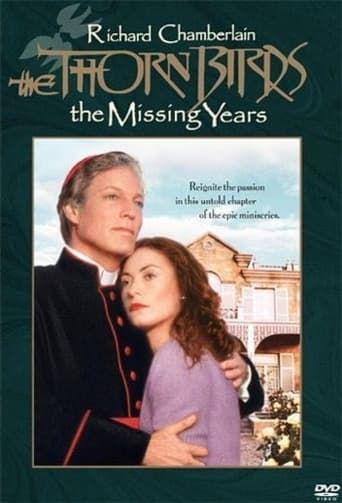
The Thorn Birds: The Missing Years

The Thorn Birds: The Missing Years 1996

7.00

The story of the 19 years that are unaccounted for between the birth of Dane and Ralph's return to Australia in the original miniseries.

1996

Circus of the Stars

Circus of the Stars 1970

1

Circus of the Stars was an annual television special, broadcast by the CBS network in the United States, in which celebrities performed circus-type acts. There were 19 shows in total, the first being broadcast in 1977 and the last in 1994. Over the years the series featured many leading movie and television stars. Towards the end of its life the program title was changed slightly. In 1992 it was Circus of the Stars and Sideshow, in 1993 it became Circus of the Stars Gives Kids the World and in 1994 it was Circus of the Stars Goes to Disneyland. Although the show has ceased in the United States, the concept has been emulated in other countries where similar programs continue to be made, notably Stars in der Manege in Germany.

1970

House Blend

House Blend 1970

1.00

House Blend was a pilot for an American Television Series written by Anne Flett-Giordano and Chuck Ranberg and directed by John Whitesell. It was made by Paramount Network Television. The pilot first aired on May 1, 2002.

1970

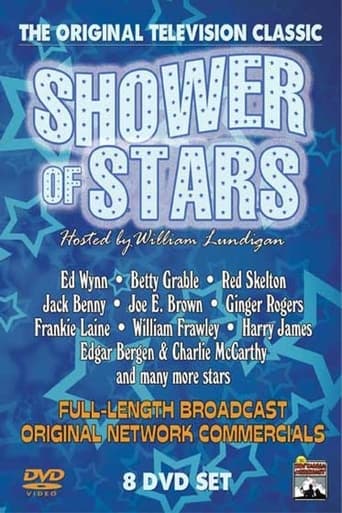
Shower of Stars

Shower of Stars 1954

1

Shower of Stars is an American variety television series broadcast live in the United States from 1954 to 1958 by CBS. The series was broadcast in color which was a departure from the usual programming broadcast by CBS.

1954

60 Minutes II

60 Minutes II 1970

1

60 Minutes II was a weekly primetime news magazine television program that was intended to replicate the "signature style, journalistic quality and integrity" of the original 60 Minutes series. It aired on CBS on Wednesdays, then later moved to Fridays at 8 p.m. The original 60 Minutes continued airing on Sunday nights throughout the run of 60 Minutes II. The first edition of 60 Minutes II ran on January 13, 1999. Its final airing was September 2, 2005. 60 Minutes II was renamed 60 Minutes by CBS for the fall of 2004. CBS News president Andrew Heyward stated at the time, "The Roman numeral II created some confusion on the part of the viewers and suggested a watered-down version." The show was later renamed 60 Minutes Wednesday to differentiate it from the original 60 Minutes Sunday edition, but reverted to its original title on July 8, 2005, when the show moved to the 8 p.m. Friday timeslot, where it completed its run.

1970

That's My Line

That's My Line 1970

1

That's My Line was a summer CBS reality show developed by Mark Goodson, one of the creators of What's My Line?. The show highlights the unusual occupations of ordinary people, but unlike What's My Line?, it has no panel or game components; the show is rather along the same lines as NBC's Real People and ABC's That's Incredible!. It was hosted by Bob Barker and announced by Johnny Olson, both associated with Goodson-Todman's hit game show, The Price Is Right. The series was co-hosted by Suzanne Childs and Tiiu Leek, and joined during the 1981 run by Kerry Millerick. The thrust of the show during the 1981 season also changed from unusual occupations to an emphasis on the funny, bizarre, or ridiculous. Notable moments included voice artist Mel Blanc having a contest with an audience member on who does voice acting the best and magician James Randi contesting James Hydrick's psychic abilities.

1970

Money for Lunch

Money for Lunch 1970

1

Money for Lunch was a afternoon business program which aired on CNN Radio in Houston, weekdays from 12-2pm Eastern Time. Its main competitor was CNBC and Fox Business.

1970

Really Raquel

Really Raquel 1970

1

Really Raquel was a prime-time variety show adapted from Raquel Welch's 1973 live night club show. The special showcased Welch's talents as a singer, dancer and comedienne, pitting her in a variety of skits with the Krofft Puppets, who were the only guest stars. Some Krofft sites list the title of the special as Raquel Welch in the World of Sid and Marty Krofft. The show aired on CBS on March 8, 1974.

1970

Beat the Blondes

Beat the Blondes 1970

1

Beat The Blondes is a television game show format based on preconceptions, prejudice, strategy and statistics created by Eyeworks and hosted by Tom Arnold. The grand prize was US $1,000,000.

1970

Place the Face

Place the Face 1970

1

Place the Face is an American game show that aired on CBS and NBC from 1953 to 1955. The series was hosted by Jack Smith, Jack Bailey, and then Bill Cullen. Jack Narz was the announcer.

1970

The Next Tycoon

The Next Tycoon 1970

1

The Next Tycoon is a reality television series that originated in Atlanta, Georgia, by W. Cliff Oxford. As a televised business plan competition, the show features entrepreneurs who present their business plans in front of national business leaders to show what makes their business plan better than all the rest. Four finalists will then face a panel of media and business experts and a live audience. There is a group of judges and an alternate group called the School of Hard Knocks, which judges each contestant. The show is hosted by W. Cliff Oxford and Minoo Hosseini, while the judges and the School of Hard Knocks alternate per episode.

1970

Who's Whose

Who's Whose 1951

1

Who's Whose is a panel quiz television game show that ran on the Columbia Broadcasting System (CBS) television network.

1951

Crosswalk the Musical

Crosswalk the Musical 2015

1

The theatrical flare that has led to viral segments such as “Carpool Karaoke,” has also leant itself to more ambitious and sillier work inspired by Late Late Show writers. “Crosswalk the Musical” is an ongoing Late Late Show segment that features Corden, celebrity guests, and extras charging into busy crosswalks to sing snatches of musicals before the light changes color.

2015

The Revlon Revue

The Revlon Revue 1960

6.00

The Revlon Revue is a variety show that aired on CBS.

1960

Video Village

Video Village 1970

1

Video Village is an American television game show produced by Heatter-Quigley Productions which aired on the CBS network in daytime from July 11, 1960 to June 15, 1962 and in primetime from July 1 to September 16, 1960. It was notable for the use of its unique "living board game" concept, as well as being one of the first new games to premiere after the quiz show scandals.

1970