
Buster be good 1925
American Short Film, Comedy
American Short Film, Comedy
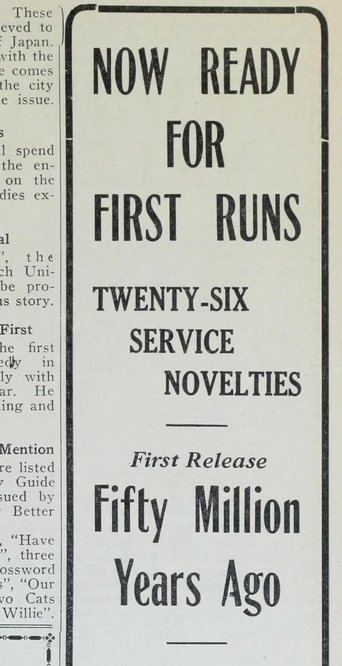
A German animated film about dinosaurs that was repackaged in the United States during the Scopes Monkey Trial. The opening scenes depicting the formation of the earth, and early marine life, employ such simple means of simulating movement as a moving camera and sliding cels and overlays. One primal, insect-like creature is pictured by means of an elaborate jointed cutout, its legs and antennae manipulated frame by frame—a technique favored by some early animators. Most of the creatures in this film pose sedately before painted backdrops or simple settings; the effect is that of museum dioramas come to life.
Cortometraggio animato
Set in contemporary Bolivia, a love story between an Aymara man and the daughter of a white landowner. The film was censored and cancelled by the authorities, due to its "social critique" (highlighting the condition of indigenous Bolivians) and the controversial idea of a white woman falling in love with an indigenous man.
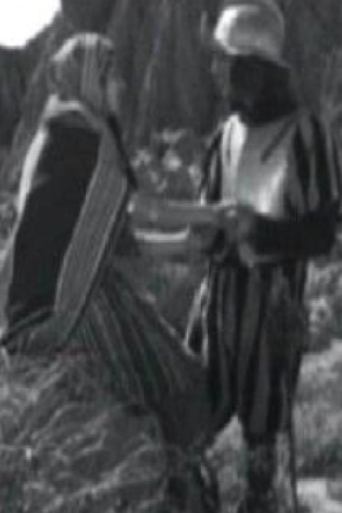
An Aymara woman strugges against accusations that she is unfaithful to her husband.
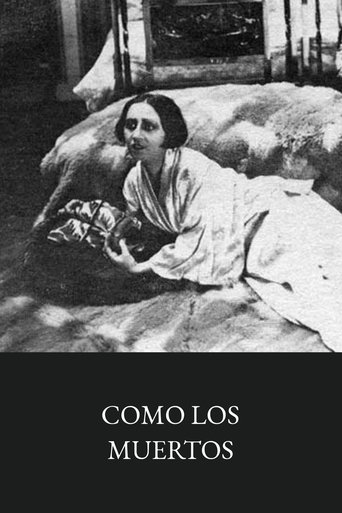
A man suffers from leprosy. The disease progresses in such a way that it drives him to madness, without his wife's knowledge. She begins to suffer a progressive moral deterioration, which completely ruins the marital relationship, this intense conflict leads to the worst outcome.

Felix, hungry and looking for a meal, hears that food is plentiful down south, and decides to check it out...
Elizabeth Trent lives alone on a farm with her adopted son, Donald, having been deserted by her husband, John, years earlier when he went to Alaska to make his fortune.
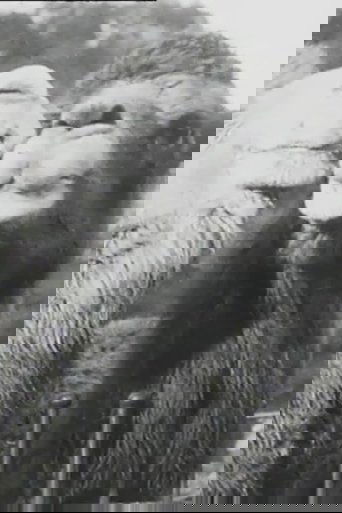
A Christmas message from Topical Budget featuring two camels.
According to Yomota Inuhiko's What is Japanese Cinema?, this is the first film produced by a Taiwanese person in Taiwan (circa 1925).
A commercial promoting products from the Koh-i-noor company, whose factory based in the Czech town of České Budějovice produces Hardtmuth pencils. A pencil draws a man and a lion, subsequently adding iron bars around the animal. The man is fighting with the lion. The cat first devours the man and then spits him out. An elephant appears - the image known from the Koh-i-noor erasing rubber - and performs some acrobatics. The rubber with the elephant erases the picture of the lion and the pencil scribbles over the man's figure.

A defining cultural phenomenon of the Roaring Twenties, the Charleston gained widespread popularity after its appearance in October 1923 in the African American Broadway revue Runnin’ Wild. Newsreels captured the dance’s irresistible rise over the course of the decade. Fox News, Vol. 6, Release 74, issued on 13 June 1925, featured Charleston footage filmed at the Fox studio in New York and at Starlight Park, a prominent amusement park in the Bronx. In the studio footage the Charleston was demonstrated by a group of dancers sent by none other than Texas Guinan, the famed queen of New York speakeasies – among them was a very young Ruby Keeler, who, just a few years later, would marry Al Jolson and go on to become a successful actress. The surviving set of outtakes showcases a performance by an unidentified dancer embodying the Charleston’s spirit of freedom, fun, and youthful rebellion that so captivated audiences of the era.
The Funeral of Mr. C.R. Das, the first Indian mayor of the city of Calcutta. Prod.: Gaumont (Journal Actualité Gaumont) DCP. D.: 1’. Bn
India. Muslim religious ceremonies celebrated in Calcutta Year: 1925 Country: Francia Running time: 1'
The resultant faces this time are: Lady Astor, David Belasco, Clara Kimball Young, Billie Burke and Larry Semon.

A short documentary that explores the culture and traditions of Egypt. Made by famous Egyptologists Harry Burton and Albert Morton Lythgoe, the film presents the many similarities and differences between ancient Egypt and the one from 1925.

A picturesque portrait of Stratford-on-Avon in the 1920s, evocatively photographed by British cinema pioneer Cecil Hepworth.
A Krazy Kat short.
