
Young Eagles 1944
The spoiled Marianne has switched cocktail parties to flight lessons.
The spoiled Marianne has switched cocktail parties to flight lessons.

Backstage before a performance, a French actor recalls his time in Madagascar during World War II, when he secretly ran a Resistance radio station under the watch of a collaborationist police chief. His story unfolds in flashback, revealing espionage, deception, and divided loyalties within the French ranks. Made for Britain’s Ministry of Information, this 1944 French-language propaganda short satirizes Vichy opportunism and wartime hypocrisy, and was shelved for decades before its release in 1993.

A nightclub dancer makes it big in modeling, leaving her dancer boyfriend behind.

Framed for two crimes he didn't commit, and betrayed by his girl, Cliff Banks finds himself on the run from the police. Now distrustful of everyone, he finds a safe haven hiding out at a quaint country cottage under the care of a kindly old farmer and his daughter, a Cinderella-like blind woman who seems to be able to communicate with nature. There he is forced by their love to question his misanthropy.
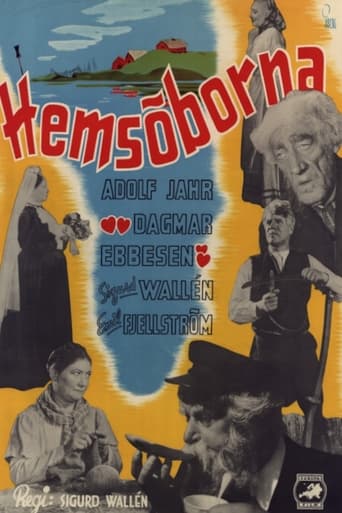
In the Stockholm archipelago in the 1880s, Carlsson move out to an isolated farmstead to help the widow Flood with the farm. Carlsson has big plans for the island, including having paying guests in the summer but Gusten, the son of the widow, is negative. Plot by Mattias Thuresson.

A beautiful child star tires of life in the spotlight and so disguises herself and sneaks off to join a Civilian Conservation Corps camp to work with normal kids. It doesn't take her long to discover that being "normal" isn't easy as it looks. When a crop is in danger of being ruined because there are not enough people to harvest it, the girl employs some of her famous colleagues to lend a hand. Songs include: "Too Much in Love," "Here It Is Monday," "Delightfully Dangerous," "Hawaiian War Chant" and "Notre Dame."
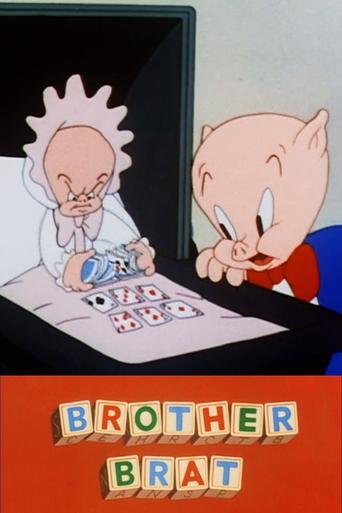
A "Rosie the Riveter" type is in need of a baby-sitter for her awful child. The only person available is a clueless Porky Pig. His only instructions are to use a book of child psychology. After fruitless attempts to control the brat, his mother returns to show Porky how to use the book - as a paddle on his little behind.

Set in the late thirteenth century, this film depicts the defense of southern Japan led by the Kono clan against the Mongol invasion in 1281.

A hunt for a spy in a hotel in the South of France just before World War Two.


Pvt. Snafu becomes a superhero, only for him to become the world's dumbest one because he won't study his field manuals.

Cass Brown is about to marry for the second time. His first marriage, to Isabel, was annulled. But when he discovers that Isabel has just had their baby, Cass kidnaps the infant to keep her from being adopted. Isabel's parents hunt for the child and discover that Cass and Isabel are still hopelessly in love.
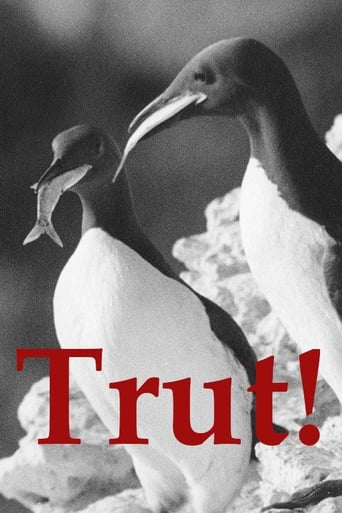
Arne Sucksdorff’s short documentary observes gulls raiding nests and stealing eggs with ruthless persistence. Though presented as pure nature study, the film was widely read as an allegory of Nazism—a symbolic parable of predation and violence during wartime. Sucksdorff himself denied such intent, but remarked that “a film that is not open to interpretation is a dead film.”

A 17th century woman, imprisoned for fighting in a bar, recounts her past to a priest. She tells of her father teaching her how to fence, of being sent to a convent by her aunt when her father died, of escaping by dressing as a man, and of her life as a man following the escape.

Young women at a precision optics factory in wartime Japan push to exceed production quotas, enduring illness, injury, and personal hardship to “serve the country.” Led by Tsuru Watanabe, they fight fatigue and setbacks to keep their line moving—even when duty collides with grief.

An ego clash between two friends, Madhav Pandit and Pande, over cultural differences shatters their families' happiness, leading to broken engagements, forced marriages, and a daughter's disappearance, all designed to teach Pandit a crucial lesson.

While doing their respective yardwork, the fox and crow (next-door neighbors) overhear a radio broadcast encouraging everyone to "love thy neighbor". The fox concludes, "I'm going to love my neighbor... if it kills me!" The crow tends to make a nuisance of himself as he borrows the fox's lawn mower and destroys it. Next, he borrows everything in sight the fox owns for an upcoming "Birthday" (at which point, the fox destroys his radio). The fox installs a security system but the crow still arrives at his house through an underground route. Finally, the fox travels to the Southwestern U.S. desert planting his home atop a high rock pillar... but the crow still returns. At this point, the fox freaks out borrowing something from the crow... "Some feathers 'cause I wanna be an Indian!". The naked crow concludes that the fox is "a mental case".
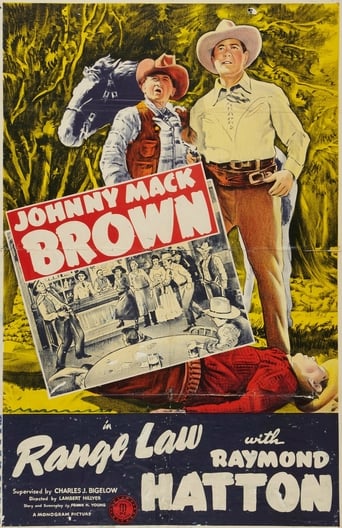
Range Law stars Johnny Mack Brown as "Nevada" and Raymond Hatton as "Sandy", the same characters they played in most of their mid-1940s Monogram westerns. This time, Nevada and Sandy, US marshals both, set out to collar some renegades who've been driving out the local ranchers. It's just possible that one of said ranchers is behind this land-grabbing scheme.

Though plagued by ill health all his life, a young Japanese man is obligated to fulfill his family's longstanding military tradition.

Set during the early part of his reign, Ivan faces betrayal from the aristocracy and even his closest friends as he seeks to unite the Russian people. Sergei Eisenstein's final film, this is the first part of a three-part biopic of Tsar Ivan IV of Russia, which was never completed due to the producer's dissatisfaction with Eisenstein's attempts to use forbidden experimental filming techniques and excessive cost overruns. The second part was completed but not released for a decade after Eisenstein's death and a change of heart in the USSR government toward his work; the third part was only in its earliest stage of filming when shooting was stopped altogether.
