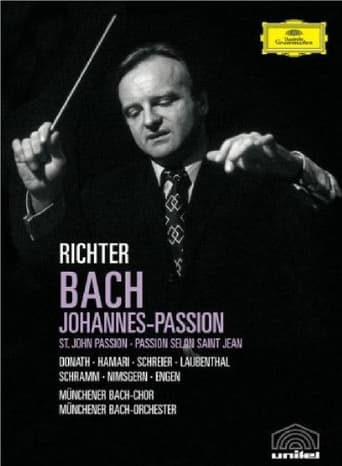
Bach: St. John Passion 1971
Karl Richter conducts Bach's Johannes-Passion with the Muenchner Bach Chor & Orchestra.
Karl Richter conducts Bach's Johannes-Passion with the Muenchner Bach Chor & Orchestra.
Follows the experiences of two brothers and their little sister as they explore the inside of a large empty house which is rumored to be haunted.
Mexican feature film
Mexican feature film
Mexican feature film

Mexican feature film

A short documentary by Claudia von Alemann.
David Cort of the Videofreex travels to Jerusalem. This tape contains raw footage of him as he is taken on a tour through a poor neighborhood by a group of young men. There is talk of the Israeli Black Panther Party, and of drug dealers and poverty. Somebody says the tape is being made for the Jewish Museum in NYC. The Israeli guide talks about the movement, and says the bourgeois and the poor can meet through parties and drugs. They visit a woman and her children who are living in poverty, and interview her about the needs of her family. She says, “You coming to take pictures won’t help us.” During the next scene in a room full of people in suits, the conversation is about the Black Panther Party and the plight of the poor.
The Videofreex had several experiences with the Black Panther Party, including interviewing Illinois Chapter Deputy Chairman Fred Hampton and New Haven Minister of Information Cappy Pinderhughes. In this tape, recorded on March 5th 1971, the Videofreex one-person camera crew Bart Friedman is walking the hallways of CBS, trying to find out where a video statement by Black Panther Eldridge Cleaver is located. The shots are mostly close up on people’s torsos and there is some image loss, but the sound is intact. The tape has an eerie espionage feel. There is a conflict between station personnel and Bart: they keep telling him, “You can’t tape in here.”
Gaelic lessons on the Isle of Lewis.
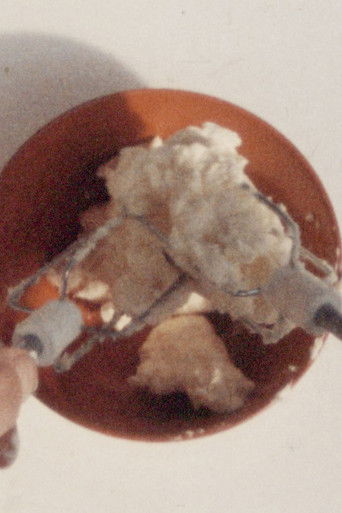
Drawing upon the resources of the National Archives and the almost documentary like paintings of Remington and his contemporaries, Report From Wounded Knee is a short history of the official attitudes and postures toward the American Indian that led to the infamous massacre of the Sioux at Wounded Knee. The dramatic use of paintings and photographs, as well as the carefully documented narration, infuse this chapter of American History with a vivid sense of immediacy
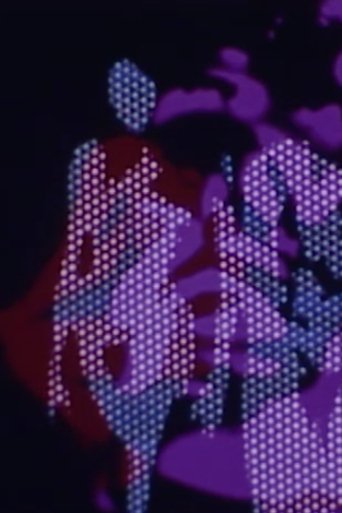
This film appears to focus on the female body in an artistic and colorful manner through the use of superimposition and flashes of repeated scenes. The film begins with two females in the nude, chatting, smoking, and eating saltines. Other scenes include two females in the nude and in a variety of positions: slouching, standing, sitting, etc. They are displayed in many colors and patterns, purple in one scene and polka dots the next. At one point, the women appear to be colorful cutouts moving jaggedly around the screen. In this film and in Hexagrams, Byron re-uses some of the same film scenes to create original content. Festival of Cyclists was created using a film technique invented with a Bell and Howell Film 16mm camera. In this technique, a short loop of film is repeatedly printed onto the camera roll. Byron wrote and published an article in Filmmaker's Newsletter about the technique. In 1972, Festival of Cyclists was shown at the 10th Ann Arbor Film Festival.

The objective is to show myself visiting myself, and then showing the frustration of loneliness, by trying to be with myself. –Al Wong
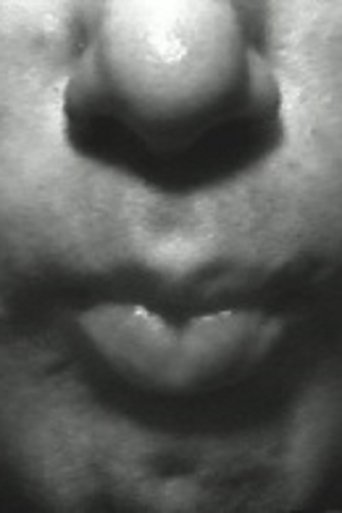
Using extreme close-ups and amplified sound to force the viewer into the space of his body, he experiments with his mouth as a container for saliva, holding it in as long as possible, trying to catch it in his hands.

“Sociological cinematic observation about the life of young people.” About hippies and other informal communities.
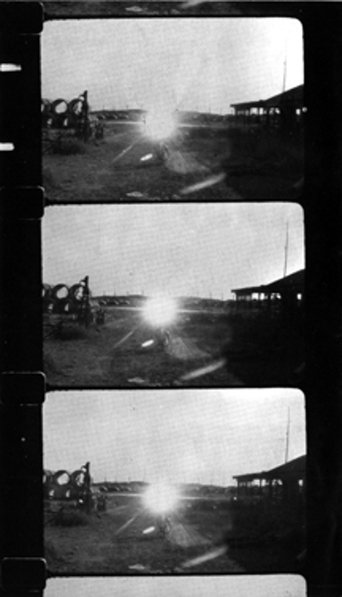
The camera slowly zooms, in over a long period of time, on the light of the sun reflected in the mirror of a bicycle parked at the construction site. To this is added a slowly evolving flicker effect derived from negative-positive reversals, progressively dismantling the distance from the subject. Nakai created a masking film with a calculated pattern of black and white frames into which he inserted positive and negative images and made a print out of two separate rolls of film. The original projection speed was 16 frames per second, but the sound is separate from the open-roll tape rather than burned in, so it can also be screened at 24fps. Also, the original sound consisted of the friction noise of rubbing steel, but in 2019 a new version of the sound was created featuring the friction noise of glass. Two versions of the film exist: 24:15 mins at 24 fps and 40 mins at 16 fps.
Using Paraguay, Peru, and Guatemala as examples, Bananera libertad analyzes the dependence of small Third World countries on global trade, a form of exploitation from which European consumers profit greatly.
