Theory of Uncertainty 1978
Short by Andrea Granchi.
Short by Andrea Granchi.

Rostock - GDR county on the Baltic. This county covering the northern part of the GDR is the welcoming destination of many people: holidaymakers, tourists, people on business trips and seamen. Sometimes there is an equal number of local residents and visitors. The film reports on the development of this formerly backward region to an advanced agrarian and industrial county. It reports on the way of life and achievements of the people and gives the viewer an impression of the county's scenic beauties.
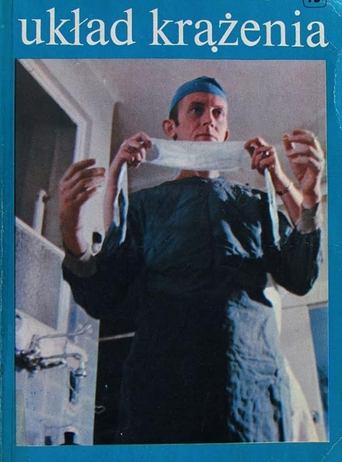
It is a psychological and social series, the protagonist of which is a doctor, Dr. Bognar. He is characterized by honesty, vocation, professional passion and stubbornness. Falsely accused of euthanasia and suspended from the right to practice the profession, he decides on his own - regardless of the investigation conducted by the MO authorities - to investigate and find the real culprit. To this end, he moves from place to place, changes jobs several times, meets different people. Each episode presents the next stage in the search for Dr. Bognar. Bognar goes through a complex process of gaining life and human experience - from section to section it becomes richer with experience gained from working in rural health centers or provincial hospitals.
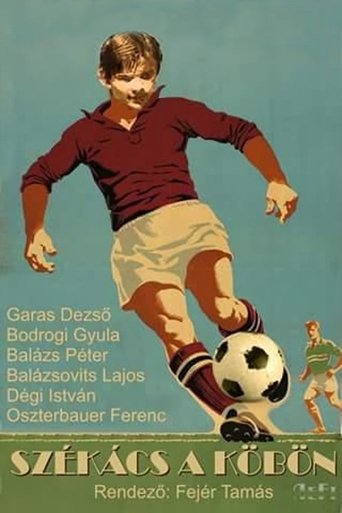
Laci Székács, the best football striker in his class, is not good at maths.When it comes to writing his test, he can't solve the examples.The children do everything they can to stop their partner's father from going to the teacher, because they know that if he finds out the result, he won't let Laci play.In the end, the boy, although he learns maths, can't take part in the championship, but the other children are also banned from playing...

Land Art performance by Nanda Vigo.
On 7 July 1978, the Solomon Islands regained its independence from Britain. This documentary, filmed by cinematographers John Hosking and Academy Award winner Dean Semler, looks at the people of these islands and their views on independence, and records aspects of their way of life, including their songs and dances. It also describes some of the problems facing the new nation and what is being done to combat them.

In Charente, in Mansle, it's la frairie, the local festival. We attend the preparations and the celebration itself.
Magda breaks up with Michał, the father of her child, and returns to Poznań. There she meets the composer Adam, but her previous partner reappears in her life.
A Latvian engineer returns as an expert to the shipyard on the Coast, which he had to leave once.

Experimental film by Alida Walsh
A film about the relationship between real life and art in photography, photo as the capturer and interpreter.
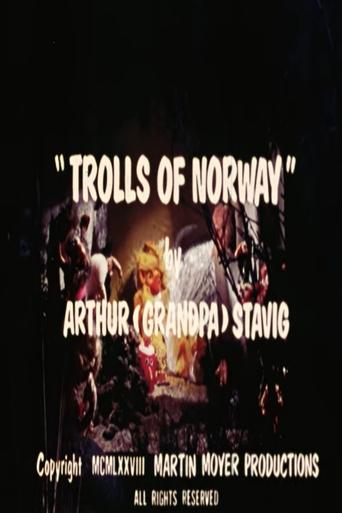
Arthur (Grandpa) Stavig takes us on a journey through the various trolls which once called Norway their home.

Compilation Feature, featuring DAVY CROCKETT, KING OF THE WILD FRONTIER, and cartoons presented by the cast of the Mickey Mouse Club revival.


Short documentary dedicated to the life of the "young atomohrad" Pripiat, directly after operations began at the Chornobyl station in December 1977. This work is a triumphant overview of the results of the journey from the beginning of the power station's construction to its successful outcome. The builders and witnesses of the station's creation reminisce on the years of construction, which became a "school of life" for those involved. Doctors talk about the excellent ecological state of the environment near the station, youths ski in the nearby snowy woods. The "big happy family of the atomohrad" celebrate the New Year. Even in winter, these scenes are depicted in bright, saturated colors, with gentle reminders of the invisible work of the Atom, illustrated with glittering diagrammes, sensors and monitors of the station, all details emphasizing the joyful existence within the "Atomohrad".
West Side Highway was first screened by filmmaker Donald J Pollock on a super 8mm print at an open screening at the Millennium Film Workshop on East 4th Street back in 1978. Unseen for decades, it’s a simple document of a place both familiar and no longer existent, moving in its quiet historicity.

According to the director, this film is made by Osaka people, for Osaka people (?). according to the director. The director himself appears in the film and gives a light-hearted performance. The combination of the slapstick sensibility and the beautiful screen is indescribably stylish.
The light and shadows of today's youth are intermingled in a prismatic world of scenes depicting images of agonizing days with a surreal touch, and scenes of rampaging in all directions in the real world. Eight-Man is an energetic young man who dreams of being Superman but can't be.
An Alberto Bróccoli's animation short film.
Between 1976 and 1982, Jane Veeder traveled the western mountains of the United States with Phil Morton. On these road trips the two would shoot video of their surroundings using a portable video recorder. Some of these video recordings of the western mountain terrain were used to produce the televised video piece known as Program #7. Program #7 was produced as a part of a larger group of videos known as The Electronic Visualization Center: A Television Research Satellite to the School of the Art Institute of Chicago. Program #7 was televised on Chicago Public Television as a part of a program which ran work by independent video creators. Program #7 was created using a Sandin Image Processor and a Bally Home Computer. Graphics generated using a Bally Home Computer would be overlaid overtop of the video recorded by Veeder and Morton using the Sandin Image Processor. The Sandin Image Processor would also be used to add varying patterns to the image.
