Arrowcatcher

Arrowcatcher 1978

1

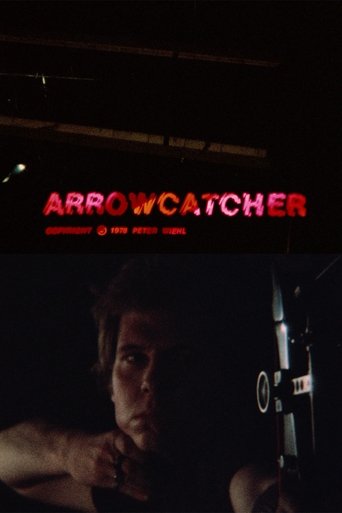
At venues such as Southern Exposure in San Francisco and Some Serious Business in Venice, California, Wiehl performed Arrowcatcher, creating a sculpture through shooting arrows into a rectangular structure that would visibly suspend their movement in time. He explored variations of form and multi-layer, parallel panes of material – cloth, Plexiglas, and glass with mirror base. Filmed with a high-speed military camera, the slow-motion film Arrowcatcher (1978) was screened prior to his live performance at the San Francisco Museum of Modern Art. The sculpture remained on view as part of Exposures, one of the group exhibitions presented within the major overview The Floating Museum: Global Space Invasion II (1978). The Floating Museum (1975-78), founded and directed by Lynn Hershman Leeson, worked with Wiehl on his site-specific project A Month Becomes An Hour at The Foothills Community Planetarium in Los Altos, California.

1978

Buscando el camino de tu amor

Buscando el camino de tu amor 1978

1.00

In his quest to find true, Francisco goes from one lover to another driven by an exacerbated passion that immerses him in a plot typical of film noir in which the protagonist is the victim of a plot to end his life.

1978

El enterrador de cuentos

El enterrador de cuentos 1978

1

Based on the book Undertaker of Tales and 40 Barbarities by Roman Leonardo Picón.

1978

O Bondinho de Santa Tereza

O Bondinho de Santa Tereza 1978

1

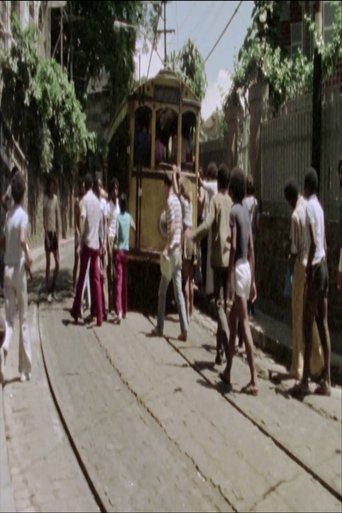
Through documentary images, old photographs and interviews, the director presents the Santa Tereza cable car, not only as an original means of transport and tourist element, but also as an important part of the history of the city of Rio de Janeiro.

1978

Zerda's Children

Zerda's Children 1978

1

Ethnographic film documents a family of woodcutters living in isolation in the mountains of Calden, at the geographic center of Argentina. Through his narration, Sixto Ramon Zerda explains his wish for his children to be educated and to avoid the punishing work and exploitation he has suffered. Introduction narrated by Henry Fonda.

1978

Beginning Responsibility: Taking Care Of Things You Share

Beginning Responsibility: Taking Care Of Things You Share 1978

1

Isabel takes very good care of her own things, but is careless with things that others share with her. When she "magically" changes places with those she has returned damaged property to, she learns to treat all property as if it were her own.

1978

The Final Answer

The Final Answer 1978

1

A man enters the elevator to go to his office late at night. An unidentified man asks him some multiple choice questions he'd better answer correctly.

1978

Cylinder Sphere and Solid

Cylinder Sphere and Solid 1978

1

Cylinder, Sphere and Solid opens with a white screen. A performer enters from the right side and draws a black circle. He continues to draw and finally, after drawing and erasing, the circle becomes a cylinder. While continuing to draw and erase the cylinder becomes two intersecting circles. After drawing some more the drawing becomes two spheres.

1978

Au pays des couchers de soleil

Au pays des couchers de soleil 1978

1

Fables have their relevance, particularly when dealing with such delicate topics as politics. This is the story of a retired gentleman with a distinctly British demeanor who buys nine provincial flowers to be planted in his garden. He avoids the fleur-de-lis, which, however, doesn't avoid him. Eventually their attitudes towards each other soften due to the beneficial effects of a watering can.

1978

The Moth-Eyed Man

The Moth-Eyed Man 1978

1

"This is a portrait of Brakhage in Brakhage's style. I can't see any justification for making this film." - Ken Jacobs

1978

Nimbus

Nimbus 1978

1

"Nimbus was Robert Creeley's first choice to show in conjunction with a lecture at Rocky Mountain Film Center in 1978. This film owes much to Creeley's poetry and Edward Hopper's paintings, although no conscious consideration structured the working process - Hopper in the sense that Brian O'Doherty writes of the paintings as displaying 'an observed, an observer and a witness.'" –G.D.

1978

The Moieties

The Moieties 1978

1

"... where beads of light searching out 'the beloved' do pulse with the beat of the filmmaker's heart in perfect contrapuntal rhythm with all else in the frame of that sequence." – Stan Brakhage, World Film Festival of Canada

1978