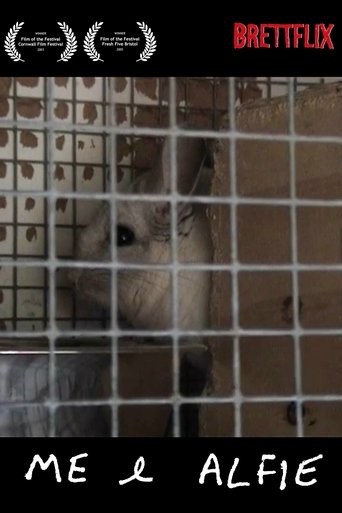
Me & Alfie 2003
A man confides in his long suffering best friend. Winner of "Film of the Festival" 2003 at The Cornwall Film Festival. Winner of "Best Film of the Festival" at the 2005 Fresh Five Festival in Bristol.
A man confides in his long suffering best friend. Winner of "Film of the Festival" 2003 at The Cornwall Film Festival. Winner of "Best Film of the Festival" at the 2005 Fresh Five Festival in Bristol.

A short experimental film.

Recorded at the Gods Festival in Bradford, England on June 2, 2002, where Hardline was the headliner. Hardline's return to the scene was the event of the year in the world of melodic rock, with Johnny Gioeli on top form, and Josh Ramos stepping in for Schon. Setlist: "Intro", "Hot Cherie", "Life's a Bitch", "Everything", "Face the Night", "Takin' Me Down", "Weight", "In the Hands of Time", "Only a Night", "I'll Be There", "Drum Solo", "Rhythm from a Red Car", "Keyboards Solo", "Dr. Love"

José José: Biografía en canción Vol. 1 documents his early successes and the evolution of his style, highlighting the beginning of his legend as "El Príncipe de la Canción".
This is a story about the life of a lonely person, who is striving for happiness and makes life meaningful for "the other happy men".
The film is inspired by the architecture of the building of the CAC, Contemporary Art Center in Vilnius.
A computer guided choreography of abstract forms and explicit body language.
Moving, narrative documentary depicting the effects of AIDS on four young girls' lives.

2003 release
2003, Double 16mm film projection performance, black/white, sound, variable duration (approx. 15–20 minutes). Music by Charlemagne Palestine: Schlingen-Blängen (1979/1999) Alignments for Linea is a site-sensitive projection performance. Intermittent machine-precision line scratches on black opaque film provide the basis for this dual projection performance. The “performance” consists in an open set of carefully choreographed projector movements, including the alignment-misalignment-realignment in the distribution of the projected light or light incisions across the screen. Micro adjustments in the optical bending and diffraction of light introduce an uncanny sense of mobility that seems to transcend the fixed parameters of the loop form.

Remembering the High Lonesome is the story of the making of a classic documentary film. It is also a profile of filmmaker, photographer, artist, and musician John Cohen. Through interviews, as well as Cohen's own photographs and scenes from his classic film The High Lonesome Sound: Kentucky Mountain Music, filmmaker Tom Davenport focuses on Cohen's journey to rural Kentucky in the 1950s to document the lives of the people there and his "discovery" of the musician Roscoe Holcomb. Remembering the High Lonesome also examines the birth of a new artistic ethic and counterculture through John Cohen's involvement with the Beat Generation, abstract expressionist painters, and the Folk Music Revival, and explores the role of an outsider documenting the life and arts of an Appalachian community.

The film is based on M. K. Binodini Devi's 1966 play of the same title which draws on the playwright’s interactions with Ramkinkar Baij, the eminent sculptor and her colleague. Gautam, an artist, determined to uphold his freedom, is torn between his two loves and their outlooks towards his passion.
The story takes place in one of Kyiv's neighborhoods. The father of the main character, 15-year-old Yanka, is an alcoholic, and she earns a living by returning empty bottles. She is still just a child, and although her life is not easy, she knows how to enjoy it. But one day, everything changes...
In early 1970, Salvador Allende initiated a unique process in Latin America: the peaceful path to Socialism.

Two young men arrested for robbery in Argentine prisons. A woman detained for murdering her husband, a former oppressor and torturer. A filmmaker who decides to film their life stories and, in doing so, also recognizes the detention of those who live in the "world of freedom."

A young girl arrives at a pool and is told that if she drowns herself, she’ll become a mermaid. Always wanting to be one, the girl does indeed drown herself. Will she become a mermaid? Or will she die trying?

Through the use of first person narrative and rare archival images, this documentary provides a moving glimpse of the women who have skillfully brought scores of children across the threshold of existence. Narrated by Phylicia Rashad, this evocative and passionate film celebrates women who have committed themselves to holistic answers amidst powerful misconceptions about the practice of midwifery and virulent opposition from practitioners of Western medicine.

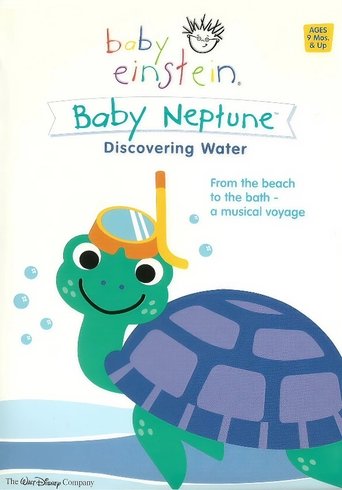
Baby Neptune: Discovering Water is the 11th video in the Baby Einstein series, and it focuses mainly on water in various locations. This was the first Baby Einstein video where Julie Aigner-Clark, the creator of Baby Einstein, was not involved at all in production, which was present until Clark wrote poems and did the dialogue of Numbers Nursery. It is also the first originally made Disney video made from the series.
