
Break 1964
A primary school break is a great opportunity to observe children's behavior. Contrary to the film title, school breaks are full of sounds and voices, small and big dramas.
A primary school break is a great opportunity to observe children's behavior. Contrary to the film title, school breaks are full of sounds and voices, small and big dramas.

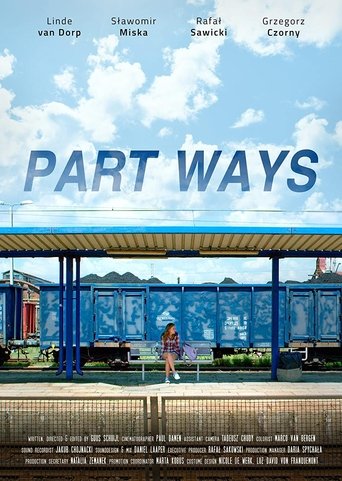
A young girl hitchhikes across Eastern Europe. Soon she has to find her way on her own for the first time in her life.
The film is dedicated to the memory of American surrealist Paul Sharits. Sharits sent Robakowski a film score with a proposal to use it in a film production, but the outbreak of martial law prevented the idea from being realised. The film was not made until 2004. The film was created as a result of a very rigorous, constructivist formal procedure, subordinating specific visual values to the melodic line of the musical piece. During the screening, as the notes of the composition are played, corresponding colours appear on the screen, eight colours that correspond to the notes of Fryderyk Chopin's Mazurka Op. 68 No. 4. The vibration of the changing colours and the radiance of the light create a coherent whole with the composer's nostalgic piece. The colourful fields pulsating to the rhythm of the music evoke, on the one hand, the American's structural cinema and, on the other, show the almost vital energy of colour.

The protagonists of the film, the patients of the hospice, teach us what life really is and what it could be if we just stopped for a moment to look, talk, hug and breathe.
Saxophone, Double Bass, Drums. Three little stories told through the medium of movement. A painterly visualization of the music of the band KWAŚNY DESZCZ (sour rain).
A highly expressive cry from the author of the manifesto, uttered while his head emerges from the water: "I should like to tell you all that art is energy!"
A “Puppetoon” style retelling of the tragic tale of Orpheus and his lost love. It features a very vivid rendering of the Underworld, with Hades and Persephone represented as strange iconic totems.
Batory is a Trans Man and inmate at the Warszawa-Grochów Detention Center in Poland. Truly a film inspired by the cinema-verité movement, Batory navigates having difficult conversations with his significant other and parents upon his release - showing us a unique perspective on the lives of those in other worlds.

The film follows the everyday life of modern women and their Men for Hire in Poland, Germany and UK. In doing so, we explore a side of human nature reflecting on today's society and will reveal its black comedy aspect.
Experimental short film by Wojciech Bruszewski.
The change of the political system that occurred in Poland in the early 1990s brought not only hopes related to the social and economic transformation, but also anxieties and fears. At the time, such fears were treated as evidence of incompatibility with the new capitalist order and thus consistently relegated to the margins of public debate. The film is an attempt to recall the traumatic experiences of this period.
The detective tells about one of his cases.
A story of combining the obsession with collecting sperm with the inability to choose to use it. The heroine is entangled in one-off love stories, and the only constant relationship connects her with the fish. What happens when her space becomes the only one available for another sperm storage fridge?

In a near-future dystopia, citizens are rising against their increasingly oppressive nationalist government. Kuba, a twenty-year-old member of an illegal opposition group, gets arrested during a street protest. Despite his clear political involvement, he receives a lighter treatment than he expects. As it becomes apparent that there is a personal dimension to his rebellion, he has to make a choice that will determine the shape of his future.
Sam Fisher's daughter is abducted. From that moment on, a man tries to get her out of her kidnappers' hands, risking his life in the process....

A cheerful series about the adventures of a group of children living in the countryside, produced in a Polish-West German co-production (the pictures were taken in picturesque locations in Dąbrowa nad Czarna, as well as in sand caves near Sulejów). The biggest attraction of the area is the historic water mill, which becomes a great place for fun for an amused crowd. As is usually the case in the countryside, its equal inhabitants are - next to people - animals. No wonder the little heroes become friends with them. And so days go by together. Almost each of them brings a new, amazing and unexpected adventure. The child's imagination makes even ordinary events take on the flavor of fairy tales and mystery.
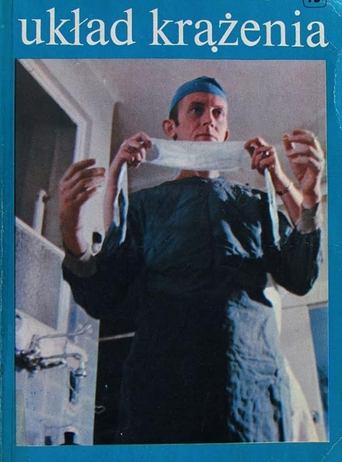
It is a psychological and social series, the protagonist of which is a doctor, Dr. Bognar. He is characterized by honesty, vocation, professional passion and stubbornness. Falsely accused of euthanasia and suspended from the right to practice the profession, he decides on his own - regardless of the investigation conducted by the MO authorities - to investigate and find the real culprit. To this end, he moves from place to place, changes jobs several times, meets different people. Each episode presents the next stage in the search for Dr. Bognar. Bognar goes through a complex process of gaining life and human experience - from section to section it becomes richer with experience gained from working in rural health centers or provincial hospitals.

The film shows in a colorful way the acting environment of Poland in the interwar period of the 20th century from behind the scenes. The main character works as a show dancer in theaters and cabarets, experiencing both professional successes and humiliating failures and poverty.
Adaptation of the novel by Jarosław Iwaszkiewicz. An epic picture of the fate of representatives of the Polish intelligentsia from 1914 to 1947. Their fate, determined by two great wars, which shook the world and scattered heroes all over Europe, changed their fate, life choices, ended love and started others. The series is the story of the next generations of three families: Myszyński, Royski and Gołąbek.
