
The Best of Everything 1970
The Best of Everything is an American daytime soap opera which aired on ABC from March 30, 1970 to September 25, 1970. The series was a spin-off of the 1959 film of the same name and the novel that spawned it.
The Best of Everything is an American daytime soap opera which aired on ABC from March 30, 1970 to September 25, 1970. The series was a spin-off of the 1959 film of the same name and the novel that spawned it.
Answers for Americans is an American public affairs program which aired briefly, first in prime time and then on Sunday afternoons on ABC from November 1953 to February 1954. Social and political issues, both foreign and domestic, were discussed by a regular panel, including university professors, publishers, and retired military officers.
The Mini-Munsters was an animated one-hour telefilm that was aired as part of The ABC Saturday Superstar Movie in 1973, and was based on the characters from The Munsters.
The Mad, Mad, Mad Comedians is an animated half-hour ABC television special produced by Rankin/Bass Animation, best known for their stop-motion Christmas special Rudolph the Red-Nosed Reindeer. The show aired on April 7, 1970 before the airing of that year's Oscars. It was a tribute to early vaudeville, and featured animated reworkings of various famous comedians' acts.
Of Many Things is a half-hour panel discussion television series which aired on ABC from October 5, 1953, to January 11, 1954. It was hosted by Dr. Bergen Evans. Topics on the program ranged from practical jokes to popular music, with Mitch Miller as a guest. Another episode focues on the German submarine U-505, captured by the United States Navy in 1944 during World War II. The program aired at 8:30 p.m. EST on Mondays following Sky King on ABC. It aired opposite Arthur Godfrey's Talent Scouts on CBS and The Voice of Firestone on NBC.
The Mail Story, subtitled Handle with Care, is a half-hour dramatic television anthology series which aired on ABC for thirteen weeks from October 7 to December 30, 1954. In the premiere episode then Postmaster General Arthur Summerfield, who served in the administration of U.S. President Dwight D. Eisenhower, introduced the program to American audiences. The program was partly documentary in offering explanations of the services available from the Post Office Department, now known as the U.S. Postal Service. It also had original dramas about individuals or groups who tried to misuse the mail and hence faced apprehension for their crimes. Such segments ranged in date from the 1850s with stagecoach robberies to contemporary times with sophisticated mail fraud cases. The three-month series aired at 8 p.m. on Thursdays opposite Meet Mr. McNutley, renamed The Ray Milland Show on CBS, and You Bet Your Life with Groucho Marx on NBC.
Quizzing the News was an American game show which aired on ABC from August 16, 1948 to March 5, 1949 at 8:00 PM on Monday nights. Alan Prescott hosted the show, which featured Arthur Q. Bryan, Milton Caniff, Mary Hunter and Ray Joseph as the panelists. The series was produced by Robert Brenner Productions.
FYI was an information series seen on the ABC network in the early 1980s. Hosted by Hal Linden, the program features answers to questions that many viewers ask, from common questions such as, "What's the leading cause of burns in children?", to questions not many ask, but may be interesting to know, like "Can a child dance his/her way to better grades?", just to name a couple. With each show lasting sixty seconds, FYI was seen three times a day on weekdays, following ABC's popular soaps All My Children, One Life to Live and General Hospital, using a formula not unlike ABC's Saturday morning mini-programs, such as Time for Timer, The Bod Squad and Schoolhouse Rock. Two books based on the television series have been published, both by M. Evans and Company: FYI: Unexpected Answers to Everyday Questions and More FYI: Further Tips for Healthful Living.
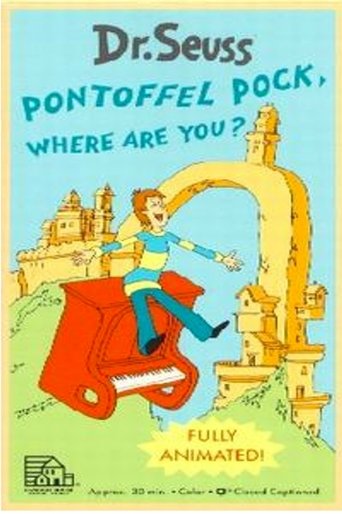
Pontoffel Pock, Where Are You? is an animated musical television special written by Dr. Seuss, directed by Gerard Baldwin, produced by DePatie-Freleng Enterprises, completed in 1979 and first aired on CBS on May 2, 1980. This was one of the final cartoons done at DePatie-Freleng as the studio would be sold to The Coca-Cola Company and become Sunbow Productions in 1981. The songs are by Joe Raposo.
The Magic Window was an American children's television program broadcast on ABC affiliate WOI-TV in Ames, Iowa from 1951 to 1994. With a run of 43 years, it was the longest running children's television program in American history. For all but the first three years of the show, it was hosted by Betty Lou Varnum, a pioneer in central-Iowa broadcasting. Betty Lou Varnum, who is best known for The Magic Window, but was versatile enough to host such other shows as a teen dance party, election coverage, and a call in 'issues' show, hosted the show, along with a cast of puppets such as Gregory Lion, Dusty the Unicorn, and Catrina Crocodile. The heart of the show was Betty Lou teaching kids a new craft each episode. The puppets would help out by opening the curtain to the screen on which various featurettes were shown. These included episodes from Tales of the Riverbank, Felix the Cat, and a series called "Let's Be Friends" which introduced viewers to a child from another city or country, sharing their culture and lifestyle.
Welcome to the Neighborhood is an American reality television series produced in 2005 by ABC that was notable for the amount of controversy it garnered before it was aired. It subsequently became one of the few American TV series to be cancelled before airing a single episode. The show was a contest to win a lush dream home in an exclusive cul-de-sac in Circle C Ranch in Austin, Texas. The catch is that the local families decide who will win, and while they are all conservative, white, upper-class Christians, all the contestants are not.
The Object Is is a game show which aired on ABC from December 30, 1963 to March 27, 1964. The series was the first game for host Dick Clark. Mike Lawrence was the announcer.
The Generation Gap was a primetime American game show that aired from February 7 to May 23, 1969 on ABC. It was originally hosted by Dennis Wholey for the first ten episodes, after which he was replaced by Jack Barry. Fred Foy announced during the entire run. Two teams of three players competed – one composed of people under the age of thirty, the other being people over thirty. At least one member of each team was a well-known celebrity, occasionally playing against a relative on the other team.
Stand By for Crime is an American police drama that aired on ABC on Saturday nights from January 11, 1949 to August 27, 1949. The series stars veteran newsman Mike Wallace under his real name, Myron Wallace. The series is notable for being the first program to be transmitted from Chicago to New York.
ABC Saturday Movie of the Week is a weekly American anthology series that airs on ABC. The series began as the replacement for ABC's Big Picture Show and as a revival of ABC's Movie of the Week theme. Since its inception, it has been ABC's main platform for airing theatrical movies, although other movies air as part of the movie of the week format during the holiday season and as special presentations. As such, ABC airs a movie on every night of the week at some point during the television season styled as [Insert Day] Movie of the Week.
100 Grand is an American game show hosted by Jack Clark. The series ran for three episodes, weekly on Sunday nights from September 15 to 29, 1963 on the highly-touted "New ABC" as the network's attempt to bring back high-stakes game shows after the quiz show scandals of 1958. When 100 Grand made its debut, it had been two years since any large jackpots comparable to the quiz shows had aired on any broadcast network, and it would be over a decade more before six-figure jackpots returned to television.
