
Rootie Kazootie 1950
Rootie Kazootie was the principal character on the 1950s children's television show The Rootie Kazootie Club. The show was the creation of Steve Carlin and featured human actors along with hand puppets.
Rootie Kazootie was the principal character on the 1950s children's television show The Rootie Kazootie Club. The show was the creation of Steve Carlin and featured human actors along with hand puppets.
Petals is an Australian children's animated television programme produced and created by Mark Barnard and aired on the ABC. It ran from 1998 to 1999 consisting a total of two seasons and 55 episodes and was aimed at pre-school children aged 2–6. After it ended in 1999, the series was still continued to be repeated on the ABC and ABC1 until 2004.
To Save Our Schools, To Save Our Children is a three hours television documentary on public education that aired on ABC on September 4, 1984 . It focus on three critical elements of the education system: students, teachers, and the tax-paying members of local communities.
The Neighbors is an American game show. It aired on ABC from December 29, 1975 to April 9, 1976. It included five female neighbors as contestants, who were asked gossip questions about each other. Regis Philbin co-hosted the show with Jane Nelson, and Joe Seiter was the announcer. It was produced by Bill Carruthers, who almost a decade later, would produce the popular hit game show Press Your Luck for CBS.
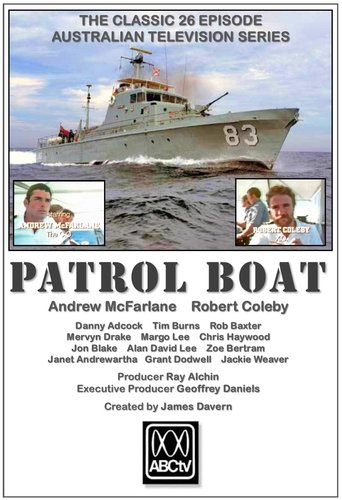
Patrol Boat is an Australian television drama series that screened on the Australian Broadcasting Corporation. Patrol Boat was created by James Davern and two series were produced, in 1979 and 1983, with a total of 26 episodes. Patrol Boat was about the activities of the crew of a Royal Australian Navy patrol boat which patrolled Australia's coastline. The series was produced with the co-operation of the Royal Australian Navy. Two fictional RAN patrol boats were depicted in the series. Attack class patrol boat HMAS Ambush was used in the first season, with filming taking place during 1978 and 1979 around Sydney Harbour, Pittwater, Ku-ring-gai Chase, and the Hawkesbury River. For the second season, the crew transferred to the newer Fremantle class patrol boat HMAS Defiance. The series is similar to the BBC series Warship, screened by the Australian Broadcasting Corporation from 1976, before Patrol Boat. Although the 2007 drama Sea Patrol is based on the same subject, it is not intended to be a follow on to Patrol Boat.
Author Meets the Critics was an American talk show which was broadcast by the National Broadcasting Company, American Broadcasting Company, and the DuMont Television Network. The series began as a mid-season replacement on NBC on April 4, 1948, but was transferred to ABC during 1949. The show was transferred back to NBC during 1951, and then to DuMont from January 10, 1952 to October 10, 1954.
Animal Crack-Ups is an ABC game show which aired in primetime from August 8 to September 12, 1987, after which it aired on Saturday mornings from September 12, 1987 to December 30, 1989 and again from June 2 to September 1, 1990. It was produced by ABC Productions in association with Vin Di Bona Productions and hosted by Alan Thicke, who was on Growing Pains at the time. The program was based on a Japanese series, Waku Waku. The show's theme song was "Animals Are Just Like People Too", created by Thickovit music
Murder Can Hurt You is a 1980 ABC television movie that parodies detective and police TV shows of the 1960s and '70s, much like the way Murder by Death made fun of literary detectives. The plot involves a mysterious "Man in White" who's out to kill famous detectives in bizarre ways, and the heroes are obvious parodies of Kojak, Baretta, Starsky and Hutch, Ironside, Police Woman, Columbo, and McCloud.
Foul-Ups, Bleeps & Blunders is the title of a comedy series that aired on ABC for two short seasons in the mid-1980s. The series is hosted by Steve Lawrence and Don Rickles. Produced as a response to NBC's TV's Bloopers & Practical Jokes, this series similarly focused on outtakes from popular television programs and movies. The series also included a Candid Camera-like segment showing people caught in amusing situations by hidden cameras. The word blooper was not allowed to be uttered, with the term "foul-up" substituted where applicable. The series debuted on January 10, 1984 as a mid-season replacement series, and returned at the start of the 1984-85 season, however after October 1984 the show ceased to be a weekly offering on ABC and instead aired at various times as filler for the next few months before resuming weekly broadcast in the spring, after which it was cancelled.
The Frontier World of Doc Holliday was a failed pilot for a series, starring Adam West. Doc Holliday was a pilot shot in 1959, scheduled to be broadcast as an episode of Cheyenne, titled: Birth of a Legend. starring Adam West. In this chapter Holliday kills a man for the first time in his life, but does not mind that this doomed. This project was led by Leslie H. Martinson, production was provided by Roy Huggins was a major project which failed.
Everybody's Talking was an American game show which aired on ABC from February 6 to December 29, 1967. Former dance-party host Lloyd Thaxton was the host; Wink Martindale and Charlie O'Donnell were the announcers. Thaxton typically closed each episode by saying, "Keep watching, and keep listening, because everybody's talking!" Veteran producer Jack Barry created this show during a brief period working for Goodson-Todman. Due to lingering bad publicity concerning his possible involvement in the rigging of Twenty One and Tic-Tac-Dough in the late 1950s, he asked that his name be kept off the credits. Jerome Schnur Productions packaged the show instead. It was the last American daytime television program aired in Black and White despite the big 3 commercial networks converted to color by September 1967.
The Reel Game was an American game show that aired on ABC from January 18 to May 3, 1971. The series was hosted by Jack Barry and announced by Jack Clark. This show marked Barry's return to producing shows for national television after his 13-year hiatus from television after the quiz show scandals of the 1950s.
A Quiet Word With ... was an Australian conversation television series originally broadcast by ABC TV in 2010 and 2011. Each episode featured New Zealand comedian and writer Tony Martin engaging in a twenty-six minute conversation with a local or international entertainer, mainly other comedians.
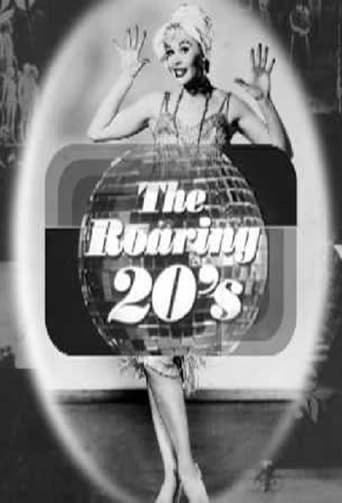
The Roaring 20s is an American drama television series that aired on ABC from October 15, 1960 until January 20, 1962.
The Family Game was a game show that ran on ABC for six months in 1967. Geoff Edwards was originally to host the pilot, but was dropped at the last minute and was replaced by producer Chuck Barris. Although ABC bought the series, they mandated that someone other than Barris be the host; Bob Barker, then hosting Truth or Consequences, was selected without a screen test or pilot. The Family Game was played similar to Barris' more popular ABC game show The Newlywed Game, except that instead of four married couples there were three families. The series is notable for being the last new black-and-white network series to air in America prior to the nationwide switch to color in 1968.

A slightly cynical parody of Candid Camera where hidden cameras capture unsuspecting average people placed in awkward and uncomfortable scenarios, hosted by Bert Convy.
The Mini-Munsters was an animated one-hour telefilm that was aired as part of The ABC Saturday Superstar Movie in 1973, and was based on the characters from The Munsters.
I-Caught is an ABC News newsmagazine program hosted by Bill Weir which ran from August 7 to September 11, 2007 at 10:00 PM ET. Originally a midseason project, the series aired during the Summer and briefly aired in Australia on the Nine Network. i-CAUGHT featured news stories based on video images captured by cell phones, webcams, surveillance cams, and the internet – as well as looking at what happens to the people involved after their video is seen publicly. Among those featured in the premiere was liquid dancer David Bernal, better known to the video-viewing public as David Elsewhere.
Celanese Theatre is an anthology television series which aired from October 3, 1951 to June 25, 1952 on ABC. The show aired as a 60-minute program on Wednesdays at 10pm ET. Beginning on January 9, 1952, the show aired in a 30-minute version which ran from 10pm to 10:30pm ET. The series was produced by the Celanese Corporation and the William Morris Agency, and featured plays by Maxwell Anderson, Philip Barry, Rachel Crothers, Eugene O'Neill, S. N. Behrman, Elmer Rice, John Van Druten, Sidney Howard, Paul Osborn, and Robert E. Sherwood. The show alternated with Pulitzer Prize Playhouse. For a short period beginning in October, Celanese Theatre alternated with a short-lived program King's Crossroads.
