
Il Sorriso Della Sfinge 1971
1971 / 8mm / color / sound
1971 / 8mm / color / sound


Animated short by Magdalo Mussio.
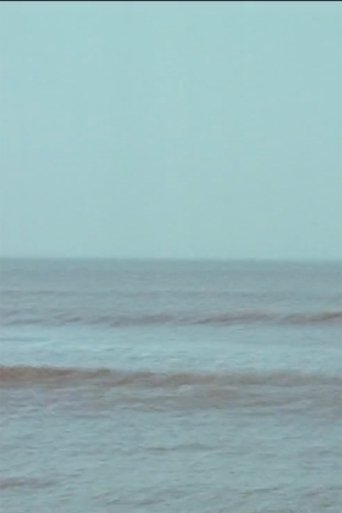
'Vibrating Horizon' offers us a view of the sea on a grey day. The horizon in the middle divides the image into two equal fields, the sea and the sky. The quietly rolling waves create an almost meditative atmosphere, until the horizon suddenly takes on a life of its own. The camera shakes on its tripod, as though affected by an earthquake, so that the dividing line between the sea and sky is constantly moving. This camera movement causes the sea and waves to lose their spatiality. The two fields become increasingly abstract, and as a result of the pulsing horizon it seems as if they are attempting to push each other out of the frame.
Moseka, a young woman from Zaire, travels to Belgium to study. With her braided hair and traditional clothes, she is the laughingstock of her fellow students who strive to look European, adopting wigs and European clothing. The film tells of the depersonalization of young Africans when they enter into contact with the European culture.
This film is in memory of the film-maker's father. –S. E.
Based on a construction by Alice Shaddle about the Bardo Plane. –S. E.
The film you are about to see is the outcome of a two-semester high school art project. It was made by a seventh grade art class at Charles Evans Hughes Junior High School in Woodland Hills, California. After seeing it, we felt it should be shared with other classes and other teachers.
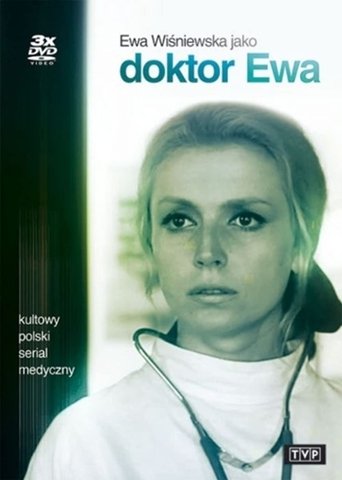
Doctor Ewa Lipska, an attractive young woman just after graduation, with interesting professional prospects for the future, chooses the job of a village doctor. Brought up in a big city, she settles in the small town of Międzybórz in the Łódź Province. She is forced not only to overcome the daily difficulties resulting from medical practice in a rural health center, but also to learn to talk to people of a different mentality and gain the trust of her patients.
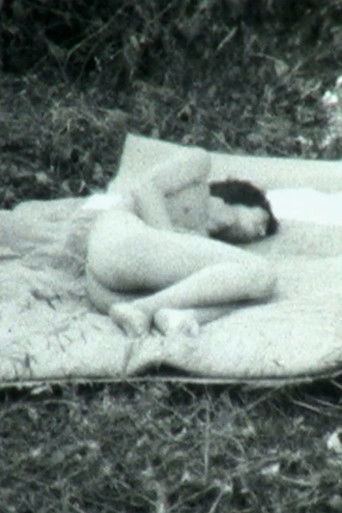
This film documents actions performed for World Uprising by Ikuo Shukusawa, Sanzō Tanaka, and Shigeru Hanagata, who collectively worked as Shikata Kōbō (Death Type Workshop). Camera person unknown, 1971, B&W, silent, 3 min. Courtesy of Kumiko Matsuzawa.
In "Run", Avraham filmed filmed himself running from point to point, and then edited the film layer by layer. The result is a chromatic intruiguing film.

12 minutes. 6 pages of text. 180 lines. 90 photos 2 lines per photo. 45 photos of the new Agadir. 45 photos from the slums of Morocco.
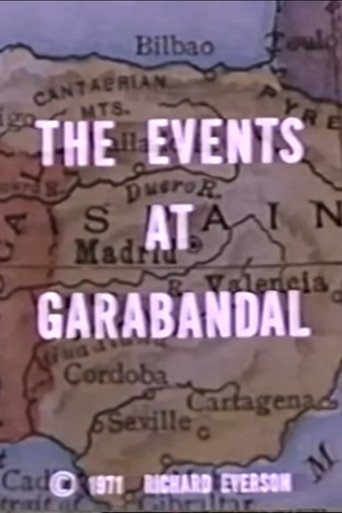
This documentary by Richard Everson marked the first groundbreaking attempt to depict the events of Garabandal in color 16MM film.
"Bruce Benton's four‐minute “Sympathy for the Devil” uses the classic Rolling Stones recording to lend a sort of frayed irony to a collage of news reel shots of President Nixon, the Vietnam war, Gov. George C. Wallace, riots, Billy Graham and lots of other ducks that aren't sitting as much as they are lying down, exhausted." - Vincent Canby, New York Times, Nov. 19th, 1971
"...the best film at the Whitney. Lamy describes his movie as “a fantasy about the mental and physical masturbation of an overexposed, overstimulated urban teenager"—a solemn proposition that he handles rather in the manner of the Three Stooges. He has assembled a marvelous cast of fat boys and slinky girls in which everybody appears either mostly comatose or wholly disreputable. There are many happy moments in “Big City Blues,” but I especially prized a parody bump and grind performed by a long‐haired, blond boy, an imitation sexy Swede, to the theme music from “Exodus.'" - Roger Greenspun, New York Times Oct. 19th 1971
"An elaborately structured and miserably acted unveiling of how ruinous people are, it looks like nothing so much as a rich kids' meditation on the vanity of life—from the point of view of a posh Manhattan townhouse." - Roger Greenspun, New York Times review Oct. 19th, 1971 David Wise, the son of Electronic Arts Intermix founder Howard Wise and producer Barbara Wise, was a child prodigy whose pre-adolescent films led him to be described by Jonas Mekas as "the Mozart of Cinema." The young Wise would be trained in stop frame animation by Stan Van der Beek, before going on to his later career as a successful writer of science fiction film and television.
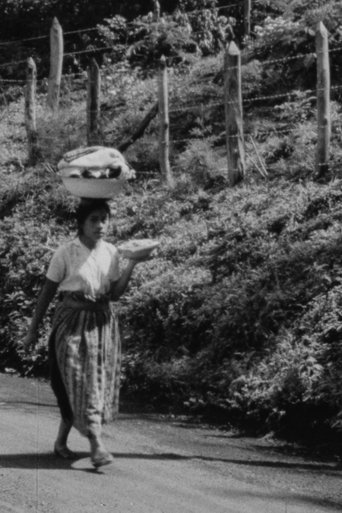
In this moving film, the personal testimonies of Guatemalan Indians, peasants, and guerrillas are dramatized to provide the narration for a powerful overview of the history of U.S. destabilization of democracy in Central America.

Things (and their treatment) are shown repeatedly - a loaf of bread, a sausage, an egg cracked open on the rim of a cup: everyday actions with irreversible, one might say vitally destructive consequences. In the second part, the actions are directed at people, and the anxiety changes because the situations are created deliberately and uncritically. Part three, which could be read as a sober protocol of a relationship, loses the proximity to actionism and performance. Images of a man and a woman alternate with images of windows, mirrors, sofas, and the interior.
Alcatraz - Island of Hate
