
The Boar with Silver Tusks 1970
While hunting a mysterious boar, a man gets lost in the forest. He encounters increasingly strange things, and his life is put in danger.
While hunting a mysterious boar, a man gets lost in the forest. He encounters increasingly strange things, and his life is put in danger.
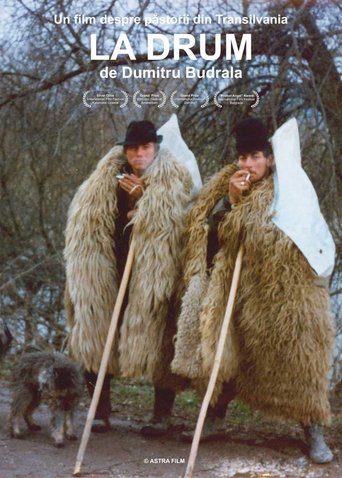
Every autumn, shepherds from Transylvania set off with their flocks in search of green grass. This Sheep Road is to some extent like the famous historic Silk Road and the Salt Road.

Jean Mihail’s "Rapsodia Rustica" deals with the life in Romanian villages in the period after the war.
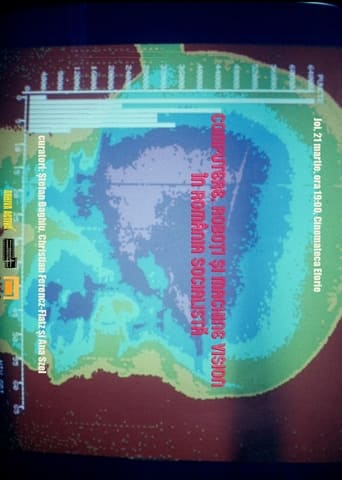
" The electronic computer - with its many possibilities of fast data processing - is not strictly used in scientific and economic fields anymore, it now plays a direct part in the production process. Filmed at the Galați Steel Mill, the film shows the ways in which the computer conducts the production of steel, making fast decisions in as little time as possible, in raport to the variety of situations which may occur. "
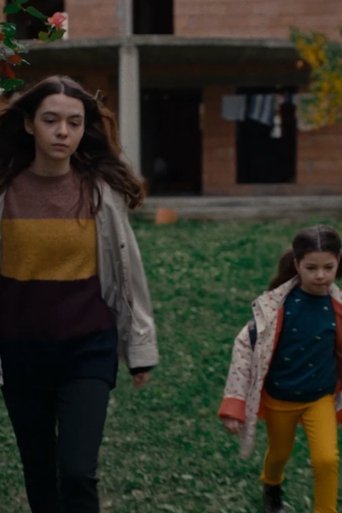
Once upon a time, there was a little girl who lived happily with her parents and her younger sister. But the little girl lived in Romania and her parents really wanted a house for them, so they went to work in Spain. The little girl stayed with her sister in the care of her grandmother and so the years passed, until one day the little sister told her that their parents were going to return. So the little girl began to hope.
The film explores sites and practices of memory in post-socialist Bucharest, twenty years after the fall of Romanian communism. It was shot in Cismigiu Gardens, one of the oldest public parks in Bucharest. This central, urban space attracts people from all walks of life. It is a place for social interaction, solitary reflection, reverie, and memory. Interweaving recollections of the past with present-day scenes from the park, the film presents a montage of stillness and motion, images and voices, landscapes and people.
A split-screen animated film that explores the complex nature of memory in contemporary post-communist Romania. Using a collection of everyday, household objects as windows into the past, it features 16mm stop-motion animations of these artifacts, projected alongside selections of interviews from the ethnographic research with the objects’ owners.
"Aflați despre mine..." stands as a quintessential social documentary from the perspective of 1980s filmmakers, delving into the effects of labor migration from agriculture to urban industry. Filmed in bachelor accommodations, it captures the intimate confessions of residents, offering faces and voices to the societal shifts in socialist times. The documentary, set against a backdrop of dormitory life, features a nuanced soundtrack blending informal interviews with the monotony of daily routines. Panning from window to window, the camera reveals the aspirations of temporary dwellers dreaming of a future beyond provisional living and aiming to settle into homes of their own.

Rebeca, Iulia and Florin, a film crew with not much experience, decide to shoot a documentary about the mysterious Toni Oniga. They have heard about him from many friends and are very interested in meeting him. But he turns out to be very hard to find. The filmmakers get the impression that people don’t want to say where Toni Oniga is. They have only good things to say about him, that he was like salvation to them, but never go into any details. Things get more and more confusing. Is it possible that Tony Oniga is an urban legend and never really existed?
The film is a classical process-film that describes the making of commercial products, from initial manufacturing of raw material to final selling.
The film didactically exemplifies a few police and coroner procedures, from gathering clues at a crime scene to doing autopsies.
The film is part of a series of scientific venatorial touristic films produced in 1930 și describes the process of extracting and transforming gold in the Apuseni Mountains.
This anonymous film shows a series of standard procedures involving treating various illnesses, for the future nurses.
At the border between traditional live coverage (that describes the stages of grape reaping) and a private family movie, the film shows a visit to the estate of Avram Ghiltcik.

There's disagreement between heart and reason. While trying to find common ground, they quarrel like blind.
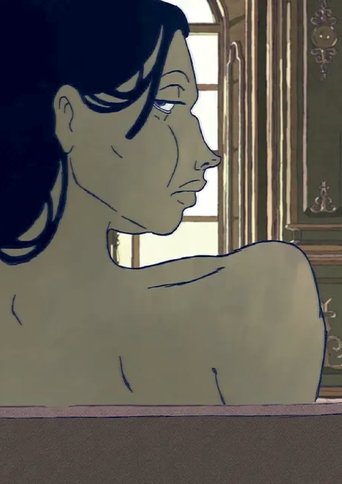
A woman gives shape to octopuses out of her own flesh. When she runs out of matter, she has to face what she has created.

hóson zêis, phaínou; experimental tribute to glimpses of beauty
a scream bothers someone's existence, but it's not the horizon that holds it.
Shot in various romanian traditional villages on Prahova Valley, the film explores the simple life of isolated villagers of all ages, throughout all four seasons.
