A Wedding in Leresti

A Wedding in Leresti 1976

1

“Wedding in Leresti: American couple gets married in the Orthodox tradition as local priest is appointed Texan sheriff” – this was the title of a feature published in the August 1973 issue of Tribuna României, a trilingual (French-English-German) Romanian publication targeted at foreign audiences. The unusual event was documented in a Sahia film commissioned by Publiturism, the media arm of Romania’s National Tourism Office, which credited Paul Anghel, the editor-in-chief of the periodical, as scriptwriter.
1976

Heiduque

Heiduque 1985

1

Follows the people's avenger, leading the fight against injustice and cruelty

1985

Granny's Got a Gun

Granny's Got a Gun 1970

9.00

Granny B. wakes up feeling that today is her last day on Earth. She decides she will do something she's never done before: she wants to see the Ocean for the first time in her life. But the journey is never easy, and together with her granddaughter Ada and their chicken, they embark on an adventure filled with charitable armed robbery, accidental organ trafficking, circumstantial grand theft auto, and befriending a local mafia gang.

1970

Truth or Dare

Truth or Dare 2024

1

Alexandra and Denisa, two teenage sisters, spend their summer vacation in the countryside. Alexandra is trying to get the attention of the older boys and show her sister that she's not just a kid anymore.

2024

Chicken, Fries and a Coke

Chicken, Fries and a Coke 2012

1

A ten year old granddaughter and her two grandmothers go to the seaside. It’s her first time in Romania. She doesn’t speak romanian, the grandmothers don’t speak english… Nor to each other.

2012

Dear Intellectuals

Dear Intellectuals 2020

1

Radu Jude's contribution to Cinem@casa, which he produced in isolation during the pandemic.

2020

The Pigment

The Pigment 2025

1

When two people can no longer understand each other, love turns into conflict, and conflict into tragedy.

2025

Who Is to Blame?

Who Is to Blame? 1965

1

Like Márta Mészáros, Florica Holban experienced losing her parents and institutionalization first-hand as a young child, which later triggered her long-term interest in the lives of the children growing up in state care. Holban’s Who Is to Blame? has something else in common with Mészáros’s Let All the Children Smile: they both include sequences filmed at the same orphanage in Bucharest (Orphanage No. 6)—Mészáros in the mid-50s, Holban a decade later. The two films also share a certain discretion regarding the role of the State, which assumed parental responsibility for children abandoned or separated from their parents. Here, both directors allow, albeit only briefly, the lonely and deprived children to appear as individuals with their own histories and traumas. Unlike Mészáros, however, Holban approaches her topic through a judicial lens: numerous sequences from her film were shot at the Tribunal, and the film credits a prosecutor as a consultant.

1965

INTERCOM NO. 14

INTERCOM NO. 14 2023

1

During one winter night in a block of flats, a resident and a food-delivery guy make an unexpected bond.

2023

The Steel-Work in the Cybernetic Era

The Steel-Work in the Cybernetic Era 1974

1

" The electronic computer - with its many possibilities of fast data processing - is not strictly used in scientific and economic fields anymore, it now plays a direct part in the production process. Filmed at the Galați Steel Mill, the film shows the ways in which the computer conducts the production of steel, making fast decisions in as little time as possible, in raport to the variety of situations which may occur. "

1974

The Shukar Collective Project

The Shukar Collective Project 1970

6.00

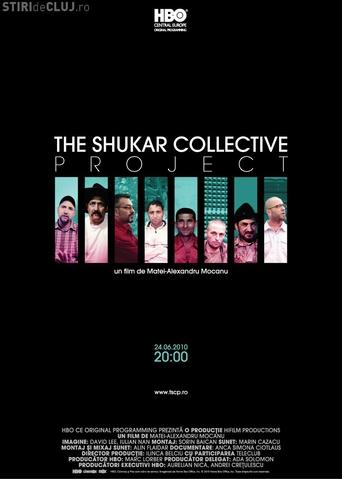
Shukar Collective play bear tamer music using spoons, wooden barrels or daraboukas, whilst a couple of DJs add layer after layer of urban sound over this traditional music. It is this kind of eclectic environment that best describes what the documentary deals with: culture contact.

1970

The King's War

The King's War 2016

8.25

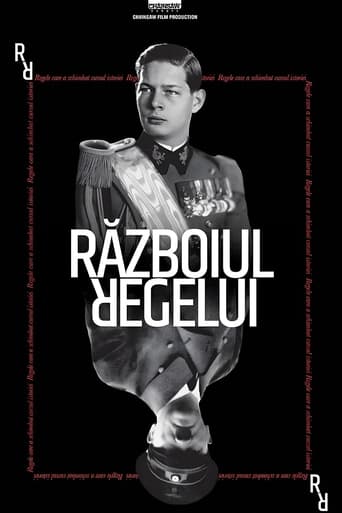
Few know what happened, in fact, on August 23, 1944, and who were the main actors of change. Words like "coup", "war" and "communists" are used often in the same sentence, without knowing anything about the courage that a king nor 23 had when it was across Hitler's plan.

2016