
Rzeczpospolitej dni pierwsze 1989
The film shows Poland regaining independence in 1918 and the formation of the first government of the Republic of Poland.
The film shows Poland regaining independence in 1918 and the formation of the first government of the Republic of Poland.
The film is about three old buddies living in one of Poznań's forgotten apartment blocks. Darek - philosophy student, Rogalo - petrol station employee and Bubu Oxford - drug dealer. They have one goal in common: they want to go abroad to work. The action of the film begins when the student gets a visa to the USA. He has a job there with his uncle. The situation becomes more complicated when a policeman who has an eye on the dealer starts blackmailing Darek - demanding that Bubu be poured in in exchange for returning his passport and permission to leave.
In the sea, Peter and the dog find a bottle with a note written by a shipwrecked person. They go looking for a sender asking for help.
The love of Leopold and Sabina is in crisis when the man meets the daughter of his former partner.
Animated characters from the film prepared by Joanna's father come to life and run away to the streets of Bielsko-Biała.
When Piotr, as a mature man, browses through family photos, memories arise in him. He then returns to his childhood, which evoke both emotions and reflections related to the values, tradition and cultural heritage he received from his father and mother.
A documentary film about the life and work of 66-year-old Piotr Sudoł, a collector of dry bread. The director, talking about the film, described the title character as follows: "Mr. Chlebek was a person so extraordinary that everything he did had a deeper meaning for him. What mattered to him was not money, but an idea. He wanted to make people realize that they should respect bread and food". Three months after shooting, the protagonist was hit by a car while working.
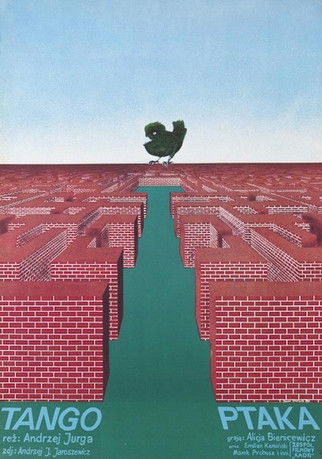
Agata is a member of the rowing sports club. At the next competition, she is going to sail in the team of the "eight". During this time she meets Robert, their relationship turns into love. Robert, however, turns out to be unworthy of her feelings, cheating on the girl by cheating on her with other women. Among them is Agata's trainer. The girl experiences it very much.
A probation officer is looking for foster families for their underage charges.
Single retirees Karol and Felicja are getting married. She is a type of a complex old maid. The war took his wife and children from him, but nevertheless he did not lose his serenity. He looks after his paralyzed neighbor. Soon she commits suicide. Under the influence of this event, the bitter Felicja changes.
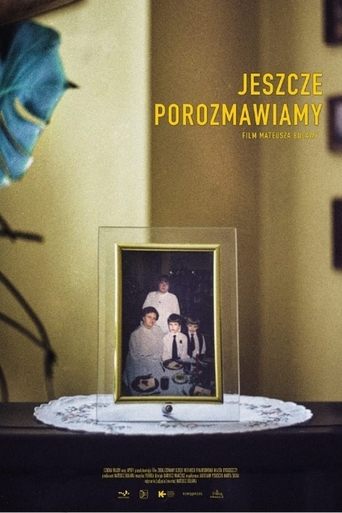
Two brothers on the threshold of adulthood still live with their mother and grandmother. In an apartment, they fight for even the smallest bit of autonomy, and each of them has a different strategy for moving around this difficult terrain. However, the family portrait is not complete - it lacks the father, whose significant absence returns with a dull tone in the telephone receiver.
The last six months of the life of a great athlete, gold medalist of the Olympic Games in Los Angeles, Janusz Kusociński, arrested by the Gestapo and shot on June 21, 1940.
A well-known actor, Bogumił Kobiela, appears on the beach in Sopot, where he does various strange and funny things for sunbathers, incl. changes into winter overalls and goes for a walk in skis, pretends to be a lifeguard controlling the possession of swimming cards, says goodbye to accidentally met sunbathers as a departing vacationer.
It is a parable about the inhabitants of Przechwałków. They could not come to terms with who was doing the most important work. Their quarrels shattered the unity in the city, which led to a threat.
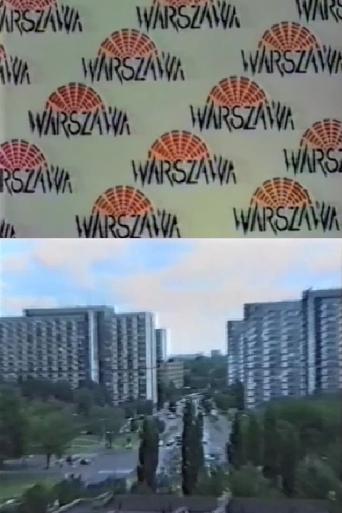
In the film Warsaw 88-89 we observe the city on the eve of the coming changes, captured on VHS tape. Tomasz Dominik and Piotr Rozbicki capture interesting, distinctive details - an unusual balcony, inscriptions on the walls, beautiful but dilapidated architectural details - from the gray reality of shabby tenement houses, blocks of flats, squalid courtyards. In the background we can observe the political, economic and cultural context of the period: lifestyle, cars, clothes, texts on walls. In the public space the sphere of the sacred mixes with the profane.
On January 27, 1952, the draft Constitution of the People's Republic of Poland was announced. The history of over a hundred years of popular struggle is illustrated by paintings, from Artur Grottger to contemporary artists of socialist realism.
The story of Witold Pilecki, soldier of the Home Army and the anti-communist underground, prisoner and organizer of the resistance movement in Auschwitz, sentenced to death in 1948. The starting point is the documentary record of the extraordinary review of the trial of Pilecki and his fellow prisoners in 1990.
The artist Małgorzata Goliszewska's journey to Rotterdam, accompanied by incessant phone calls from her mother, brilliantly illustrates the mechanisms of producing fear and a sense of constant threat.
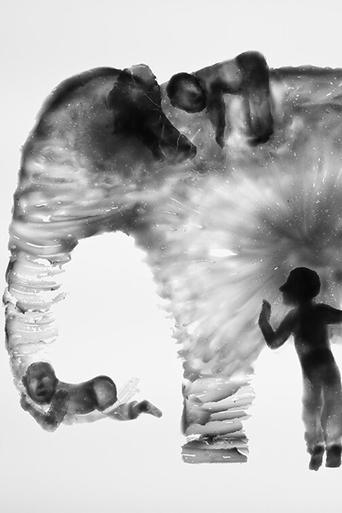
Sightless main character, fascinated by an ancient description of a peculiar animal, decides to find one and get some personal experience. Accompanied by his three blind friends, he starts an intriguing journey in search of the mysterious creature. They are led through a mixture of various scents and noises to finally reach their goal. Each character, relying on his senses, gets a very different impression of the elephant.
