
The Fall of the Idols 1993
Found footage compilation of Albania’s turbulent 20th century history is also a bitter and telling essay on the nation’s worship of personality cults and a warning of false prophets to come.
Found footage compilation of Albania’s turbulent 20th century history is also a bitter and telling essay on the nation’s worship of personality cults and a warning of false prophets to come.
Beti, a woman in her late forties, together with her family, is deported by Serbian security forces from her home in the capital of Kosovo to the border village of Bllacë. With war breaking out in 1999, her story of survival is stitched together as the world she knew disintegrates. The seemingly endless cycle of cruelty Beti endures on her journey to a safe haven becomes a collective story of survival.
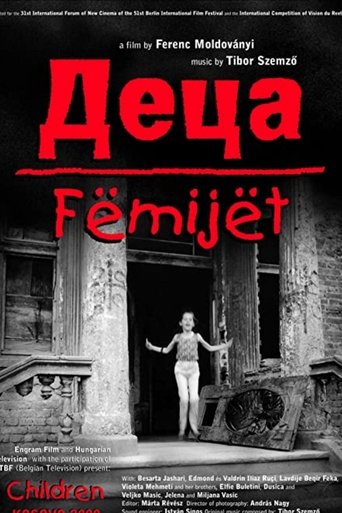
Kosovo in the spring of 2000. Winter is over but in a meteorological sense only. Ruins and pain. The marks of devastation in the sunny landscape. Wounds that never heal, the hesitating , vague gestures of a new beginning. Paradoxes. In black and white, with the broken images of memory imprints in color. Two words: deca and fëmijët , they mean children in Serb and Albanian. These expressions have no place in the irrational dictionary of war. It is the children though who are the most defenseless victims of this war governed by mad hatred. Their suffering has become an indelible chapter of the chronicle at the end of the century, the dawn of the new millennium. Besarta, Violeta, Edmond and Valdrin, Miljana and Jelena are Albanian and Serb children, the film tells their story in black and white with color Super 8 images shot by the children themselves.
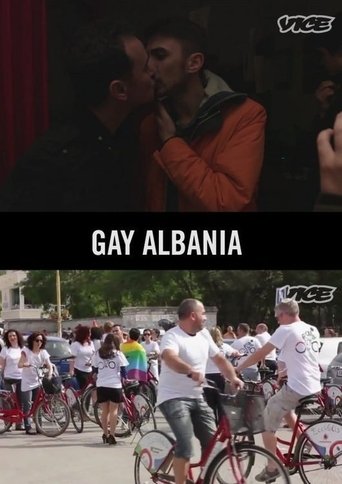
Up until the mid-90s if you were openly gay in Albania, you would be sent to prison. Many homosexuals still face bigotry and violence, even in their own homes. In the last five years, Albania has seen a dynamic LGBTQ movement. Gay activist have created secret guest houses in Tirana that offer shelter to young homosexuals who have been brutally abused. VICE Greece traveled to Albania and recorded rare glimpses into the lives of people who have been victimized and neglected because of their sexual orientation in one of Europe’s most homophobic countries.
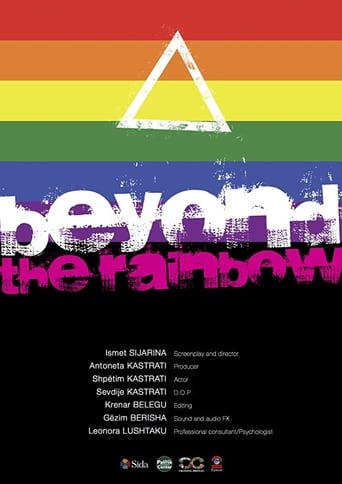
Homosexuality is one of the biggest taboos in Kosovar society. So much that the main characters of this film are hidden in shadows to protect them from the frequent attacks that occur against gays in Kosovo. This film gives the platform for Kosovo’s homosexual community to speak about their experiences and the discrimination against them, while shedding light on the subject through interviews with Kosovo’s religious leaders, psychologists, analysts and other citizens. Will society learn to accept these people as part of Kosovo’s new liberal reality, or must homosexuals remain in the shadows, hiding their true sexual identities in fear?

The movie tells a story that how one man that mistreats water without being aware that water is missing for one kid in other place.
“What if women could move a house?” In “As If Biting Iron” (2019), Rizaj uses the medium of film to challenge this very question as we witness the walls of a brutalist building, situated in the forests of Kosovo, being moved by the forces of over 100 anonymous women. Pushing against the deadweight of the concrete, the burden of oppression literally and figuratively comes undone.
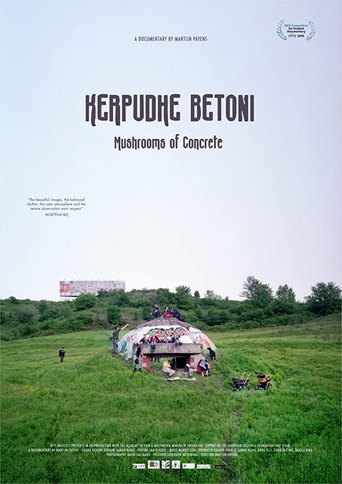
Over 750,000 bunkers were build in Albania for a war that never came. Building them drained vital resources and crippled Albanian industry. Presently, Albanians struggle to put the abandoned hollows to productive, creative use.
In Communist Albania, a bank clerk finds herself at crossroads about the work performance of her superior, who is also her husband's best friend.
Kosovo 1988. Two young boys, a Serbian and an Albanian, raised together in a small town of Kosovo. As they grow up they find themselves in a war between two countries and on different fronts.

The different skin colours of the multicoloured creatures cause their peaceful coexistence to gradually collapse under the weight of discrimination and jealousy – despite the fact that their similarities far outweigh their differences.
In Kosovo, two young men walk in the ghostly space of an abandoned construction worksite. Toni and Bleri evoke memories of a scarcely joyful past, as well as their dream to leave the country in search of a better life. Emigration seems to be the only possibility of a future, but how do you get into the Schengen Area when you do not have a visa or an employment contract and when you come from a region that current geopolitics have relegated to the fringes?
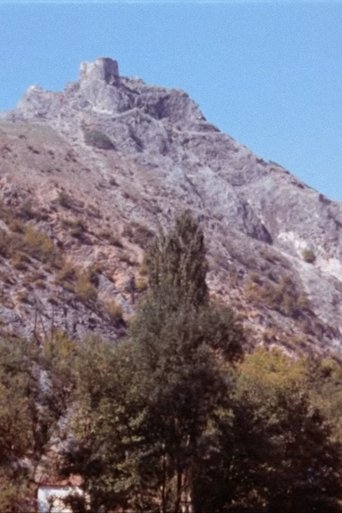
“Prizren - the City of Resources and Beauty” is a documentary directed by Zvonimir Saksida and produced by Zastava Film in 1972, which presents the history, traditions and beauties of Prizren with the aim of promoting the touristic potential of the city. Discovered in the Lumbardhi Cinema archive, it was screened for the first time during the exhibition “At Once Vague and Unavoidable: Modernities 1945-1989” produced as part of the partnership between Lumbardhi Foundation and Oral History Initiative within the project “Prizren Urban Memoryscapes” supported by Franco-German Cultural Fund, the French Embassy, the German Embassy, Municipality of Prizren and Sharrcem. The restoration and digitization of “Prizren - the City of Resources and Beauty” was made possible by the partner of the project, the French National Audiovisual Institute - INA and the French Embassy.
Congress for the unification of youth.
Albanian LGBT community members appear for the first time with their non hidden faces and names and share their personal stories about how the LGBT movement has changed their lives.
