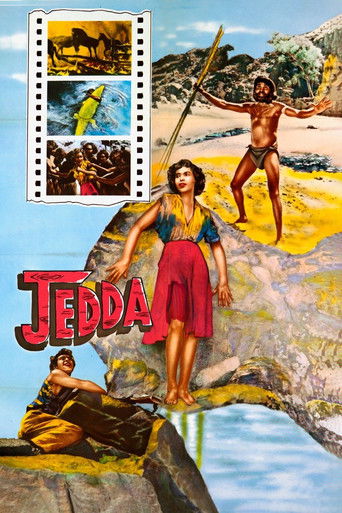
Jedda 1955
An aboriginal girl is brought up by a white family that adopts her. As a young woman, she is mysteriously drawn to go "Walkabout" as people of her tribe have for hundreds of years.
An aboriginal girl is brought up by a white family that adopts her. As a young woman, she is mysteriously drawn to go "Walkabout" as people of her tribe have for hundreds of years.
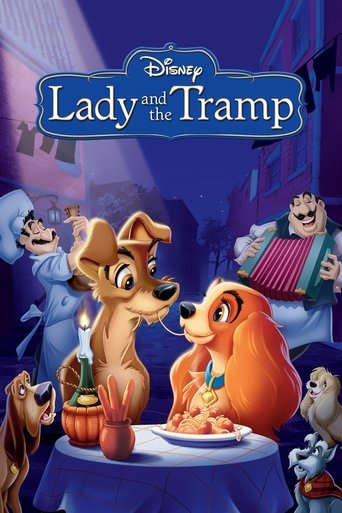
Lady, a golden cocker spaniel, meets up with a mongrel dog who calls himself the Tramp. He is obviously from the wrong side of town, but happenings at Lady's home make her decide to travel with him for a while.
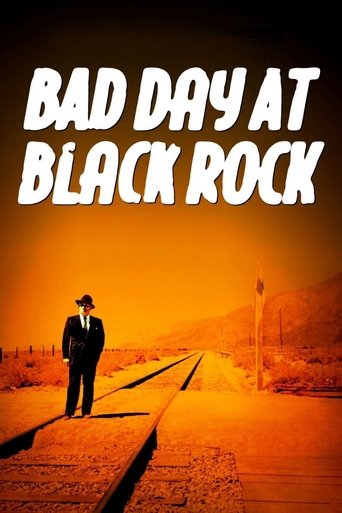
One-armed war veteran John J. Macreedy steps off a train at the sleepy little town of Black Rock. Once there, he begins to unravel a web of lies, secrecy, and murder.
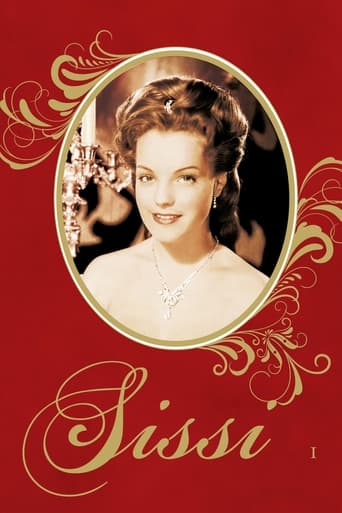
The young Bavarian princess Elisabeth, who all call Sissi, goes with her mother and older sister Néné to Austria where Néné will be wed to an emperor named Franz Joseph, Yet unexpectedly Franz runs into Sissi while out fishing and they fall in love.
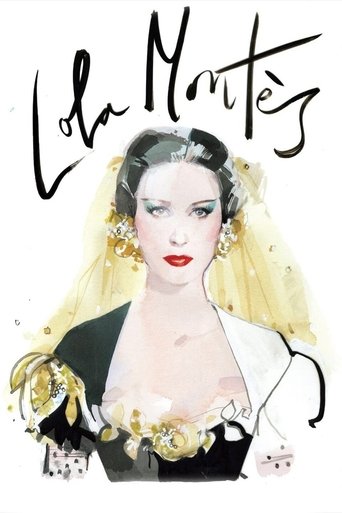
Lola Montes, previously a great adventuress, is reduced to being the attraction of a circus after having been the lover of various important men.
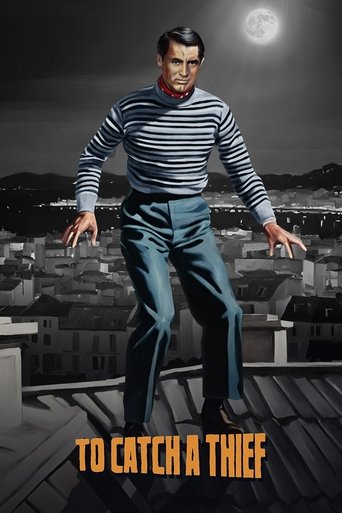
When a string of jewel robberies hits the French Riviera, suspicion falls on retired thief John “The Cat” Robie. To clear his name, he sets out to trap the copycat himself—entangling a wealthy widow and her beguiling daughter in a seductive game of pursuit, deception, and desire.
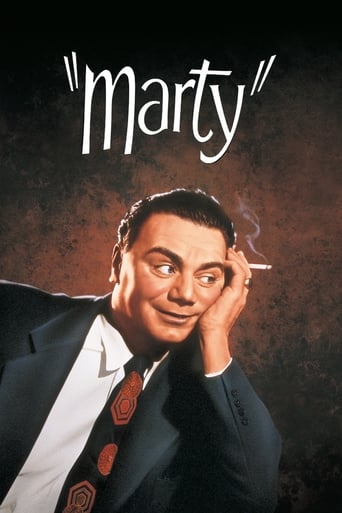
Marty, a butcher who lives in the Bronx with his mother is unmarried at 34. Good-natured but socially awkward he faces constant badgering from family and friends to get married but has reluctantly resigned himself to bachelorhood. Marty meets Clara, an unattractive school teacher, realising their emotional connection, he promises to call but family and friends try to convince him not to.
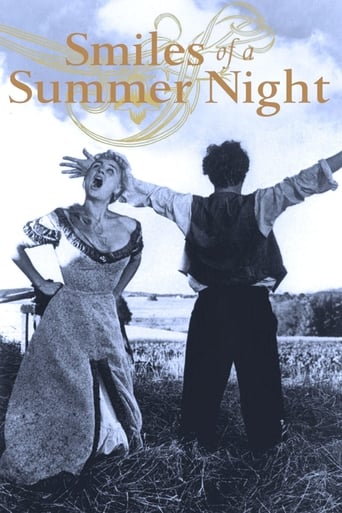
Early in the 20th century, middle-aged lawyer Fredrik Egerman and his young wife, Anne, have still not consummated their marriage, while Fredrik's son finds himself increasingly attracted to his new stepmother. To make matters worse, Fredrik's old flame Desiree makes a public bet that she can seduce him at a romantic weekend retreat where four couples convene, swapping partners and pairing off in unexpected ways.

A swashbuckling heritage reveals itself as the adopted son of 19th-century Spaniards develops into a suave lady-killer.
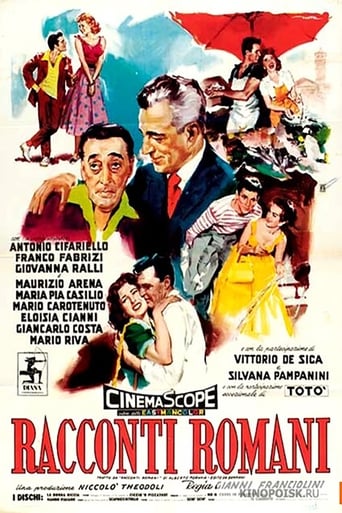
Alvaro is been in jail and so he consider himself the most fit to lead his three friends Mario, Otello and Spartaco. The four young men decide to start a business. They need only a van to start a transport company. But they lack the money. How can they get it?

Stach is a wayward teen living in squalor on the outskirts of Nazi-occupied Warsaw. Guided by an avuncular Communist organizer, he is introduced to the underground resistance—and to the beautiful Dorota. Soon he is engaged in dangerous efforts to fight oppression and indignity, maturing as he assumes responsibility for others’ lives. A coming-of-age story of survival and shattering loss, A Generation delivers a brutal portrait of the human cost of war.

The film commences with Ching (Tang Bik-wan) lamenting over her bleak life through singing: her mother died early and her stepmother (Lam Mui-mui) is wicked. The song precedes her appearance in the house while the cinematography helps to tug at the emotional heartstrings. Because of her debt-ridden father, Ching is forced by the stepmother to marry an old invalid. To prevent the marriage, Ching's lover Ho (Chan Kam-tong) raises money by agreeing to marry his own cousin (Fung Wong Nui). Ching's life is doomed, yet, when the stepmother absconds with the money. With all her hopes dashed to the ground, Ching decides to opt out of marriage for life. However, witnessing her 'self-combed' sworn sisters being bullied even to the point of committing suicide further devastates her. This tragic heroine comes to life through Tang's masterful performance both as a singer and an actor. The climatic and tear-jerking scene of Ching dying is definitely a highlight of the film.
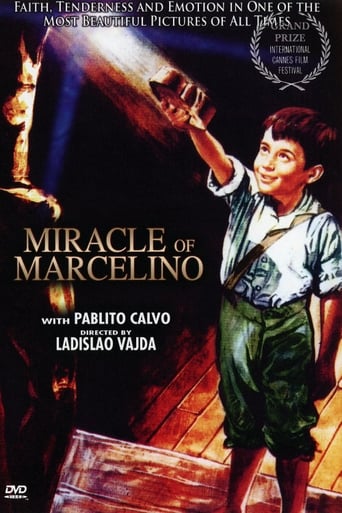
Left on the doorstep of a monastery as an infant, Marcelino was raised by the monks. He was well-cared for but lonely and missed having a mother. One day he found a special friend in the forbidden attic, hanging on a cross. A friend that would repay Marcelino's kindness by granting him one heart-felt wish.
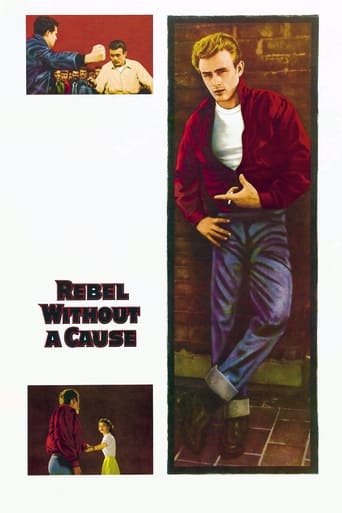
After moving to a new town, troublemaking teen Jim Stark is supposed to have a clean slate, although being the new kid in town brings its own problems. While searching for some stability, Stark forms a bond with a disturbed classmate, Plato, and falls for local girl Judy. However, Judy is the girlfriend of neighborhood tough, Buzz. When Buzz violently confronts Jim and challenges him to a drag race, the new kid's real troubles begin.

Claudette Colbert plays Prudence Webb, who arrives in the wide-open town of Fort Ralston, Texas, to assume control of her late father's newspaper. Her first major print crusade is aimed at gambler Chris Mooney (Barry Sullivan), whom Prudence holds responsible for her dad's suicide. She then takes aim at a couple of crooked cattle barons (Ray Collins and Walter Sande), who'd like nothing better than to put Prudence out of the way for keeps.
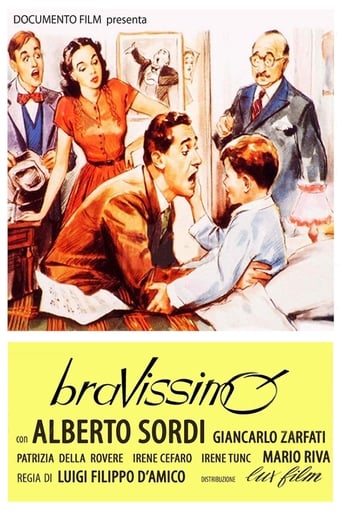
The master Impallato takes care of the boys in a suburban after-school. Here he discovers a pupil with an extraordinary baritone voice.
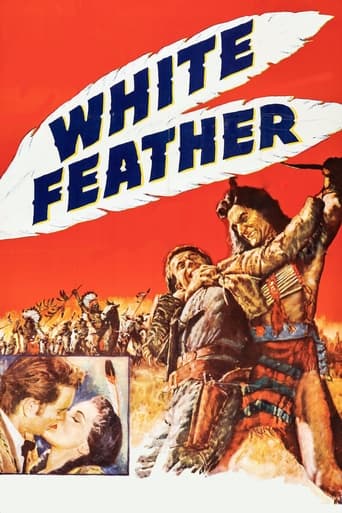
The story of the peace mission from the US cavalry to the Cheyenne Indians in Wyoming during the 1870s. The mission is threatened when a civilian surveyor befriends the chief's son and falls for the chief's daughter.
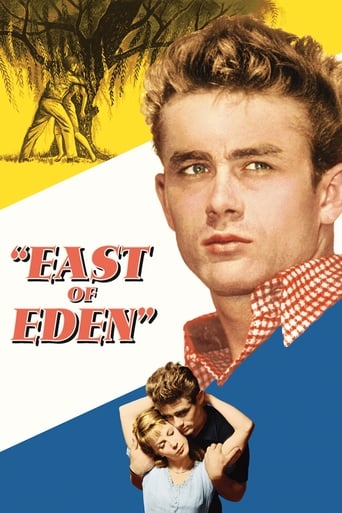
In the Salinas Valley in and around World War I, Cal Trask feels he must compete against overwhelming odds with his brother for the love of their father. Cal is frustrated at every turn, from his reaction to the war, how to get ahead in business and in life, and how to relate to his estranged mother.
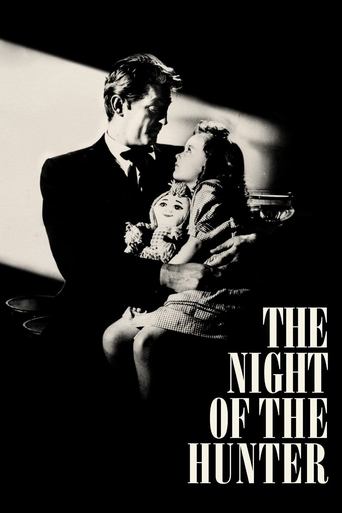
In Depression-era West Virginia, a serial-killing preacher hunts two young children who know the whereabouts of a stash of money.
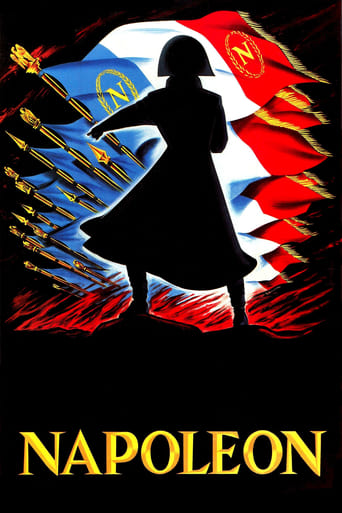
The film follows the life of Napoleon from his early life in Corsica to his death at Saint Helena. The film is notable for its use of location shooting for numerous scenes, especially at the French estates of Malmaison and Fontainebleau, the Palace of Versailles, and sites of Napoleonic battles including Austerlitz and Waterloo.
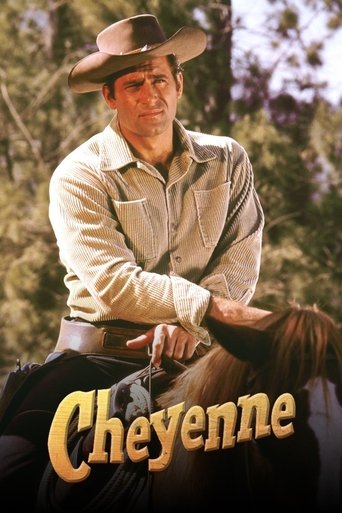
Cheyenne Bodie was a big man, a former army scout who went west after the American Civil War and drifted from job to job, here a cowboy, there a lawman, and always a larger-than-life hero. CHEYENNE is an American western television series of 108 black-and-white episodes broadcast on ABC from 1955 to 1963. The show was the first hour-long western, and in fact the first hour-long dramatic series of any kind, with continuing characters, to last more than one season. It was also the first series to be made by a major Hollywood film studio which did not derive from its established film properties, and the first of a long chain of Warner Brothers original series produced by William T. Orr.
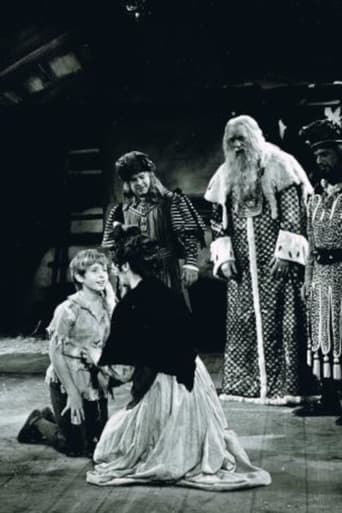
Matinee Theater is an American anthology series that aired on NBC during the Golden Age of Television, from 1955 to 1958. The series, which ran daily in the afternoon, was frequently live. It was produced by Albert McCleery, Darrell Ross, George Cahan and Frank Price with executive producer George Lowther. McCleery had previously produced the live series Cameo Theatre which introduced to television the concept of theater-in-the-round, TV plays staged with minimal sets. Jim Buckley of the Pewter Plough Playhouse recalled: When Al McCleery got back to the States, he originated a most ambitious theatrical TV series for NBC called Matinee Theater: to televise five different stage plays per week live, airing around noon in order to promote color TV to the American housewife as she labored over her ironing. Al was the producer. He hired five directors and five art directors. Richard Bennett, one of our first early presidents of the Pewter Plough Corporation, was one of the directors and I was one of the art directors and, as soon as we were through televising one play, we had lunch and then met to plan next week’s show. That was over 50 years ago, and I’m trying to think; I believe the TV art director is his own set decorator —yes, of course! It had to be, since one of McCleery’s chief claims to favor with the producers was his elimination of the setting per se and simply decorating the scene with a minimum of props. It took a bit of ingenuity.
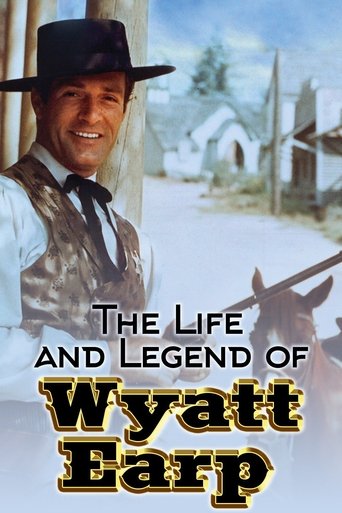
The Life and Legend of Wyatt Earp is a television western series loosely based on the life of frontier marshal Wyatt Earp. The half-hour black-and-white program aired for 229 episodes on ABC from 1955 to 1961 and featured Hugh O'Brian in the title role.
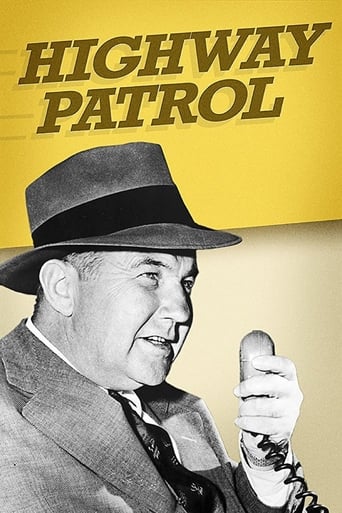
Highway Patrol was a syndicated, fictional police action series produced from 1955 to 1959, concerning the activities of the highway patrol and their leader, Dan Matthews (who held no rank). Although filmed in and around the Los Angeles area, the state setting for the stories was never identified, and city and street names were fictionalized.

This is Your Life is a British biographical television documentary, based on the 1952 American show of the same name. It was hosted by Eamonn Andrews from 1955 until 1964, and then from 1969 until his death in 1987 aged 64. Michael Aspel then took up the role of host until the show ended in 2003. It returned in 2007 as a one-off special presented by Trevor McDonald, which to date was its most recent airing. In the show the host surprises a special guest, before taking them through their life with the assistance of the 'big red book'. Both celebrities and non-celebrities have been 'victims' of the show. The show was originally broadcast live, and over its run it has alternated between being broadcast on the BBC and on ITV.
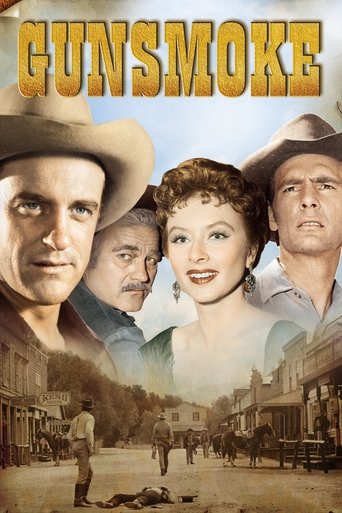
Gunsmoke is an American radio and television Western drama series created by director Norman MacDonnell and writer John Meston. The stories take place in and around Dodge City, Kansas, during the settlement of the American West. The central character is lawman Marshal Matt Dillon, played by William Conrad on radio and James Arness on television.
A television anthology series hosted by Alfred Hitchcock featuring dramas, thrillers, and mysteries.
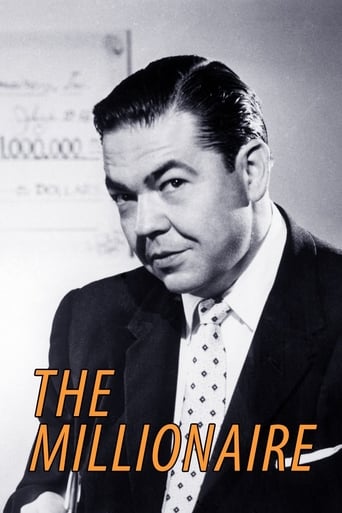
An anthology series that explored the ways sudden and unexpected wealth changed life for better or for worse. It told the stories of people who were given one million dollars from a benefactor who insisted they never know him, with one exception.
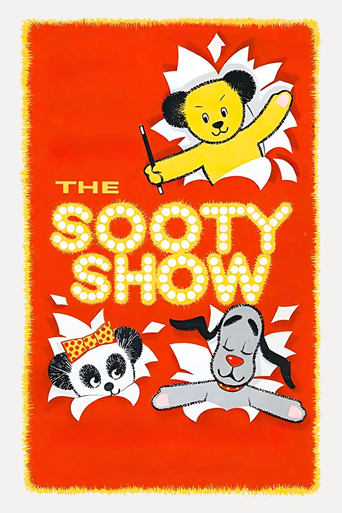
The Sooty Show is a British children's Puppet series which aired on the BBC from 1955 to 1967 and ITV from 1968 to 1992. It follows the adventures and comedic day to day life of puppets Sooty, Sweep and Soo with their owner Harry Corbett, and in later years, his son Matthew.
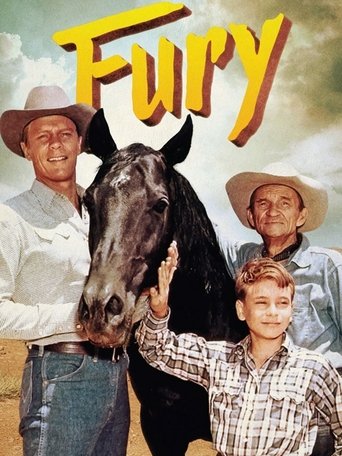
Fury is an American western television series that aired on NBC from 1955 to1960. It stars Peter Graves as Jim Newton, who operates the Broken Wheel Ranch in California; Bobby Diamond as Jim's adopted son, Joey Clark Newton, and William Fawcett as ranch hand Pete Wilkey. Roger Mobley co-starred in the two final seasons as Homer "Packy" Lambert, a friend of Joey's. The frequent introduction to the show depicts the beloved stallion running inside the corral and approaching the camera as the announcer reads: "FURY!..The story of a horse..and a boy who loves him." Fury is the first American series produced originally by Television Programs of America and later by the British-based company ITC Entertainment.
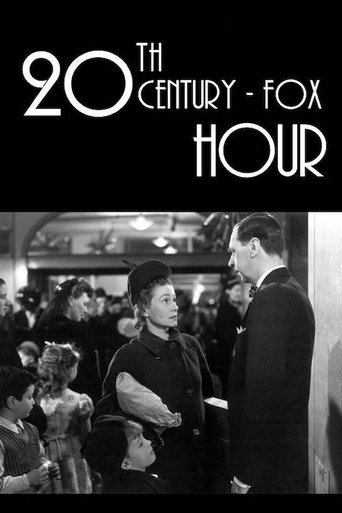
The 20th Century Fox Hour is an American drama anthology series televised in the United States on CBS from 1955 to 1957. Some of the shows in this series were restored, remastered and shown on the Fox Movie Channel in 2002 under the title Hour of Stars. The season one episode Overnight Haul, starring Richard Conte and Lizabeth Scott, was released in Australia as a feature film.

Miss Universe is an annual international beauty pageant that is run by the United States-based Miss Universe Organization. The contest is the largest pageant in the world in terms of live TV coverage, airing yearly in more than 190 countries worldwide to an audience of over 2.5 billion people. Along with Miss World, Miss International, and Miss Earth, Miss Universe is one of the Big Four international beauty pageants. The Miss Universe Organization and its brand, along with Miss USA and Miss Teen USA, are currently owned by the WME/IMG talent agency.
Navy Log is an American drama anthology series that initially aired for one season on CBS. It relates the greatest survival war stories in the history of the United States Navy. This series premiered on September 20, 1955, but the following year, it was moved to ABC, where it aired until September 25, 1958. The program aired for a total of three seasons and 102 episodes.
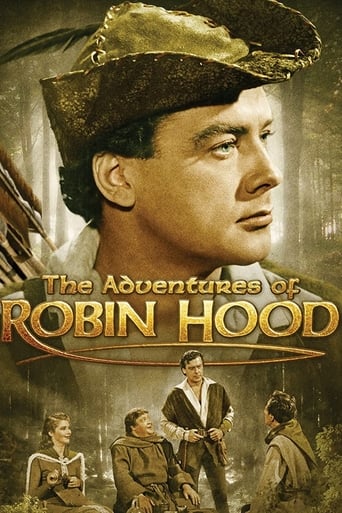
The legendary character Robin Hood and his band of merry men in Sherwood Forest and the surrounding vicinity. While some episodes dramatised the traditional Robin Hood tales, most episodes were original dramas created by the show's writers and producers.
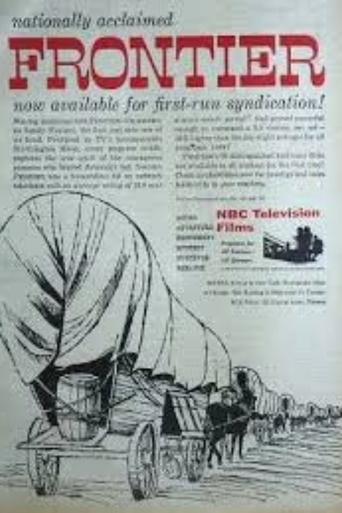
Frontier is an American Western anthology series that aired on NBC from September 1955, to September 1956. The series de-emphasizes gunplay and focuses on the hazards of the settlement of the American West. It was only the second anthology Western series in television history, having been preceded by Death Valley Days. Frontier aired premiered on September 25, 1955, and ran sporadically in its last five months. Walter Coy narrated the series and starred in occasional episodes, which are dramatizations based on actual events. The program was produced by Worthington Miner.
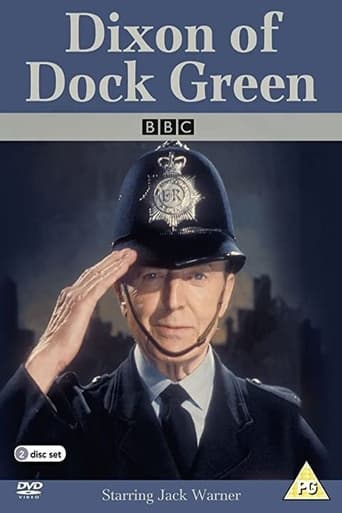
Dixon of Dock Green was a BBC television series following the activities of police officers at a fictional Metropolitan Police station in the East End of London from 1955 to 1976. Some episodes were later remade as a BBC radio series in 2005 and 2006.

A UK anthology series of single plays from major playwrights old and new. It ran from 1955 to 1974, producing about five hundred ninety-minute episodes from Granada Television. Season 1 also incorporates the Plays from the 'H.M. Tennant Globe Theatre' series, some of which were incorporated and labelled in listings as official Play of the Week episodes and some of which were played in place of Play of the Week episodes in alternative ITV regions. All 8 plays have been incorporated into this entry for convenience.
British drama anthology television series that ran from 1955 to 1965 on ITV and later transformed into ITV Playhouse in 1967. Each drama was usually 60 minutes.
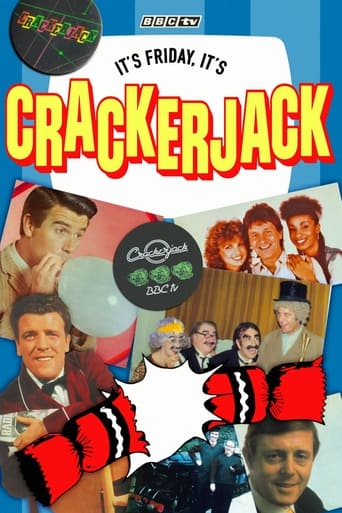
Crackerjack was a British children's comedy/variety BBC television series. It started on 14 September 1955 and ran for over 400 shows, first in black and white and later in colour, until 21 December 1984. It was revived in 2020 on CBBC.

