Rom 70/71

Rom 70/71 1971

1

Werner von Mutzenbecher created Rom 70/71 with an Agfa Microflex super-8 camera, during a residency at the Istituto Svizzero (Swiss Institute) in Rome, from autumn 1970 to spring 1971. As he wanders the city streets in the afternoons, the artist captures, without any preconceived intentions, urbans details, or micro-events that draw his attention. Mutzenbecher describes Rom 70/71 as "reflex cinema" and develops a spontaneous form of filmed diary about a location, in this case a city, without focusing on human presence.

1971

Green Cut Gate

Green Cut Gate 1971

1

Originally black-and-white material printed with green filters with a superimposed flicker loop.

1971

Film No.1

Film No.1 1971

1

Film No.1 is a 10-minute loop film. The systems of super-imposed loops are mathematically inter-related in a complex manner. The starting and cut off points for each loop are not clearly exposed, but through repetitions of sequences in different colours, in different ‘material’ realities (i.e. anegative, positive bas-relief, neg-pos overlay) yet in constant rhythm (both visually and on the soundtrack hum) one is manipulated to attempt to work out the system structure … The film deals with permutations of material, in a prescribed manner but one by no means ‘necessary’ or logical (except within the film’s own constructed system/serial.)

1971

The Golden Coin

The Golden Coin 1971

4.40

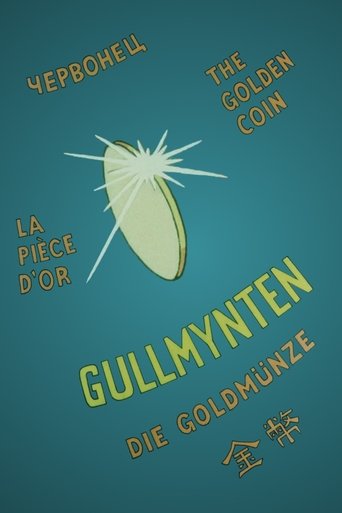
Trygve Rasmussen is one of the senior figures within Norwegian animation. He started as an animator Ivo Caprino in 1954. Through his film company Point Film made a series of short animated films, animated commercials and animated effects for films until 1980. The gold coin is a cartoon animation.

1971

Verwisseling van naam van de steden Rotterdam en Den Haag

Verwisseling van naam van de steden Rotterdam en Den Haag 1971

1

From memory, Gijzen draws the outlines of Italy on a sheet of paper. He places the capital within the boundaries, but still, something is amiss… In the second work, he plants a place-name sign in a city. These two works are part of Gijzen's quest for the relationship between public space and names. Are names decisive for spaces? Do they define a space? And if so, what happens if you exchange one name for another? With these works, Gijzen also undermines the claim to truthfulness of the TV/video image. (li-ma.nl)

1971

The Faces Of Rescue

The Faces Of Rescue 1971

1

A pilot recounts his experience of being rescued by the Jolly Green Giant helicopter.

1971

The Other Side of Madness

The Other Side of Madness 1971

4.44

A mixture of documentary footage and re-enactment scenes, some filmed on the actual locations, of the infamous Tate-LaBianca murders committed by the gang known as the Manson Family. Features music by Charles Manson.

1971