Ugolin 1953
Manon has blocked the spring that feeds the village, whose inhabitants she hates. They gradually become aware of the evil they have done to her and try to obtain her forgiveness…
Manon has blocked the spring that feeds the village, whose inhabitants she hates. They gradually become aware of the evil they have done to her and try to obtain her forgiveness…

The works of Marcel Pagnol are a veritable monument of French cultural heritage. Based on previously unseen archive material, film extracts, novels, plays, interviews and letters, the film pays tribute to the major author and popular filmmaker, who made his life a work and his work a life's project.
The last episode of Pagnol's memories (see also "La Gloire de Mon Père" "le Château de Ma Mère" and "Le Temps des secrets") deals with the teenage years of Marcel. While always spending his Summers in his dear Garrigue, he is now on the way to the Baccalaureat. He 's got a good pal Lagneau (The Lamb) who of course infuriates the teachers when he "bleats"...
This film is dedicated to Mas-Félipe Delavouët, the poet discovered by Lawrence Durrell, who wrote 14,000 verses in Provençal over a period of thirty years, and who died on November 18, 1990. "The sky, history and Mediterranean and Provençal myths are the inexhaustable wellspring of this man rooted down there, near Salon-de-Provence" (J.-D. Pollet). "Mas-Félipe Delavouët wrote five books in Provençal, 14,000 verses. A sort of "Odyssey". Of myths. What is stunning in him is that he always talks of disappearances. Cities, works, men, writings, television, etc., everything has to disappear. In order to be reborn. No pain. A sort of hand-to-hand of man and nature. During the filming, I would simply throw out some words... For example, one time I said "creation" and he said: "creation doesn't exist..., creation is before me..., I can only read creation"; this sentence describes Delavouët perfectly (J.-D. Pollet, 1989 and 1993).

The story takes us from the dear Garrigue to the secondary school where Marcel is first ill at ease because he is a scholarship holder and because he went to the grade school (the other bourgeois pupils had probably a private tutor). A fight against a rich kid ,that augurs badly for what is to follow. (to be followed in "Le Temps des Amours" )

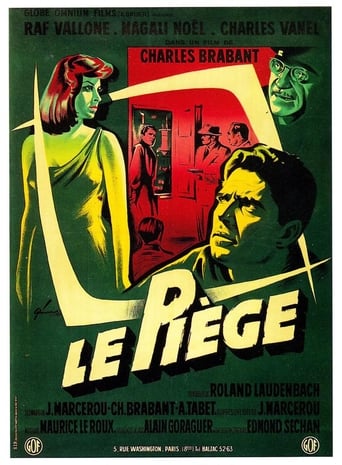
In Provence , Father Caillé runs a family pension backed by his daughter-in-law Cora and a maid. The old man persecutes Cora for her assiduity until the day when she, in a particularly violent confrontation, knocks him down before the eyes of Gino, an Italian pensioner of whom she is in love. The two accomplices will try to make up the murder.
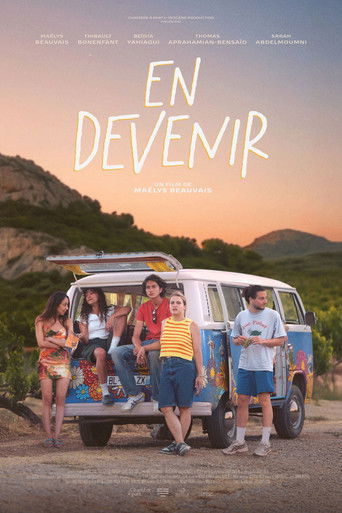
Friday, July 4 marks the end of a chapter for Sacha: her final day of drama school and the beginning of the long road to finding her place as an actress. That very evening, she heads to the Avignon Festival. She sets off in her van with four friends - a journey to come to terms with failure and to prove, to her family and to herself, that she made the right choice.

This film brings to life, thanks to unknown footage from the great American director William Wyler, an important period in the history of Corsica during World War II. In 1944, the Alto base near Folelli was home to both a group of fighter-bombers from the U.S. Army Air Force (the 57th Fighter Group) and the famous French Lafayette fighter group. Day after day, the young pilots of these two units took off from the Alto runway in their P-47 Thunderbolts to attack, strafe, and bomb the German troops who, in Italy, had halted the Allied advance at Monte Cassino and participated in the Provence landings in August 1944. Isabelle Clarke and Daniel Costelle tracked down the pilots, and sixty years later, these pilots are reunited...