
Earthrise 2018
The Apollo 8 astronauts recount their memories of capturing the first image of Earth from space in 1968 and evokes the awe of seeing Earth framed against the blackness of space.
The Apollo 8 astronauts recount their memories of capturing the first image of Earth from space in 1968 and evokes the awe of seeing Earth framed against the blackness of space.
In the year 1957 the cold war expands to space. The Soviet-Union sends Sputnik as the first manmade object into earth-orbit. 3 years later Yuri Gagarin enters space as the first man in space. The so called "Space Race" seems to be decided. But in 1961 President Kennedy promised to send American Astronauts to the Moon. The Apollo Project was born. A space ship had to be built that is strong enough to escape earth's gravitation, land on the moon and bring the crew safely back to earth. Motion Designer Christian worked with his brother and Composer Wolfgang for 18 months on this shortfilm. The foundation were thousands original NASA photographies, taken from the Astronauts during the Apollo Missions, which were released in September 2015. It is an animated collage using different techniques to bring the stills to life.

Nearly forty years after the moon landing the men on the mission reveal what really happened. On how close the mission came to disaster.

From 1957 —the year in which the Soviets put the Sputnik 1 satellite into orbit— to 1969 —when American astronaut Neil Armstrong walked on the surface of the moon—, the beginnings of the space conquest were depicted in popular culture: cinema, television, comics and literature of the time contain numerous references to an imagined future.
NASA must devise a strategy to return Apollo 13 to Earth safely after the spacecraft undergoes massive internal damage putting the lives of the three astronauts on board in jeopardy.
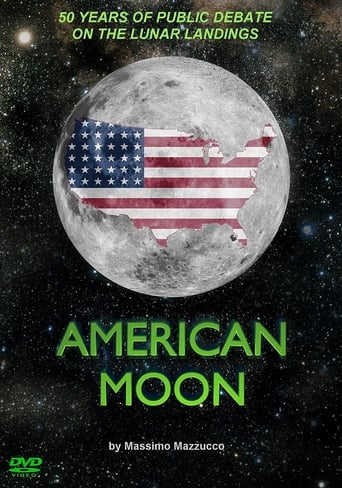
Has man really been to the moon? It’s been 50 years, and the debate rages on. For the firs time, a film compiles in a single piece of work, all the best evidence in favor of the moon landings and the evidence contrary to them. For the first time we can also analyze the Apollo pictures in detail, with the aid of some among the top photographers in the world. What was the Apollo project really? The biggest achievement in the history of mankind, or the biggest fakery of all times, watched on live television by more than half a billion people?
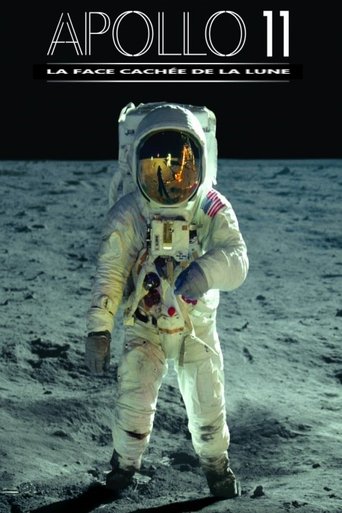
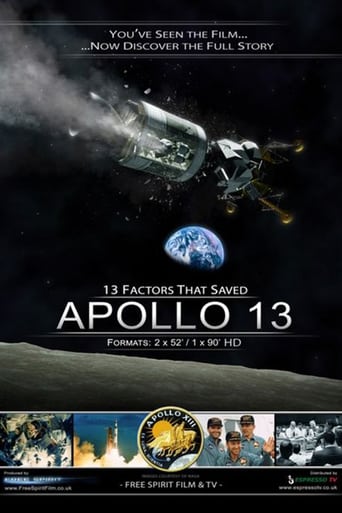
April 13th, 1970, 180,000 miles from Earth, a devastating malfunction leaves Apollo 13 leaking previous oxygen and its crew of three astronauts facing a life and death crisis. If Mission Control cannot find a way to bring Apollo 13 home, the astronauts will be stranded 200,000 miles from Earth in their dying ship. Now with limited power and supplies on board the spacecraft, the ground teams work around the clocking, engineering creative solutions to overcome carbon dioxide poisoning, dehydration and the freezing temperatures of deep space, to ensure the crew's survival. Using spectacular NASA footage, exclusive interviews with Apollo space scientists and stunning visual effects; this film explores the thirteen remarkable factors that brought the crew safely home, and the full story of the courage and ingenuity that cemented Apollo 13 as NASA's finest hour.
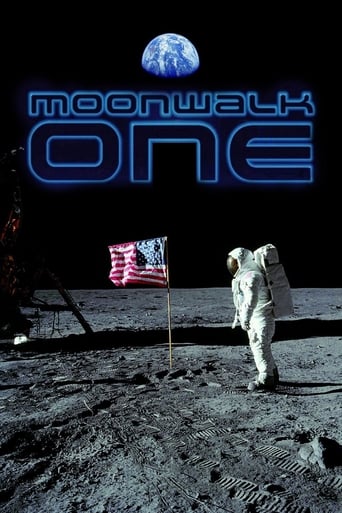
This documentary by Theo Kamecke from 1970 gives an in-depth and profound look at the Apollo 11 mission to the moon. NASA footage is interspersed with reactions to the mission around the world as the film captures the intensity as well of the philosophical significance of the event. Won special award at Cannes.

Musicians inspired by the Moon. Since the Apollo landings, the Moon has entered popular consciousness like never before. A journey through pop music's lunar obsession.
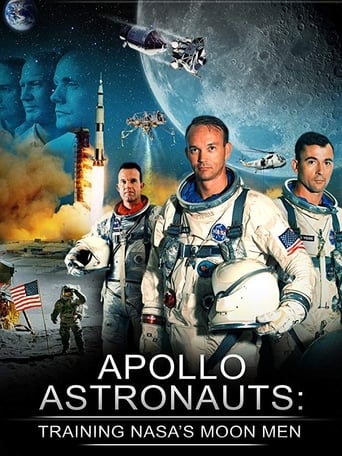

Using rare footage, Odyssey chronicles Apollo 13's 1970 crisis through Jim Lovell's family perspective and global cooperation efforts. After tank explosion damaged vital systems, NASA worked to bring astronauts safely home.
Heroes of the Apollo Missions, Buzz Aldrin, Mike Collins , Charlie Duke and more come together to share insights, experiences, and stories of the greatest adventure mankind has ever undertaken.
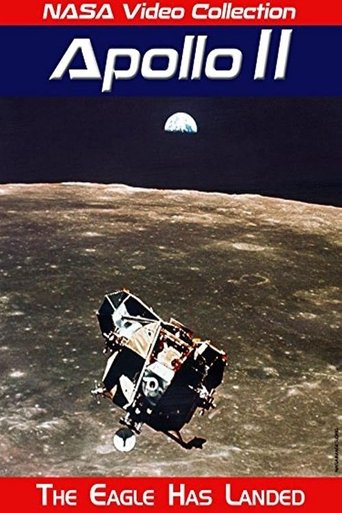
A 1969 documentary on the Apollo 11 mission to the Moon made by NASA, telling the story of the historic first landing of men on the Moon in July, 1969. It depicts the principal highlight events of the mission from launching through post-recovery activities of Astronauts Neil Armstrong, Edwin "Buzz" Aldrin, and Michael Collins. Through television, motion picture and still photography, the film provides an "eye-witness" perspective of the Apollo 11 mission.

Never-before-heard audio tapes recorded with Neil Armstrong during the final years of his life reveal an intimate portrait of this iconic - and famously private - man. Illustrated through previously unseen personal photographs and archival footage, this documentary special takes viewers on an emotional journey into the thoughts and experiences of the first man on the Moon.
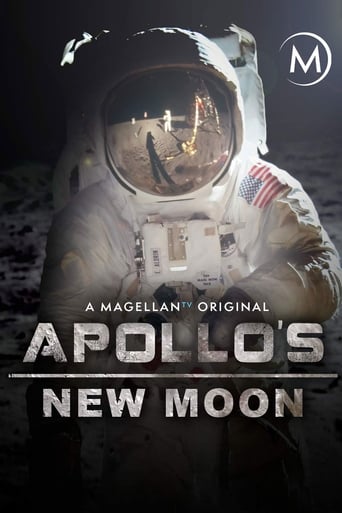
This extraordinary film features NASA film footage enhanced by AI-based software and other image processing. The clarity of the images gives viewers a whole new perspective on what it was like to step onto lunar soil and ramble about the alien landscapes. The film shows how teams of astronauts collected evidence that has revolutionized our understanding of the origin of both Earth and the moon.
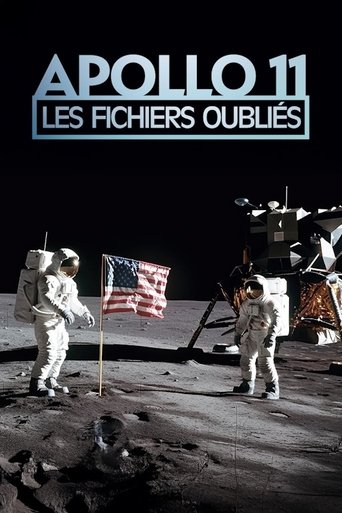
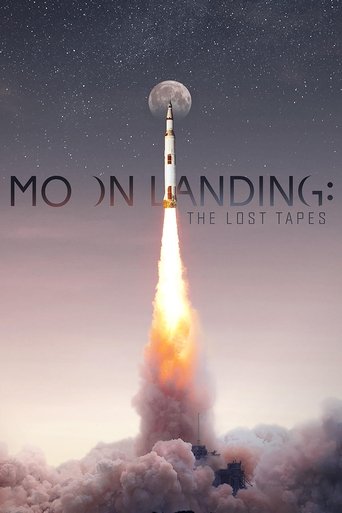
On July 16, 1969, the world watches as the three Apollo 11 astronauts attempt the impossible: to ride a controlled explosion off Planet Earth, land on another celestial body and return home. As the nine-day mission proceeds, audio from mission control captures the drama as it unfolds—each moment revealing new dangers, new decisions and new wonders. For the first time on television, this documentary utilizes “lost tapes” of the astronauts, recorded before and after the mission, along with rare film and photos. The documentary reveals the doubts and fears of the astronauts as they stand on the brink of history. The mission was nearly aborted twice, as the crew faced a mysterious alarm sounding in the spacecraft, and when fuel levels ran dangerously low. On the 50th anniversary of NASA’s most audacious achievement, Moon Landing: The Lost Tapes reveals the incredible true story of mankind’s greatest leap.
When Kennedy announced in 1961 that he wanted to take humans to the moon within a decade, Charles M. Duke was skeptical. Almost 11 years later, however, Charles M. Duke was standing on the moon himself. He gave Neil Armstrong the go-ahead for the landing on Apollo 11. Because he contracted rubella, the Apollo 13 crew had to be changed. In 1972, he landed with Apollo 16 and looked down on Earth from the moon himself.
From test flights to moon landings, thousands of people have dedicated their lives to the field of space exploration. Moon Memories presents firsthand accounts of those who made it all possible, and who now inspire a new generation of scientists, engineers and explorers.
