Something in the Air

Something in the Air 2012

5.85

During the 1970s a student named Gilles gets entangled in contemporary political turmoils although he would rather just be a creative artist. While torn between his solidarity to his friends and his personal ambitions he falls in love with Christine.

2012

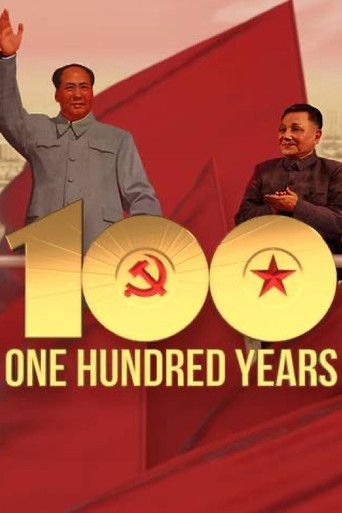
100 Years

100 Years 2021

1

As the Communist Party of China celebrates its 100th anniversary, this documentary looks back at the party’s history, from the 1920’s, to the Civil War, the Great Leap Forward, the Great Famine, the Cultural Revolution and the reforms by Mao Zedong and Deng Xiaoping. Did the Great Famine cost more than 15 million lives? How does the Cultural Revolution continue to shape Chinese politics today? What was capitalism like after Mao’s death? Through rare and never-before-seen historical footage, expert interviews and eyewitness accounts of the Great Famine, Tiananmen incident, and the Cultural Revolution, get to know how one party has so profoundly shaped China.

2021

Mao: Seize the Day, Seize the Hour

Mao: Seize the Day, Seize the Hour 1972

1

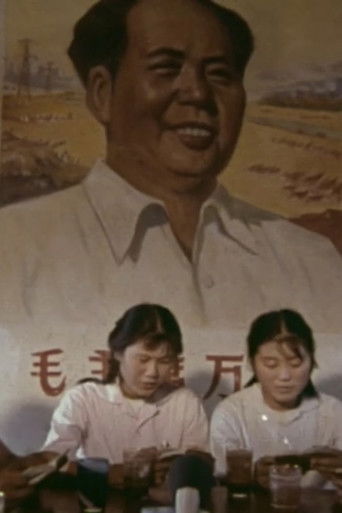
Mao Zedong was not only a revolutionary leader and thinker, he was also a poet. In poems written in the classic calligraphic tradition he expresses his experiences and visions. In this film, 8 of Mao's poems are sung, recited and interpreted: 'Changsha' (1925), 'Jinggang Mountains' (1928), 'The Long March' (1935), 'Snow' (1936), 'The People's Liberation Army Captures Nanjing' (1949), 'Swimming' (1956), 'Reply to Comrade Guo Moruo' (1961) and 'Reascending Jinggang Mountains' (1965). Through these poems we get a picture of the Chinese revolution from its first beginning in 1921 until the Cultural Revolution. The poems of Mao Zedong have been published in more than 57 million copies

1972

Swimming, Dancing

Swimming, Dancing 2023

1

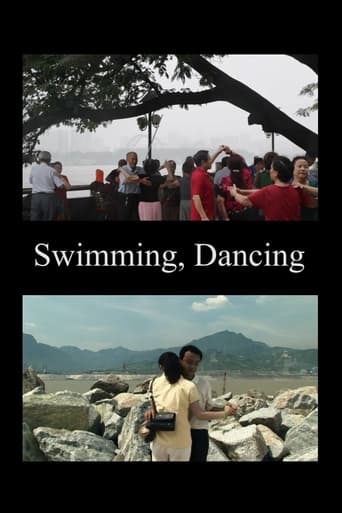
Swimming, Dancing examines audiovisual representations of the Yangtze (1934–present), from silent film to video art to the contemporary vlog. Inspired by the city symphonies of the 1920s, Swimming, Dancing pieces together a “river symphony”, evoking the images, sounds and contradictions that make up the river’s turbulent history.

2023

The astonishing destiny of General Luo

The astonishing destiny of General Luo 2004

1

Born in Austria in 1903, Jacob Rosenfeld was imprisoned in Dachau. He manages to flee and takes refuge in Shanghai, like 30,000 other people. He exercised his profession there and sought to get involved in 1941 alongside the revolutionaries of the Chinese Communist Party. Rosenfeld becomes a surgeon on the war front between China and Japan. Thanks to his talents as a doctor and an organizer, he soon became close to Mao Tsé-Toung. In 1945, he was appointed general, responsible for the health of the armies and the entire liberated area. He is now called General Luo. Later, he became the Minister of Health of the first communist government. Thanks to his journal found in 2001, this documentary traces its extraordinary destiny.

2004

Red Guards after The Cultural Revolution

Red Guards after The Cultural Revolution 1972

1

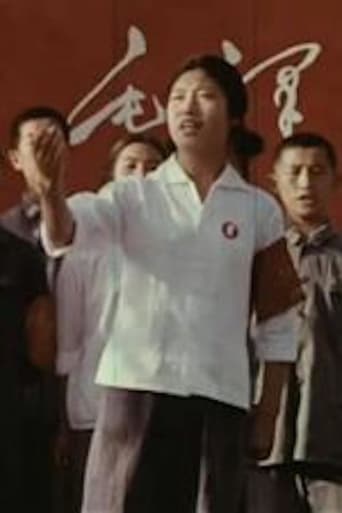
Red Guards were a student movement supported by Mao Zedong in 1966-67 during the Cultural Revolution. A group of students at Qinghua University who issued 2 big-character posters in May-June 1966 called themselves Red Guards. The students criticised the university administration of elitism and bourgeois tendencies. In August 1966 Mao Zedong expressed support for the Red Guards. This gave the student movement political legitimacy and it spread outside Beijing. The Red Guards started to attack the Four Olds and marched across China to eradicate old ideas, old cultures, old customs and old habits. Ultimately the struggle between different Red Guard factions led to a chaotic civil-war-like situation. During 1967-68 the Peoples Liberation Army got the movement under control and restored social order. Beginning late 1968 members of the Red Guard movement were sent to the countryside to undergo re-education. We met and filmed them in August 1971.

1972

Decisive Victory

Decisive Victory 2021

7.33

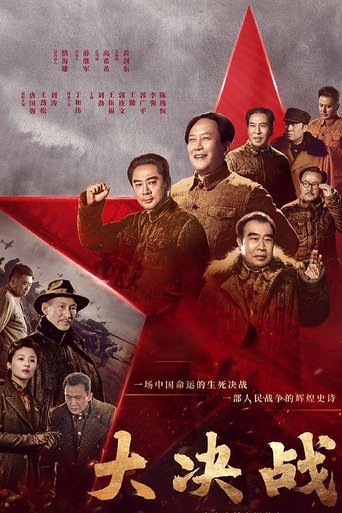
For the first time, the drama "Decisive Victory" presents a panoramic view of the three major battles of Liaoshen, Huaihai and Pingjin in the form of a TV series, presenting a dramatic battle of China's destiny. It presents the three battles in three dimensions by telling the stories of strategy, tactics and battles and presents a vivid individual in the grand war through colorful characters.

2021

Waves Against the Sand

Waves Against the Sand 2021

10.00

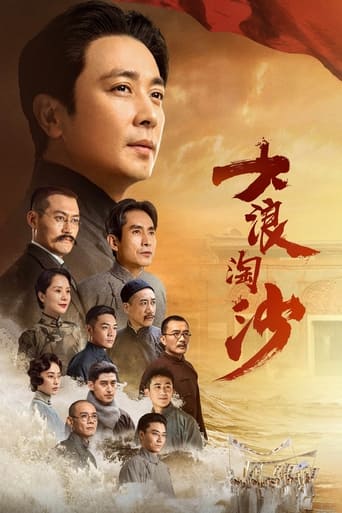
It tells the story of the first generation of leaders of the Communist Party of China represented by Mao Ze Dong. When the country is in crisis, the first congress of the Communist Party of China was held to establish the Communist Party of China and lead the Communist Party to explore the great course of maturity. The story takes Mao Ze Dong’s “one major representative” as the perspective, starts from the main contradictions in Chinese society after 1919, and takes the party’s development context as the foundation. The arduous struggle opened up an unprecedented revolutionary road and finally won a great victory.

2021

Lightseeker: The Story of the Young Mao Zedong

Lightseeker: The Story of the Young Mao Zedong 2023

1

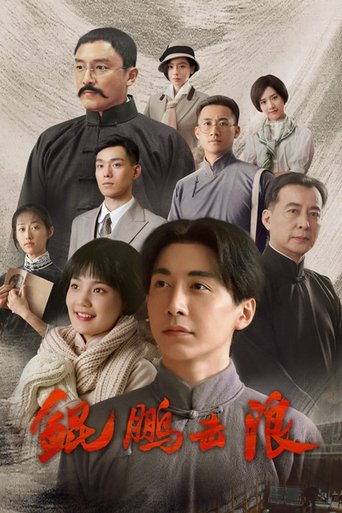
The series follows Mao Zedong’s journey from a young student to a devoted Marxist between 1918 and 1921, set against China’s political turmoil, social movements, and the rise of new ideas, as he searches for a path to save his country and its people.

2023

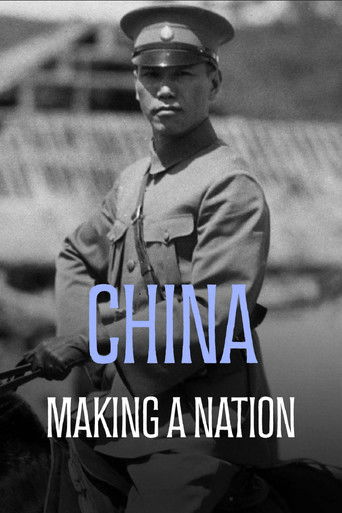
China: The Making of a Nation

China: The Making of a Nation 2026

8.00

China: The Making of a Nation is the story of the painful transformation of the vast Qing Empire into the Chinese nation after the 1911 revolution. Spanning more than a century up to the Xi Jinping era, the story pits the two pivotal leaders of this transformation against each other: Chiang Kai-shek, leader of the Republic of China for 47 years, and Mao Zedong, who rose from ‘red bandit’ to master of the mainland in 1949. Sworn enemies, they fought a merciless battle: first military, then diplomatic, and finally, beyond their deaths, in the conflicting memories of the Taiwanese and the Chinese of the People's Republic. Beyond their fierce hatred, the two tyrants also had much in common: a certain vision of Chinese territory and the greatness of China, the desire to regain the country's sovereignty and the quest for a Chinese identity in a nation that also includes Tibetans, Uighurs, Mongols... and a certain ability to rewrite history.

2026