Mardhë

Mardhë 2021

1

Beti, a woman in her late forties, together with her family, is deported by Serbian security forces from her home in the capital of Kosovo to the border village of Bllacë. With war breaking out in 1999, her story of survival is stitched together as the world she knew disintegrates. The seemingly endless cycle of cruelty Beti endures on her journey to a safe haven becomes a collective story of survival.

2021

A Child

A Child 2021

10.00

The married couple Krenar and Blerta are trying to have a child for a long time, but unfortunately it doesn’t happen. Blerta’s husband denies going through the tests of fertility. Not only is their relationship in a crisis, Krenar’s mother, ascertain of Blerta’s incapability of getting pregnant, urges him to find another wife.

2021

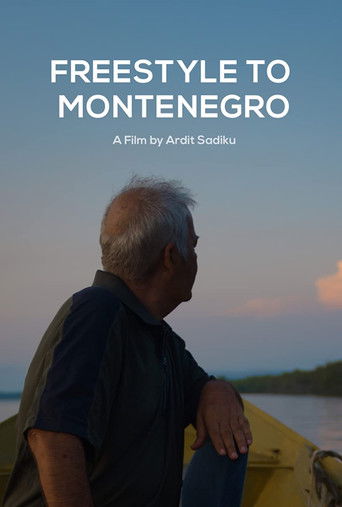
Freestyle to Montenegro

Freestyle to Montenegro 2021

1

In the summer of 1987, Tonin Gjini swam from Albania to Yugoslavia, in search of freedom. Three decades later, he revisits the locations and recreates the events of that unforgettable experience.

2021

Beyond the Rainbow

Beyond the Rainbow 2007

1

Homosexuality is one of the biggest taboos in Kosovar society. So much that the main characters of this film are hidden in shadows to protect them from the frequent attacks that occur against gays in Kosovo. This film gives the platform for Kosovo’s homosexual community to speak about their experiences and the discrimination against them, while shedding light on the subject through interviews with Kosovo’s religious leaders, psychologists, analysts and other citizens. Will society learn to accept these people as part of Kosovo’s new liberal reality, or must homosexuals remain in the shadows, hiding their true sexual identities in fear?

2007

Days of War

Days of War 2019

1

Helena was five years old when the Kosovo War began in February of 1998. She and her family were forced to flee their homes as Serbian soldiers swept the countryside, massacring ethnic Albanians and destroying their land. «Days of War» is a meditation on these experiences of war and displacement.

2019

As If Biting Iron

As If Biting Iron 2019

1

“What if women could move a house?” In “As If Biting Iron” (2019), Rizaj uses the medium of film to challenge this very question as we witness the walls of a brutalist building, situated in the forests of Kosovo, being moved by the forces of over 100 anonymous women. Pushing against the deadweight of the concrete, the burden of oppression literally and figuratively comes undone.

2019

Hope

Hope 2020

1

Four women, four heroines, who share a common fate. They have been brutally stricken by misfortune. It is not their shared past that brought them together, but it is “Hope” that keeps them alive, encouraging them to move on. “Hope” presents the different but powerful stories of Ferdonije, Auntie, Makfirete and Valentina. Although life can sometimes be very difficult, one must always try to find something to hold onto. Without hope, these four characters’ lives would have ended a long time ago. “Hope” has a power that even magic does not.

2020

Otranto

Otranto 2020

1

Four female voices interweave a polyphonic narration of the tragic story of “Katër i Radës,” the boat that sank in 1997 due to the naval blockade imposed by the Italian government on migration flows from Albania. The relatives of the victims that were amongst the first to die, in their attempt to cross the borders of “Fortress Europe,” sail along the Strait of Otranto following the route of the doomed ship only to pose the questions ignored by the media and the judicial authorities.

2020

The Train Leaves at Five to Seven

The Train Leaves at Five to Seven 1970

1

In Communist Albania, a bank clerk finds herself at crossroads about the work performance of her superior, who is also her husband's best friend.

1970

Bal Can

Bal Can 2015

4.00

Kosovo 1988. Two young boys, a Serbian and an Albanian, raised together in a small town of Kosovo. As they grow up they find themselves in a war between two countries and on different fronts.

2015

Prizren the City of Resources and Beauty

Prizren the City of Resources and Beauty 1972

1

“Prizren - the City of Resources and Beauty” is a documentary directed by Zvonimir Saksida and produced by Zastava Film in 1972, which presents the history, traditions and beauties of Prizren with the aim of promoting the touristic potential of the city. Discovered in the Lumbardhi Cinema archive, it was screened for the first time during the exhibition “At Once Vague and Unavoidable: Modernities 1945-1989” produced as part of the partnership between Lumbardhi Foundation and Oral History Initiative within the project “Prizren Urban Memoryscapes” supported by Franco-German Cultural Fund, the French Embassy, the German Embassy, Municipality of Prizren and Sharrcem. The restoration and digitization of “Prizren - the City of Resources and Beauty” was made possible by the partner of the project, the French National Audiovisual Institute - INA and the French Embassy.

1972

Give Me the Colours

Give Me the Colours 2003

6.00

Sala didn’t paint the Tirana facades in Dammi i Colori (Give Me the Colors), in his current show. Others did, as part of an ongoing project initiated by Edi Rama, the city’s mayor and a former artist.

2003