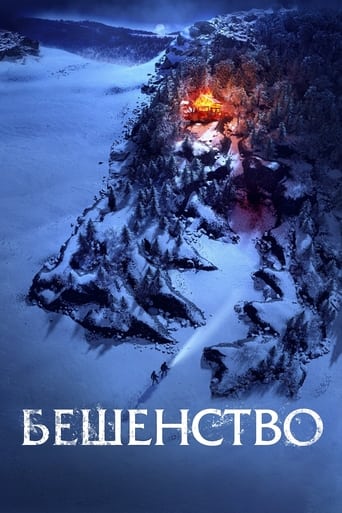
더 레이지 2023
타이가에서 전례 없는 광견병 유행이 발생하고 있다. 감염된 늑대들은 점점 더 사나워지며, 아주 작은 물림만으로도 반드시 죽음을 부른다. 동시에 한 절망적인 아버지는 중독에서 아들을 구하기 위해 사냥 오두막 중 한 곳에 아들을 강제로 격리시키기로 결심한다. 곧 그와 몇몇 지역 주민들은 광견병에 걸린 무리뿐만 아니라 숲의 가장 위험한 포식자와도 맞서 싸워야 할 것이다.
타이가에서 전례 없는 광견병 유행이 발생하고 있다. 감염된 늑대들은 점점 더 사나워지며, 아주 작은 물림만으로도 반드시 죽음을 부른다. 동시에 한 절망적인 아버지는 중독에서 아들을 구하기 위해 사냥 오두막 중 한 곳에 아들을 강제로 격리시키기로 결심한다. 곧 그와 몇몇 지역 주민들은 광견병에 걸린 무리뿐만 아니라 숲의 가장 위험한 포식자와도 맞서 싸워야 할 것이다.

몽골 북부의 다르하트 계곡에서 유목 부족의 말을 도적들이 훔쳐 러시아 도축장에 팔아넘깁니다. 용감한 기수 슈케르트는 시베리아에 접한 몽골 타이가를 가로질러 도둑들을 끈질기게 추적합니다.

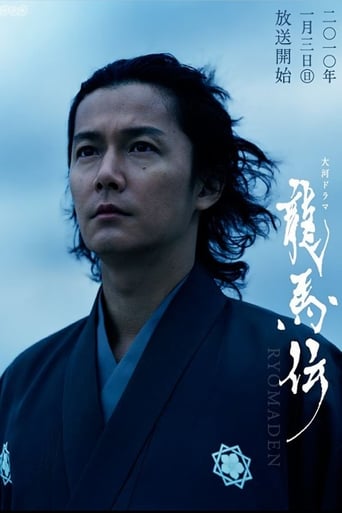
Ryōmaden is the 49th NHK Taiga drama. It was shown on NHK from January 3 to November 28, 2010 spanning 48 episodes. The story centers on the life of 19th-century Japanese historical figures Iwasaki Yatarō and Sakamoto Ryōma. It has been announced that the series will be aired in several other countries, for example Hong Kong, South Korea, Taiwan and Thailand.
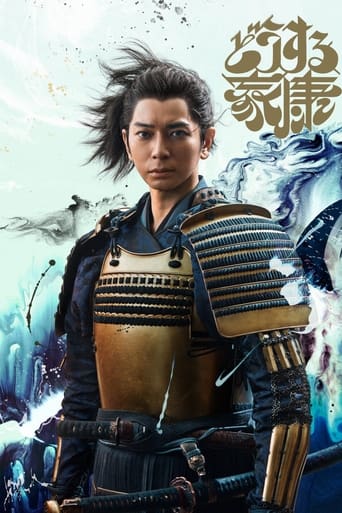
He lost his land, his father, and was torn from his mother. Lonely and wounded, young Takechiyo thought he'd live out his days quietly as a hostage. But fate had other plans. Inspired by Mikawa warriors, he becomes a minor lord and dives into a war-torn world ruled by monsters like Nobunaga and Shingen.Life-or-death moments, miscalculations, and no time to breathe—what will you do, Ieyasu?
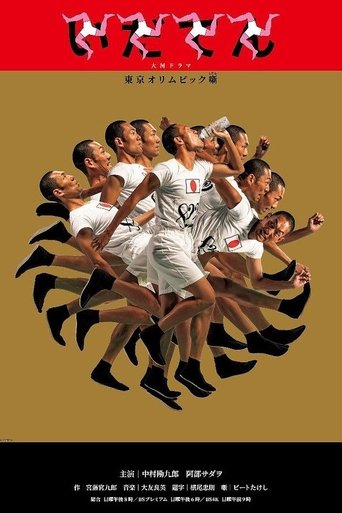
Traces Japan’s history with the Olympic games and the 1964 Tokyo Olympics for viewers before Tokyo hosts the event again in 2020. The first half tells the story of marathon runner Kanakuri Shiso, who became one of the first Japanese nationals to participate in the Olympics in Stockholm in 1912. The second half features Tabata Masaji, the coach who laid the foundations of Japanese swimming and helped bring the games to Tokyo for the first time in 1964.
A dramatized biography of the second of Japan's three legendary leaders. Rising from obscurity, Hideyoshi served under the command of Oda Nobunaga. With an extraordinary combination of intelligence, bravery and military skill, Hideyoshi rose to near-absolute power and greatly expanded upon Nobunaga's unification of Japan's warlords. This series also focused on Hideyoshi's personal life, particularly his relationships with his mother and his wife, and the pair's rivalry for influence over him.
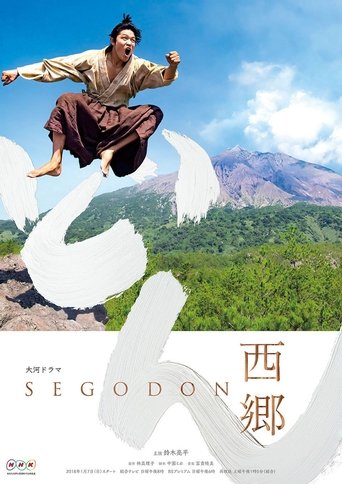
Saigo Takamori, the hero of the Meiji Restoration, was born to a poor, low-ranking samurai family in the Satsuma domain (present day Kagoshima Prefecture). His simple honesty caught the attention of its charismatic feudal lord of Satsuma, Shimazu Nariakira. Nariakira’s assertion that the love of people is what will enrich and strengthen the nation captivated Saigo who took on Nariakira’s secret mission and eventually became a key person for Satsuma. Not a portrait of him survives today and much of his life is a mystery. He is a man who was twice exiled and thrice married. He overthrew the Tokugawa Shogunate with exceptional bravery and action. Although he accomplished the restoration, he lost his life in a fight with the new Meiji government.
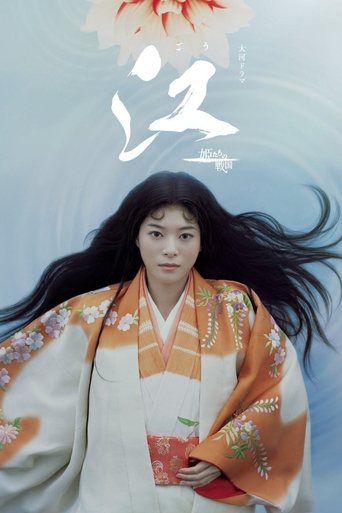
Princess Go was the youngest of the most famous three sisters in Japanese history, who each led a remarkable life in an age of turmoil and civil war. Go loses her parents in the war, marries three times, and feuds with her own sister in competing for power. Go's husband becomes the second Tokugawa Shogun and she ensures her prominence as she gives birth to a son who later becomes the third Shogun and a daughter, a wife of the Emperor. The drama describes the age of the civil war through the eyes of Princess Go, who plays a significant part in establishing the age of peace that lasts over 200 years in Japan.
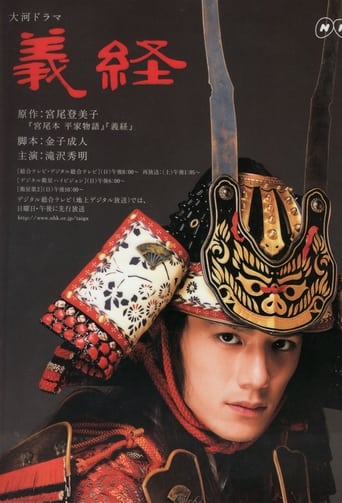
Yoshitsune is a Japanese television drama series originally broadcast between 9 January and 11 December 2005, with a three-part special compilation being aired from 24 December to 25 December 2005. The 44th Taiga Drama, the original work is by Miyao Tomiko, screenplay by Kaneko Narito and starring Hideaki Takizawa.
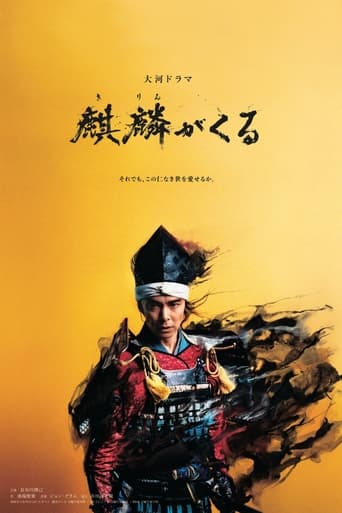
After the Onin War, the world is plunged into chaos. Amid this situation, heroes of the warring states begin to emerge in an attempt to unify the country and rule in these turbulent times. In the mid-1540s, there is a young wandering samurai in Mino which is strategically located between the East and West. His name is Akechi Mitsuhide. At this time, there is plenty of internal strife within the Toki clan which rules Mino. Surrounded by the Oda of Owari, the Imagawa of Suruga and the Asakura of Echizen, Mino has constantly faced the risk of invasion. Mitsuhide is pulled into battle and destroys the enemy. His bravery as well as stratagem catches the attention of Saito Toshimasa, the chief retainer of the Toki clan, and he is singled out. This man who is also known as Saito Dosan will go on to takeover the Toki and make Mino his own.
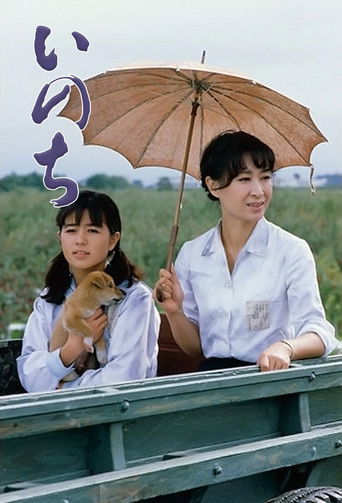
The drama begins in August 1945, three days after the end of the Pacific war. A freight train completely jam-packed with passengers heads for Aomori from devastated Tokyo. On the train is Takahara Miki and her sister Sachi. Miki and Sachi are the daughters of a wealthy landlord living in a village in the Tsugaru area in Aomori prefecture, but they have been living in Tokyo since before the war to attend school. After seeing her village does not have a doctor, Miki is determined to become a rural doctor.
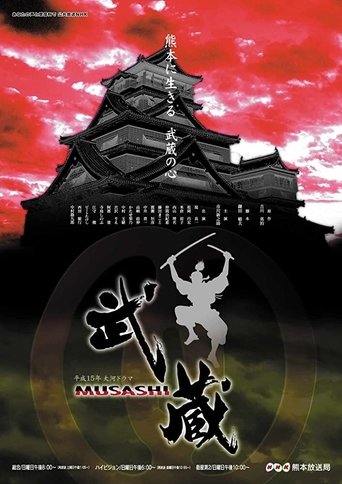
Orphaned when he was not yet ten, Musashi grows up skilled in the martial arts. During the Battle of Sekigahara, he fights on the side of the losing Toyotomi forces, but eludes the enemy as they hunt down the vanquished soldiers. He then spends years wandering the countryside mastering the sword. As his fame spreads throughout the nation, men seek him out to test their skills against him--most notably Sasaki Kojiro who faces Musashi in the ultimate duel at Ganryujima.
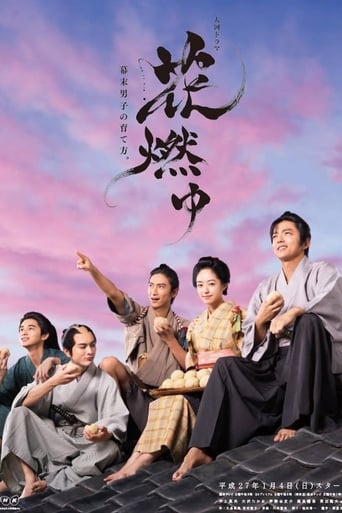
Fumi becomes Genzui Kusaka’s wife. During the turbulent times of the closing days for the Tokugawa shogunate, she lives positively and tries to keep up Shoin Yoshida's will. Shoin Yoshida is her older brother and intellectual.
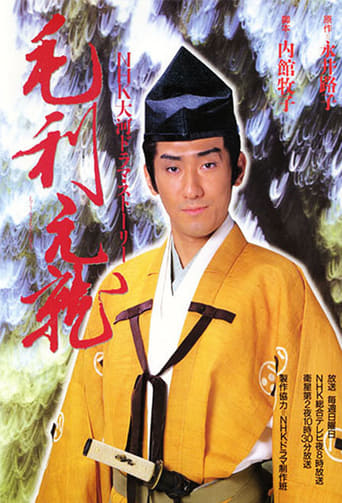
The 36th NHK Taiga Drama is Mori Motonari. This series chronicles the life of Mori Motonari, a warlord of the early 1500s who stood at the vanguard of the Warring States era. All Japanese school textbooks contain the Mitsuya no kyokun, Mori's famous lesson to his three sons that teaches that while one arrow is easily broken, three arrows together cannot be broken. In 1997, 500 years after his birth, NHK dramatizes Motonari's rise from a chief of the region of Aki (now Hiroshima) to a daimyo who rules over ten provinces of the Chugoku region. Motonari was 64 years old and already the patriarch of a powerful dynasty about the time Oda Nobunaga and Takeda Shingen appeared on the scene. And even after his death, the Mori family figured prominently in Japanese history. His grandson Terumoto became a loyal Toyotomi vassal. Defeated at the Battle of Sekigahara, Ieyasu confiscated most of his lands, leaving him only with Suwo and Nagato, later known as Choshu. But 260 years later, the Mori got their ultimate revenge, leading the imperial forces against the Tokugawa in the Meiji Restoration.
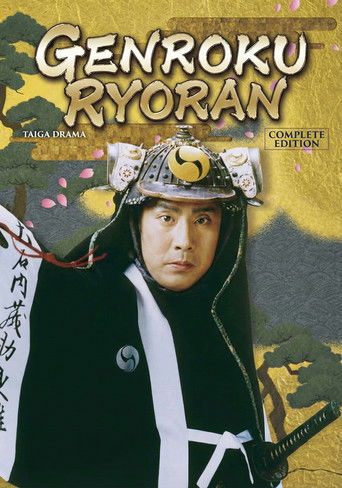
The 38th NHK Taiga Drama is Genroku Ryoran. The "Forty-seven Loyal Samurai" is one of the most enduring and best loved stories of Japan's history. Generations have grown up hearing the stirring tale of Oishi Kuranosuke, chief councillor of the Ako clan who leads his men through suffering and hardship to ultimately avenge their lord after he is unjustly forced to commit harakiri. NHK's 38th Taiga Drama "Genroku Ryoran" is the ambitious remake of this classic epic and boasts a cast that reads like a Who's Who in Japanese entertainment.

Murasaki Shikibu (Yoshitaka Yuriko), the heroine of this story, wrote the bestseller 'The Tale of Genji,' transcending a thousand years during the Heian period. She weaves the story of Hikaru Genji, fueled by her love for Fujiwara no Michinaga (Emoto Tasuku), with her hidden passion and incomparable imagination. It is a tale of a woman who lived with unchanging love in an ever-changing world. (From TV JAPAN)
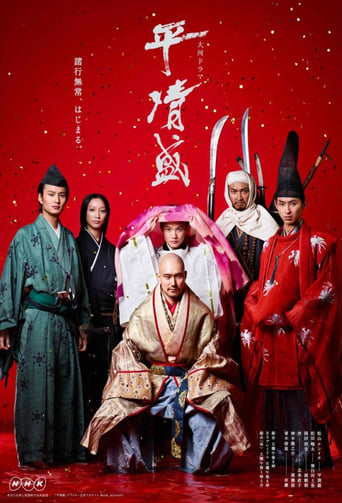
Villain or hero, Taira no Kiyomori changed Japanese history forever 900 years ago. Without ever knowing his real father, Kiyomori was raised as a samurai. Together with his stepfather, he wiped out piracy along Japan's western coast, becoming a full-fledged warrior samurai. In an age when samurai were looked down on as members of the lower class, Kiyomori was skillful at winning the hearts and minds of the people. By rounding up surrendered pirates and achieving other successes, Kiyomori eventually became the de facto ruler of Japan.
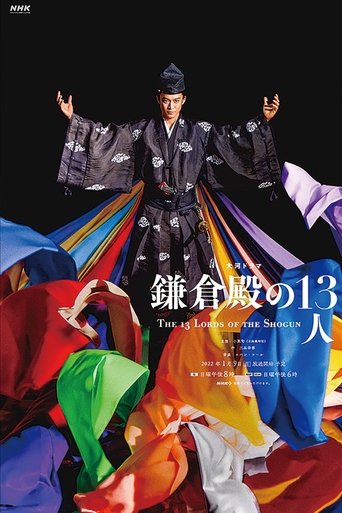
Following the ascension to power of Taira no Kiyomori, the Minamoto clan is exiled. Minamoto no Yoritomo meets Masako, the sister of Hōjō Yoshitoki and later marries her. Following this marriage, the gears of Yoshitoki's destiny begin to turn.
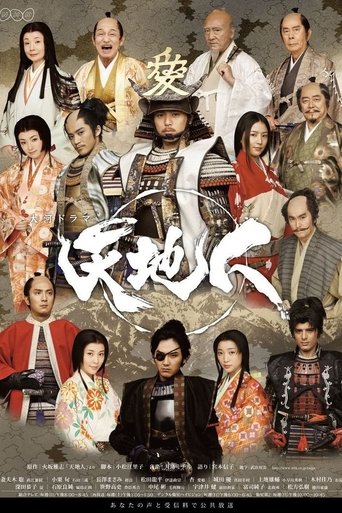
Tenchijin is the 48th NHK Taiga drama. It airs on NHK from January 4, 2009 every Sunday from 20:00 to 20:44 JST to November 22, 2009 spanning 47 episodes. The story centers on the life of the 16th century samurai Naoe Kanetsugu. Production began on April 27, 2007. The story is based on the novel Tenchijin by Masashi Hisaka and was adapted for screen by scriptwriter Eriko Komatsu. The series' music composer was Michiru Oshima. The protagonist of the drama, Naoe Kanetsugu, was taught by Uesugi Kenshin in his youth that to conquer the world is a trifling matter, but what matters is to live one's life with righteousness. After Uesugi's death, Naoe supports Uesugi Kagekatsu, who holds the destiny of Echigo province.
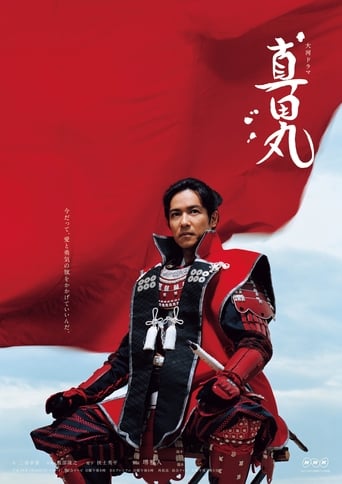
Spanning over 50 episodes, we follow the historical fiction of the Sanada clansmen as they plotted and fought their ways to survive the changing political alliances during the Warring States Period of Japan.

Yae no Sakura is a 2013 Japanese television series. It is the 52nd NHK taiga drama. The story focuses on Niijima Yae, who is portrayed by Haruka Ayase.
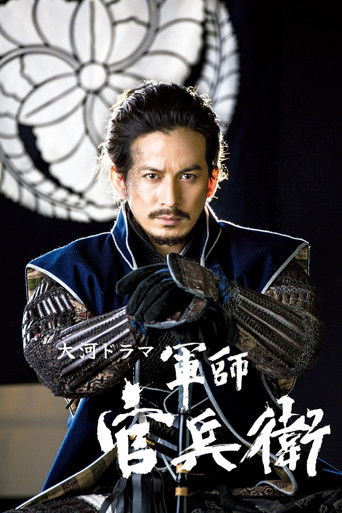
July 1590, Odawara. Toyotomi Hideyoshi's army had surrounded the Odawara Castle for over 3 months, hoping to conquer this last obstacle to his dream of the country's unification. Standing at the gate of the castle, a lone man facing the menacing guards shouted out: "Do not throw your lives away. Treasure living!". Not long after, the castle gates opened and the reigning lord surrendered. The name of that man is Kuroda Kanbee. An excellent military strategist, he worked hand-in-hand with Hideyoshi to unify the country.
