
The Little Soldier Who Became a God 1908
A stop-motion film from Émile Cohl with tin soldiers, children's drawings and cannibals.
A stop-motion film from Émile Cohl with tin soldiers, children's drawings and cannibals.
1908 French short silent film by Georges Méliès, which is presumed lost. No English-language release is known for this film,[1] but the translated title The Fairy Dragonfly has been used in film reference.
A sheriff apprehends a bank robber and recovers the money. On the way back to town, the sheriff loses the recovered money in a crooked card game. The bank robber helps him recover it.
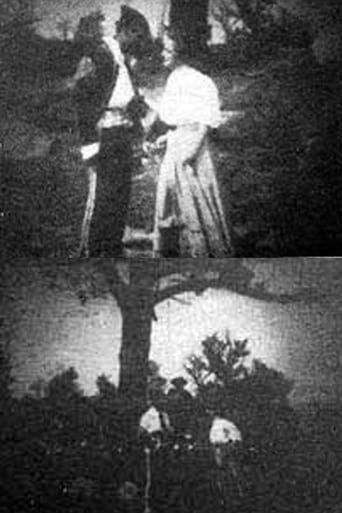
Jose, a handsome young Mexican, leaves his home in the Sierra Madre Mountains to seek his fortune in the States. On leaving, his dear old mother bestows upon him her blessing, presenting him with a pair of gauntlets, upon the dexter wrist of which she has embroidered a Latin Cross.
De Chomon film from 1908. Existing film is incomplete in length.
A Spanish dancer, in front of an inn in the Spanish mountains, is courted by a smuggler, who asks her to marry him. She agrees. Later, in the dancer's room, another man enters and declares his love for her. The smuggler, entering unnoticed, hears the declaration of love, and a violent argument breaks out between the two rivals for the dancer's affection. The suitors travel to a remote spot in the mountains and fight to the death; the smuggler wins the fight when the other suitor falls over a precipice. Returning to the dancer's room, the smuggler comes to meet his beloved, but the dancer refuses him when she finds out he killed his rival. The smuggler stabs himself in despair. The dancer, running to his corpse, touches his hands, and is repulsed to find them covered with blood.
The fairest maiden is crowned queen of the May Day festival and the dignitaries of the town, surrounded by the cheering populace, music and decoration, are on the huge platform to do her honor. She is entitled to marry the man of her heart with public celebration. The bridegroom makes his way to the fair grounds and jumps into the basket of a balloon. Just as he is ascending his bride comes to the scene and attempts the hazardous task of joining her loved one, but she is a few seconds too late, for the aircraft goes with a jerk, and she finds herself caught by its dangling anchor, and thus she rides, struggling and squirming as the balloon goes high into the clouds.
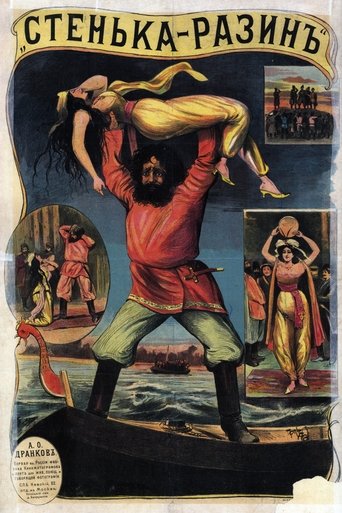
Stenka Razin is the leader of a group of outlaws who live a life of revelry and carousing along the Volga River and in the nearby forests. When Razin becomes distracted by a captured foreign princess and starts to dote on her, his men are displeased, feeling that he is neglecting them and their usual activities. Soon they come up with a plot, in the hopes of turning Razin against the princess.
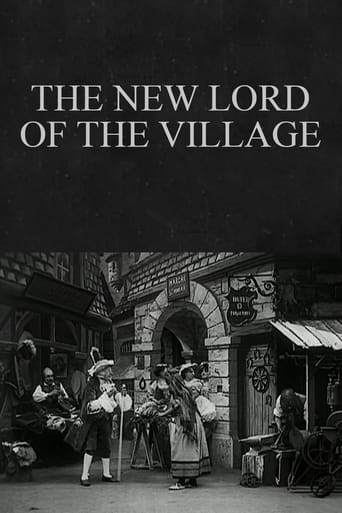
There's a scene in a village, then there's a scene out in the wilderness with what appear to be gods, and a giant crab, and a giant frog... then there's another scene in the village... and that's it.
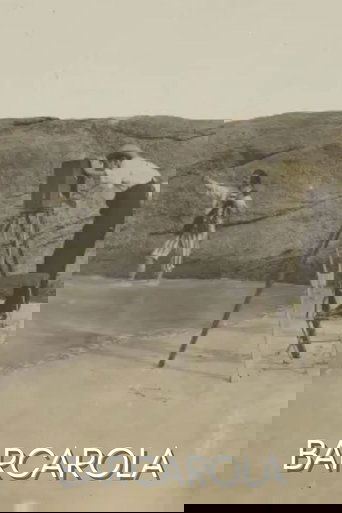
Barcarola is a 1908 Brazilian film directed by Júlio Ferrez. It was the first "sound" film in Brazil, that is, with actors dubbing themselves live, behind the screen, based on already recorded images. Premiered on September 1, 1908. It was produced by the company William e Cia. The film was inspired by the operetta "Les contes d'Hoffmann", by composer and cellist Jacques Offenbach. The film's synopsis is unknown, but given the name, which references the song "Barcarolle", it is very likely that it is inspired by the third act of Les contes d'Hoffmann. Like many films from this era, Barcarola is considered a lost film, with only one surviving image, taken during the film's production.
A short film starring Clément Mégé.
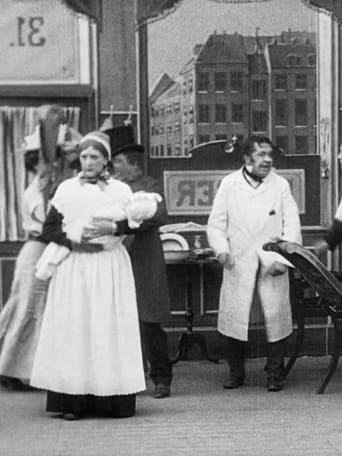
It’s the day of the barber’s baby’s christening, and the guests start arriving with their flowers and gifts, dropping them off while the barber is still trying to see to his last customer. As it’s taking a while, the wet-nurse is asked to take the baby on a short walk before the ceremony begins. She comes across a handsome young soldier, who she strikes up a conversation with. When an even more handsome man passes by, she hands the baby to the soldier. He has to return to the barracks, so he finds someone to leave the baby with. As time passes, the party start to wonder where the baby is. Fortunately, the baby has been handed in at the police station, where the parents reunite with their child. (stumfilm.dk)
In this simple melodrama, a boy loses his beloved girl, hence dying of a broken heart. The film presents advanced techniques in several fields.
Two hunters set out on safari with their African guide. They observe zebras, an ostrich, and a hippopotamus, capture a monkey, and camp for the night. After a lion kills their goat and horse, they shoot it by the water’s edge and later kill a second. The animals are skinned, and the hunters relax with cigarettes beside their trophies. (Note: Produced by Nordisk Film in 1907, Løvejagten gained notoriety because founder Ole Olsen purchased lions from Copenhagen Zoo, released them on an island, and filmed their killing. Supplemented with zoo footage to simulate Africa, the film caused public outrage yet drew huge audiences, establishing Nordisk’s reputation worldwide.)
Mack Sennett appears as a man in the bar in this film produced by the Biograph Company.
Stable hostler Joe loves his wife Annie, but she leaves him and their child for a wealthy gentleman, only to die destitute in London, where Joe's enduring love brings her solace in her final moments.
A young couple are enjoying a romantic interlude in the young woman's home, when her father discovers them and angrily chases the young man out of the house. They thus decide to elope, and they make plans accordingly. But as they are leaving, a thief discovers their plans, and he decides to turn the situation to his own advantage.
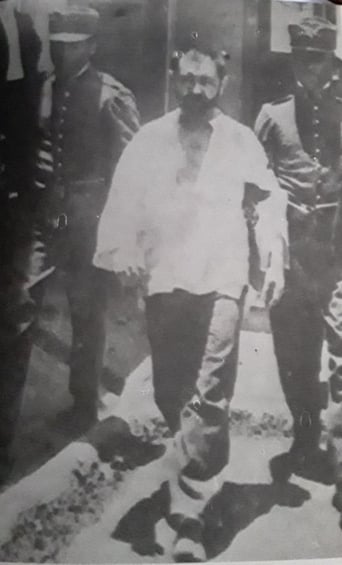
It depicts the notorious criminal incident that had occured in Rio de Janeiro.

An excellent reproduction of the world-famed riders of Russia in their various stunts and acrobatic feats while on their thoroughbred horses.
