Magic 2004
Series which gives a definitive guide to the history of performance magic from Ancient Egypt to 21st century Las Vegas, and why it has played such an important role in our social and cultural history.
Series which gives a definitive guide to the history of performance magic from Ancient Egypt to 21st century Las Vegas, and why it has played such an important role in our social and cultural history.

Hotch Potch House is a BBC TV show from 1996 aimed at preschool children. Hotch Potch House featured Richard Coombs as Raggs, Francis Wright as Shelley and Rebecca Nagan as Woolie. It was directed by Vivienne Cozens. It was shot at Grip house Studios. The stated aim was to "have the puppets teach children about their emotions and feelings in a way that relates to them." One feature was an animated storytime called "The Mouse House" told by Nana. The series is no longer in production. A recycled home made model Hotch Potch House spins round once and the camera zooms in at a different bit of it which indicates something. ⁕Eye - Eyewitness ⁕Front Door - Letter of the Week - a b c d e f ⁕Chimney - Number of the Week - 1 2 3 4 5 ⁕Tree - Activities ⁕Window - Songs & Rhymes ⁕Garden Door - Out and About The Mouse House ⁕Animation - Ealing Animation ⁕Nana's Voice - Tina Gray Letter/Number of the Week ⁕Animation - Alan Rogers and Peter Lang ⁕Number Song - Steve Brown Music ⁕Paddy Kingsland ⁕Stephen McNeff ⁕Sandy Nuttgens Episode List Hide and Seek Raggs always hides behind the door and wants to find a new place to hide. ⁕Eye - Camouflaged Animals
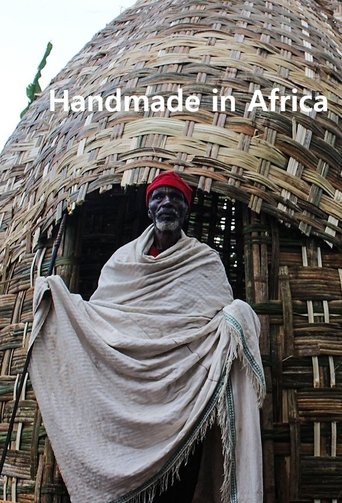
Observational documentary series that explores inherited knowledge and the meaning of tradition, master craftsmanship and artistic processes in three African cultures.
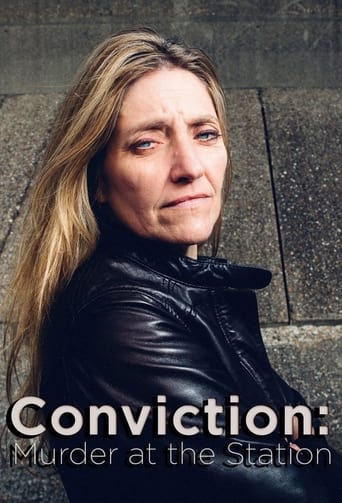
Louise Shorter investigates the case of a convicted murderer who claims to be innocent.
Treasure is an animated television series set in England shown on ABC Kids. It is about the life of a fourteen-year-old girl and her friends. The series was based on the popular newspaper column of the same name by Michele Hanson which became a book, Treasure: The Trials of a Teenage Terror. Treasure chronicles the life of Michele Hanson's daughter, Amy Hanson. The characters were designed by illustrator Christine Roche.
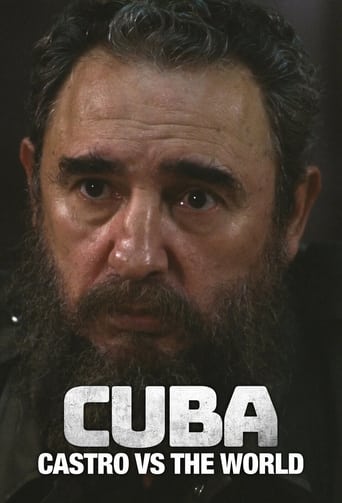
The story of how Cuba struggled in the wake of the collapse of the Soviet Union, their main economic and political supporter. The massive decline in living standards triggered refugee crises, which played havoc with Cuba's already difficult relations with the US and forced the two enemies to negotiate for the first time one-on-one and officially.
An eye-opening look inside the Post Office - an iconic national institution undergoing the biggest shake-up in its nearly 400-year history as it battles to reinvent itself for the modern world.
An aerial Grand Tour of the United Kingdom.
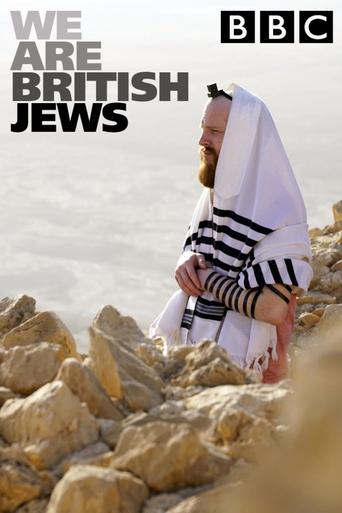
Eight British Jews with a broad range of opinions, beliefs and practices, go on a journey to explore what it means to be Jewish in Britain today.
Broadcasting from one of Britain's biggest car factories, James May, Kate Humble and Ant Anstead reveal the science, engineering and people that keep us all on the road.
Colour Me Pop was a British music TV programme broadcast on BBC2 from 1968-1969. It was a spin-off from the BBC 2 arts magazine show Late Night Line-Up. Designed to celebrate the new introduction of colour to British television, it was directed by Steve Turner, and showcased half-hour sets by pop and rock groups of the period. The programme was a pioneering precursor to the better remembered BBC music programme The Old Grey Whistle Test. Unlike its successor, most of the editions of Colour Me Pop are lost.
Despatch Box was a late night political analysis television programme produced by the BBC and broadcast on BBC Two between 1998 and 2002. The programme was a replacement for the nightly political programme The Midnight Hour, and like its predecessor, was initially presented by a team of single-presenter journalists, rotated nightly, consisting of Zeinab Badawi, Michael Dobbs, Andrew Neil and Steve Richards. The programme regularly gained an audience of more than 350,000 viewers. Following a change of format, it was decided that the programme should have one, regular presenter, a role for which Andrew Neil was chosen. The programme was produced at the BBC's Millbank studios in London. Following changes to sitting hours in the United Kingdom parliament, and extensive changes to the BBC's line-up of political programmes, Despatch Box was discontinued, and the programme's then regular presenter, Andrew Neil, moved on to present The Daily Politics and This Week.
Four-part series in which grumpy celebrities ponder on why holidays are just another of life's many disappointments.
It was the biggest information leak in US diplomatic history – over 250,000 US diplomatic messages or “cables” between the US State Department and US embassies all over the world – turned into a global sensation by the website WikiLeaks.
A short-lived studio discussion programme about television. Originally presented by Paul Barnes and Chris Dunkley, from the second series onwards the programme was chaired by William Hardcastle.
In January 2006, Ben and Mark decided to set up their own eco-community. They set up a website to persuade volunteers to come and live on a Fijian island
