
Jamestown Exposition 1907
Scenes of Theodore Roosevelt at the Jamestown Exposition in Norfolk, Virginia, in April and June, 1907, participating in Jamestown's tercentennial celebration on April 26, its opening day, and later on Georgia Day, June 10.
Scenes of Theodore Roosevelt at the Jamestown Exposition in Norfolk, Virginia, in April and June, 1907, participating in Jamestown's tercentennial celebration on April 26, its opening day, and later on Georgia Day, June 10.

Two clowns perform acrobatic routines with each other, but suddenly start fighting. One of them finds and hides inside a large canvas sack that turns out to have magic properties. (stumfilm.dk)
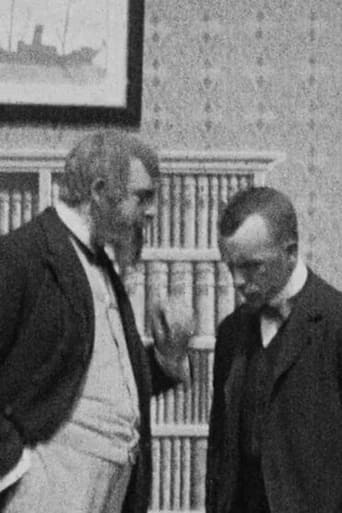
The film is incomplete and there are no preserved programmes which explain the story. The fragment consists of the following scenes: Scene 1: An older and a younger man are talking in a living room. Scene 2: The young man is courting a woman and is rejected on account of another suitor. Scene 3: The older man receives a telegram about a shipwreck. The news almost drives him to take his own life. Scene 4: The two men are now standing outside a shop and seem happy again. A woman is sitting with a child on her lap, perhaps belonging to the young man and the woman he previously pursued. The film was directed by Viggo Larsen, who, as far as we know, directed all films for Denmark’s first film company, Nordisk Films Kompagni, in the period between 1906 and 1909. Viggo Larsen also plays the young man in the film. -Stumfilm.dk
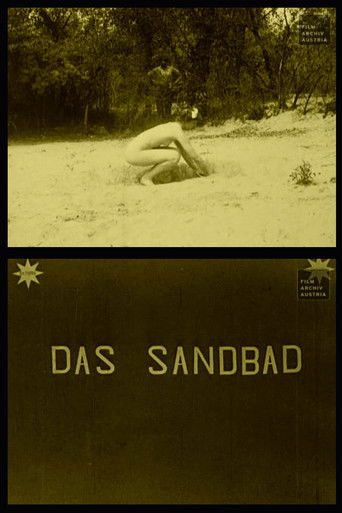
A middle-aged man bare chest and wearing trousers, clears a shallow trench in the sand while a young woman draped in a long, flimsy veil looks on. The man leaves, but stays in the nearby wood at a watching distance, glancing at the girl divesting of her robe, sitting in the trench as if to sunbathe. She shifts positions a couple of times, but then the man returns, and starts covering her with sand. Unhappy, the girl gets up, picks a flask of lotion from the trench, and leaves with the man.

The film is several vignettes of slap stick presentation of racial stereotypes. We are treated to murderous Mexicans, conniving Jews, brawling Irish, bloodthirsty Scots, an Indian, and even Uncle Sam. This little black and white silent feature is an interesting look, especially in that we really don't know what we are seeing. Is this what it first appears - a racist comedy that shows a disdain for all non-WASPs? Is the final scene depicting most of the cast (except the dancing Negros) working together to show that America is a melting pot?

Compilation of two shorts also distributed independently: Cricket und Reifenspiel [Croquet and the Arc and Hook Game], and Springschnur und Amazonen [Jump Roping and the Amazons]. In a sunny day, on a lawn in the woods, three nude, young brunettes with little flower arrangements on their hair are playing a succession of three dexterity games: throwing and catching three arcs with the use of a thin long hook, jumping the rope (soon replaced by a long piece of light cloth), and using the arcs as hoops for a bit of croquet with appropriate mallets and balls.
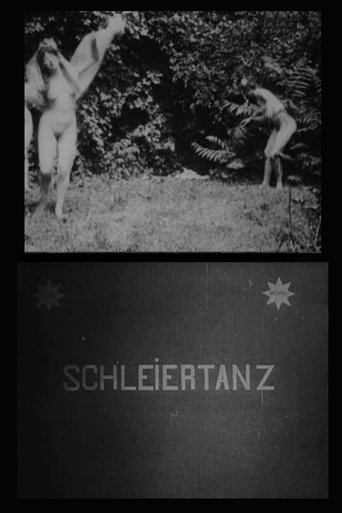
Four nude girls prance about in a small clearing in a dense wood or green garden. Two stay coyly to the left, one dances in the front with a flowing, flimsy veil, and another, far right, mimics the dancer's movements.

A middle-aged woman in rural dress and a young woman in a smarter dress are picking up herbs in a forest. The workload and the sunny day call for a halt for refreshment. The young girl disrobes, and enters the nearby river in the nude, followed by the mature woman who simply fathers her long skirts up to her waist, revealing her naked thighs and white-slip covered buttocks. The camera follows them to the right, capturing the water movement, and their splashing about. (A white sunflower stands alone in the midst of the water creeks - hinting at the Production company's logo, an 8-pointed star.) A fisherman arrives and starts throwing his hook at the fish, with no results; so, he moves to the right, and throws the hook again, this time capturing the heavy mature woman who comes from behind the curtain of willows, complaining of pain in the lower of her back. A policeman in city uniform and white casket appears, to expel both the fisherman and the woman from the place.

A woman replaces her injured beau on a spy mission.
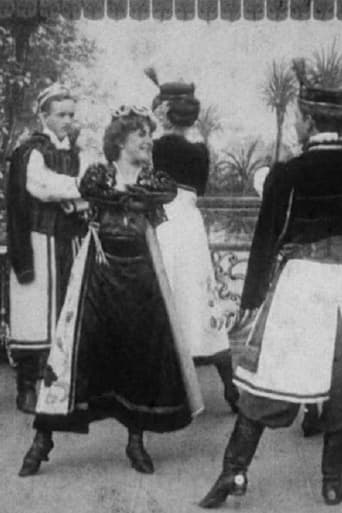
In the impoverished Balkan principality of Pontevedrino, a love drama unfolds. The class divide prevents Count Danilo from marrying the peasant girl Hanna. With an aching heart, he moves to Paris, while she becomes engaged to a rich banker who dies soon afterwards, leaving her his large fortune. Baron Zeta of Pontevedrino now seeks to have Hanna marry a compatriot, hoping that her millions will save the principality from bankruptcy. Although the plan seems to succeed at first, fate has something else in store for Hanna. (stumfilm.dk)
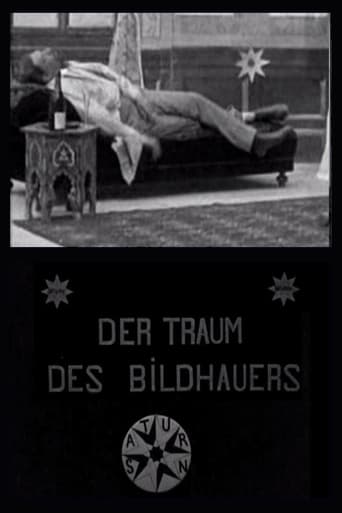
The artist studio is decorated with a rug, a chaise lounge, a small table, a plinth, a couple of copies of classic sculptures, a vase with flowers, a few prints on the walls, and on the wood paneled lower half of the wall, an 8-pointed star [Saturn-Film's logo]. The artist is wearing a white shirt over his grey trousers, shirt and necktie, and he is wearing black shoes. With hammer and chisel, he applies the last touches on his last piece of sculpture - The Three Graces, standing nude on a rectangular podium covered with a white bed-shirt. He steps back, contemplates his work, and rejoices on the beauty he has achieved. He goes out momentarily, and brings a bottle of champagne and a glass; before drinking, he makes a toast to his finished statue. He drinks, smokes a cigarette, and contemplates his work - until he falls asleep on the chaise lounge. Only then do The Three Graces stir, and tip-toe around their creator. One even dares to approach her lips to the artist's.
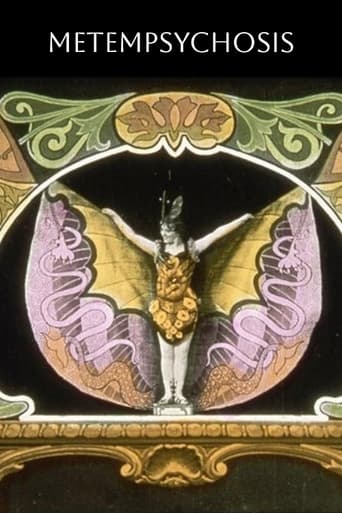
Stencil-coloured version of Segundo de Chomón's Les roses magiques (1906).
In front of a round tent, a pasha is sitting on the grass; to the right of the tent's door, covered with a patterned blanket, is a flagpole - on top of which is an 8-pointed star [Saturn-Film's logo]. The pasha claps hands, and a servant comes to his bid. The lord is going to smoke from his water-pipe while he buys some new slave girls. The servant calls the seller and his two henchmen, who bring forth four girls in patterned burnooses.
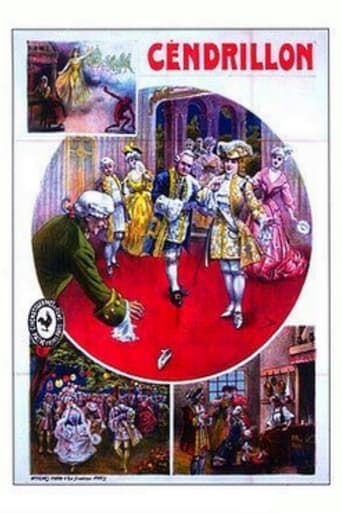
This is a compact telling of the Cinderella fairy tale and the film is elaborately staged.
Jim, a robber, is in love with the chief’s bride Clara, who firmly rejects his many advances. In revenge, he snitches on the entire gang of robbers to the police, who immediately imprison the chief and his men. Clara kills the treacherous Jim and sets out to free her lover from prison. (Stumfilm.dk)
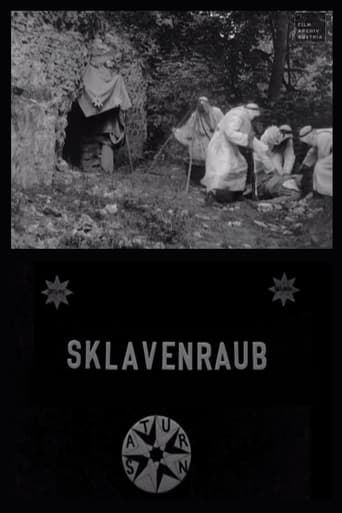
Four Arab men in white burnouses, two women in grey, and one female cook in striped burnous, are sitting in front of a cave in a forest path.
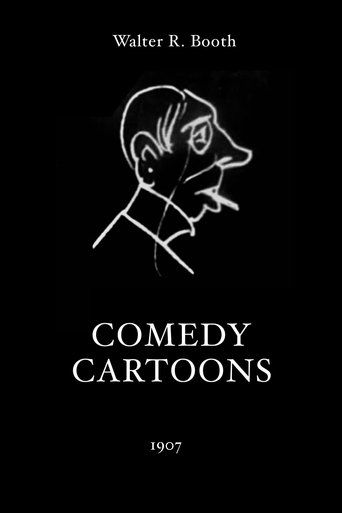
The artist is presented, with his board: his only appearance. The hand rapidly outlines a human head, into the chalky jaws of which it inserts a cigarette. The chalk head smokes, and finally eats, the cigarette. The head of a woman is drawn, which gradually fills and becomes undoubtedly human. —Urban-Eclipse catalogue
Many demonstrations of the art of Jiu Jitsu are given, and as evidence that this is not a passing fad intended only for the amusement of the public there is illustrated in very thrilling manner how several footpads follow two girls and then in a deserted section of the road make an attack, which is successfully foiled and the perpetrators taken into custody. Splendid action and good photographic quality. (Gaumont catalogue)
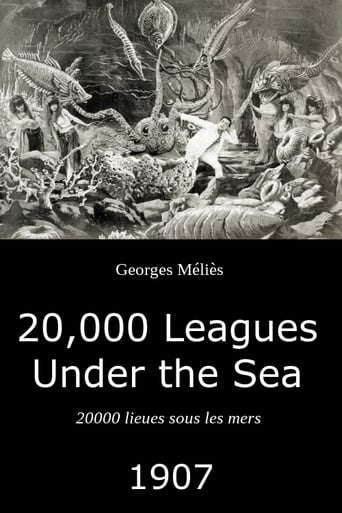
The film, a parody of the novel Twenty Thousand Leagues Under the Sea by Jules Verne, follows a fisherman, Yves, who dreams of traveling by submarine to the bottom of the ocean, where he encounters both realistic and fanciful sea creatures, including a chorus of naiads played by dancers from the Théâtre du Châtelet. Méliès's design for the film includes cut-out sea animals patterned after Alphonse de Neuville's illustrations for Verne's novel.

The cyclist is dispatched upon an important errand, and his humorous and alarming adventures by the way form the subject of this series. Misadventure follows misadventure with great frequency, but the cyclist comes up smiling every time, mounts his machine, and again resumes his journey. Accidents which would maim or kill an ordinary mortal serve only to spur him on to fresh exertions in a mad search for physical inconveniences and dangers, which always present themselves. (Picture World)
