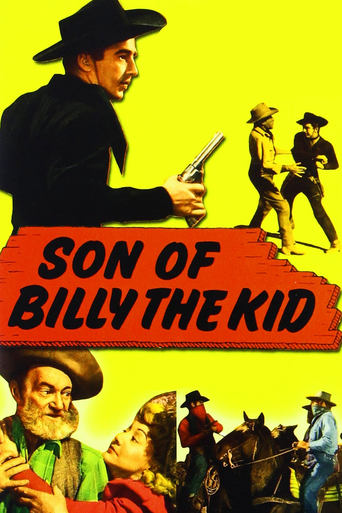
Son of Billy the Kid

Son of Billy the Kid 1949

5.00

Jack Garrett interrupts a stagecoach holdup where he meets Fuzzy (The town's stagecoach driver, station agent, baggage agent, and sheriff) and banker Jim Thorn. The trio team up to prevent robberies of Thorn's bank by Clem Yantis's large gang.

1949

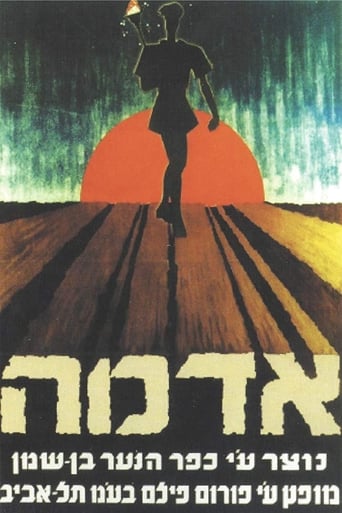
Tomorrow is a Wonderful Day

Tomorrow is a Wonderful Day 1949

2.00

Benjamin, an adolescent boy, arrives on a bus with other boys who are new arrivals at the village. They are introduced to the class. He is still suffering from trauma and begins to hoard bread taken from storage even though the village has no lack of food. He watches other children at work but feels foreign and alienated

1949

Winter Storage

Winter Storage 1949

6.82

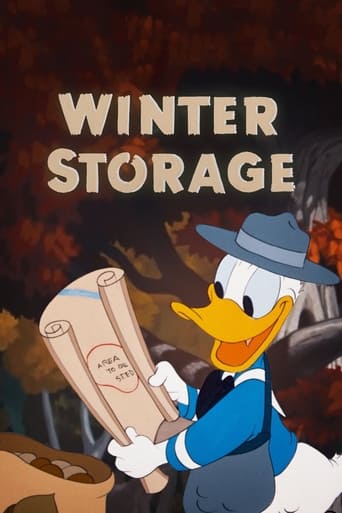
It's October 7th and Chip is working industriously to store enough acorns in the tree for the winter. Dale would rather sleep in his matchbox, but an angry kick from Chip gets him working furiously. But there's only so much they can do. Their tree is nearly out of acorns. Luckily, the two semi-intelligible chipmunks happen to see the half-unintelligible Donald Duck, a park ranger, planting acorns. They immediately set to steal his bag of the precious nuts. Donald soon realizes what they are up to, and sets out a box propped up with a stick. It's a crude trap, with an acorn as bait; but it's not too crude to fool Dale, who upsets it and traps Chip. Soon, Donald finds he can have fun instigating a fight between these two quarrelsome chipmunks, but he underestimates their friendship and their ability to work as a team against a common enemy: in this case, a bad-tempered duck.

1949

Shooting Star

Shooting Star 1949

1

Based on that testimony, an investigation is launched in the entertainment district, and through a brief conversation between Toda and Nanako at the cabaret "R-Red," it becomes apparent that her lover, Kaneda, is suspicious. Toda and Kaneda are, in fact, members of the gang currently being frantically pursued by the Metropolitan Police. Their leader is a ruthless man named Yoshio Matsui, known as "Tetsu the Murakumo," who has his mistress, Aiko, working as a singer at this cabaret. Kaneda, using his leg injury caused by Detective Mishima as leverage, demands a large sum of money from Tetsu, but is instead met with gunfire from Tetsu's gang. Upon hearing the gunshots, Officer Fujita, who was patrolling nearby, gives chase. As Kaneda lies dying, he reveals the truth before drawing his last breath. With this near-confirmation, Fujita puts out an all-points bulletin for Tetsu.
1949

Black Magic

Black Magic 1949

6.20

A hypnotist uses his powers for revenge against King Louis XV's court.

1949

Goofy Gymnastics

Goofy Gymnastics 1949

6.90

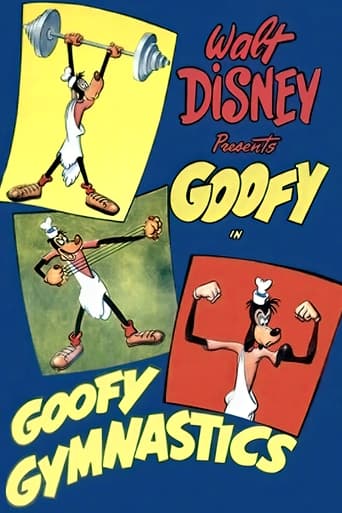
Inspired by a magazine ad, Goofy sends for a mail order body building course. First is weight lifting; after Goofy finally gets the weights up, a fly lands and sends him crashing through several floors in the apartment building. Chinups: the bar itself goes up and down. Then a rubber-band stretch device, which Goofy quickly tangles up in, sending him crashing through the building and several other pieces of equipment.

1949

Prison

Prison 1949

7.10

A filmmaker sets out to create the greatest film in history, but finds out that human abilities have limits.

1949

Africa Screams

Africa Screams 1949

5.67

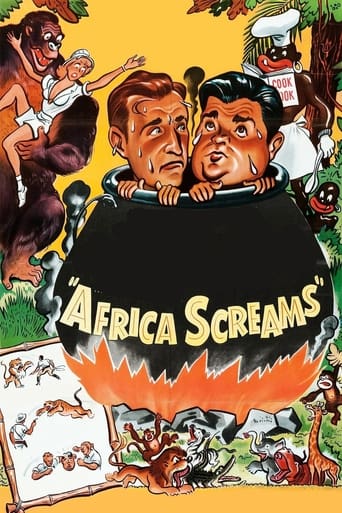
When bookseller Buzz cons Diana into thinking that his friend Stanley knows all there is to know about Africa, they are abducted and ordered to lead Diana and her henchmen to an African tribe in search of a fortune in jewels.

1949

Manon

Manon 1949

6.85

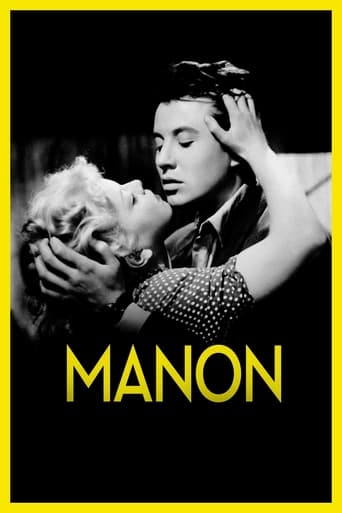
Port of Marseille, France, recently liberated from the German yoke. Caught as stowaways aboard a ship, Manon, a young woman who was accused of collaborating with the Nazis, and Robert, a freedom fighter who saved her from reprisals, tell the captain about the many challenges they have had to face in order to survive.

1949

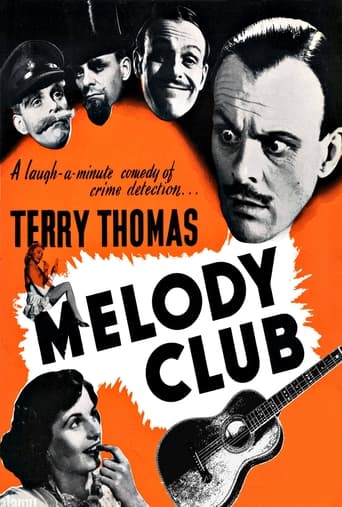
Melody Club

Melody Club 1949

6.00

Customers at the Melody Club are burgled while attending the the club. A detective investigates.

1949

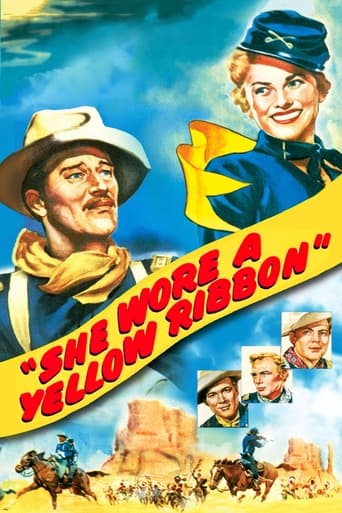
She Wore a Yellow Ribbon

She Wore a Yellow Ribbon 1949

6.90

On the eve of retirement, Captain Nathan Brittles takes out a last patrol to stop an impending massive Indian attack. Encumbered by women who must be evacuated, Brittles finds his mission imperiled.

1949

Devil in Human Being

Devil in Human Being 1949

1

A young girl, Suli, marries a young man, Zhengli. After the marriage, Su Li realizes that her husband is acting strangely, so she follows him to Zheng Li's former home and encounters a series of strange events. Finally, Su Li learns from her nanny, Wang Ma, that the house was haunted three years ago, and that Zheng Li's sister-in-law, Li Zhen, was forced by a ghost to hang herself from a beam, and that Zheng Li's brother came back as a madman. The day after Su Li learns of all this, the bookkeeper Lao Wang is killed again, and next, the nursemaid is also brutally murdered. Suli knows she is in danger and wants to leave immediately, but Zhengli does not agree. Suli is in danger several times, but fortunately saved, and finally finds the real killer, and kills him because he is full of evil!

1949

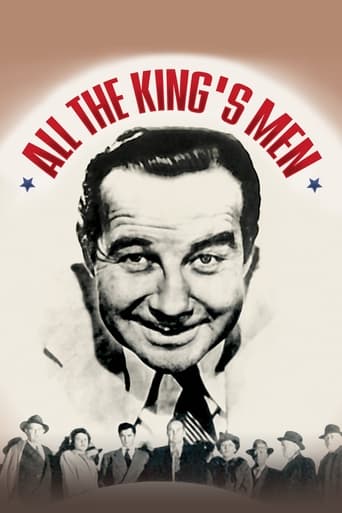
All the King's Men

All the King's Men 1949

7.00

A man of humble beginnings and honest intentions rises to power by nefarious means. Along for the wild ride are an earnest reporter, a heretofore classy society girl, and a too-clever-for-her-own-good political flack.

1949

Sicilian Uprising

Sicilian Uprising 1949

1

Sicilian Uprising or Sicilian Vespers is a 1949 Italian historical drama film directed by Giorgio Pastina and starring Marina Berti, Clara Calamai and Roldano Lupi.

1949

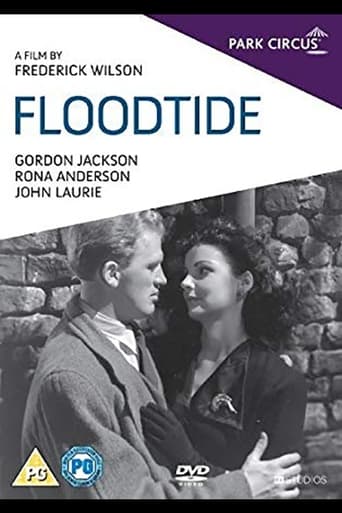
Floodtide

Floodtide 1949

6.00

David Shields refuses to go into agriculture and opts instead for ship building

1949

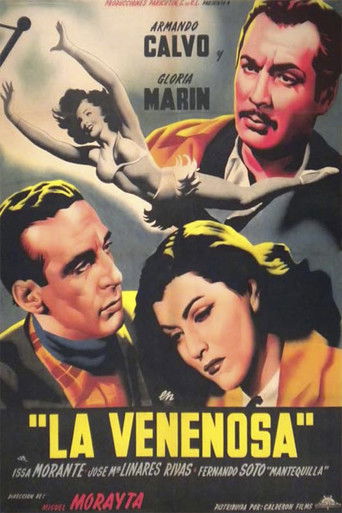
La venenosa

La venenosa 1949

5.50

A snake-charmer falls in love with a circus trapeze artist who trains her and has her debut in this discipline.

1949

Marry Me

Marry Me 1949

4.30

The stories of several individuals who consult a marriage bureau, including a peer of the realm, his butler, a lonely school teacher, a French girl on the run from a violent boyfriend, a country vicar, and a newspaper reporter, sent by his editor, to do an undercover story.

1949

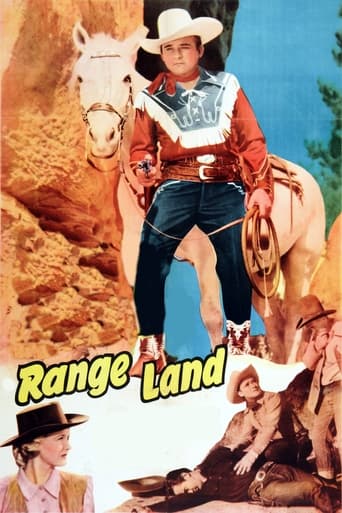
Range Land

Range Land 1949

1

Monogram's Whip Wilson western series occasionally produced a better-than-average entry. In Range Land, Wilson and saddle pal Andy Clyde try to get the goods on a gang of stagecoach bandits.

1949

The Unloved Woman

The Unloved Woman 1949

7.00

Emilio Fernandez directs Dolores Del Rio and Pedro Armendariz in a classic tale of family and obsession. Raimunda's daughter Acacia hates her stepfather Esteban, and in order to escape her suffocating home life she's accepted a marriage proposal from a man she doesn't even love. But Esteban has become obsessed with Acacia, and in order to ensure that she doesn't leave he's plotting to murder the girl's unsuspecting fiancée. As Esteban's true nature emerges, mother and daughter must band together to support one another and make sure that their family bond remains strong even in the darkest of times.

1949

Mama

Mama 1949

8.00

Mama was a weekly Maxwell House and Post-sponsored CBS television comedy-drama series from July 1, 1949 until March 17, 1957.

1949

The Hartmans

The Hartmans 1949

1

The Hartmans is an American television sitcom that aired live on NBC on Sunday nights from February 27 to April 24, 1949. The series stars Paul and Grace Hartman, a married couple who performed together on the vaudeville circuit and on the Broadway stage.

1949

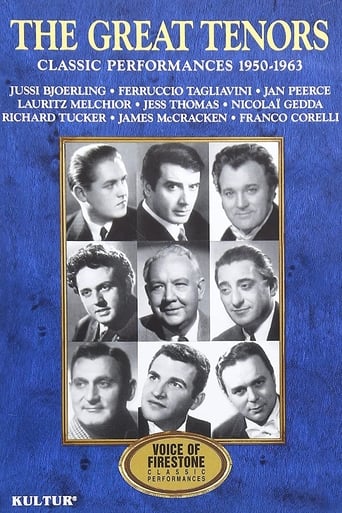
The Voice of Firestone

The Voice of Firestone 1949

6.00

The Voice of Firestone is a long-running radio and television program of classical music. The show featured leading singers in selections from opera and operetta. Originally titled The Firestone Hour, it was first broadcast on the NBC Radio network on December 3, 1928 and was later also shown on television starting in 1949. The program was last broadcast in 1963.

1949

Hands of Murder

Hands of Murder 1949

1

Hands of Murder was an American mystery/anthology series that aired on the DuMont Television Network.

1949

Starring Boris Karloff

Starring Boris Karloff 1949

1

Starring Boris Karloff (also known as The Boris Karloff Mystery Playhouse) is an American radio and television anthology series broadcast for 13 weeks, September–December 1949, on the ABC network. Boris Karloff was the host and occasional star, with music by organist George Henninger. Produced and directed by Charles Warburton, the series adapted short stories of mystery and suspense.

1949

The Admiral Broadway Revue

The Admiral Broadway Revue 1949

1

The Admiral Broadway Revue is an American variety show that ran from January 28 to June 3, 1949. The show was broadcast live on Fridays, 8-9 pm Eastern Time. and was broadcast simultaneously on both NBC and the DuMont networks.

1949

Your Show Time

Your Show Time 1949

1

Your Show Time is an American anthology drama series that debuted as a midseason replacement on NBC Television in January 1949. Hosted and narrated by Arthur Shields, the series ran until July 1949.

1949

These Are My Children

These Are My Children 1949

1

These Are My Children is a short-lived American television soap opera which ran on NBC from January 31, 1949 to February 25, 1949. The show was broadcast live from Chicago, Illinois, airing fifteen minutes a day, five days a week, at 5:00 p.m. EST. These Are My Children was the first soap opera to air on a major television network. Created by Irna Phillips and directed by Norman Felton, the show was based in large part on Phillips' early radio soaps Today's Children and Painted Dreams. Children centered on an Irish widow, Mrs. Henehan and her struggles to run a boarding house as well as help her three children and new daughter-in-law Jean. Critics were not impressed; Television World ended their review with: "There is no place on television for this type of program, a blank screen is preferable."

1949

Arthur Godfrey and His Friends

Arthur Godfrey and His Friends 1949

6.50

Arthur Godfrey and His Friends is an American television variety show hosted by Arthur Godfrey. The hour-long series aired on CBS Television from January 1949 to June 1957, then again as a half-hour show from September 1958 to April 1959. Many of Godfrey's musical acts were culled from Arthur Godfrey's Talent Scouts, which was airing on CBS at the same time. Among the more popular of his singers were Frank Parker, Marion Marlowe, Janette Davis, Julius La Rosa, Haleloke, The McGuire Sisters, Carmel Quinn, Pat Boone, Miyoshi Umeki and The Chordettes. The show was live, and Godfrey often did away with the script and improvised. He refused to participate in commercials for products he did not believe in.

1949

Colgate Theatre

Colgate Theatre 1949

1

Colgate Theatre is a 30-minute dramatic television anthology series telecast on NBC during 1949 and 1958 for a total of 50 episodes. The first edition, a live anthology, was telecast on Sunday nights at 8:30pm through the summer of 1950. The second series [Tuesdays, 9:30pm] consisted of filmed pilot episodes of unsold series, and was a last-minute replacement for the game series Dotto, which was ended during August 1958, due to accusations that it was rigged. It served as a filler for the sponsor until The George Burns Show premiered on October 14, 1958.

1949

Leave It to the Girls

Leave It to the Girls 1949

3.00

Leave It to the Girls is an American radio and television talk show, created by Martha Rountree, and broadcast, in various forms, from the 1940s through the 1980s.

1949

Famous Jury Trials

Famous Jury Trials 1949

1

Famous Jury Trials is a dramatized court show that first appeared on radio, followed by television, and then in the movies. The series enjoyed a long, successful run in radio programming from 1936 through 1949, then on television from 1949 through 1952, and finally in a movie in 1971. On television, it aired on the now-defunct DuMont Television Network.

1949

The Herb Shriner Show

The Herb Shriner Show 1949

1

The Herb Shriner Show was the title of two different American television series shown in prime time by CBS during the late 1940s and 1950s. A similar program, also hosted by Herb Shriner, was Herb Shriner Time, which was aired by ABC as part of its 1951-52 lineup. The first Herb Shriner Show was essentially a continuation of what Shriner had previously done on radio. It was aired by CBS five nights a week from 7:55 to 8:00 P.M. Eastern time and consisted solely of Shriner's folksy monologues, which had already earned him comparisons to Will Rogers. This program was seen only from November 1949 until February 1950. Herb Shriner Time was a half-hour format aired by ABC on Thursday nights at 9 PM Eastern from October 1951 to April 1952. In addition to the comedy monologues, this format provided time for guest stars, and also allowed for Shriner to play his harmonica and act in comedy sketches.

1949