Sin título 1971
Short film made by psysisist Septimio Tesone. An experiment made in his laboratory for his students to see multiple chemical reactions.
Short film made by psysisist Septimio Tesone. An experiment made in his laboratory for his students to see multiple chemical reactions.
An experimental documentary on the atmosphere of the Tehran Coppersmiths’ Bazaar
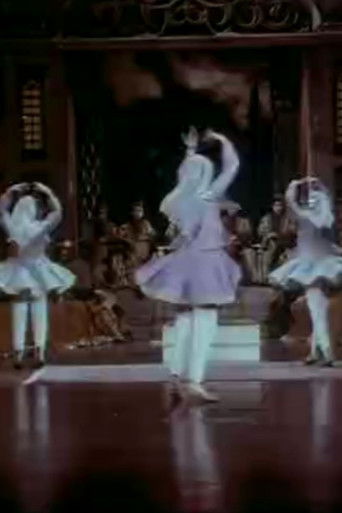
The 'Rounama' dance comes from a wedding custom that was common in Iran, both in the distant past and more recently. Grooms wouldn't know their brides until the very last moment before getting married, and this unfamiliarity sometimes led to unexpected situations. The creators of the Rounama dance, which has humorous elements, aim to introduce viewers to this old tradition.

A short feature on the city of Gorky in the year of its 750th anniversary.
About small and large events in a city at war.
A film by Fritz André Kracht
Documentary about the EEC debate in Norway.

A man is pursued by aggressive advertising images. he finds himself in a labyrinth of advertisements from where he escapes and subsequently ends up in advertising heaven. There an ironic fate awaits him...
The film focuses on Black writer Carolina Maria de Jesus, who lived in a favela.

In this film, heavily inspired by Man Ray's collage work L'enigme d'Isidore Ducasse (1920) and the poetic energy of Lautreamont's Les Chants De Maldoror, Franco films a number of incunabulae (a swing machine, an umbrella), ancestors of fecund inspirational symbols for modern and contemporary art, which hold a privileged position among the objects described by Lautreamont.
Access to video technology had largely been limited to corporate-run TV studios until the Sony Portapak, a battery-powered video tape recorder that could be carried by one person, was popularized in the early 1970s. This device also allowed artists to see what they were recording in real time and to immediately play it back, prompting investigations of technology’s increasingly fluid relationship to the body, language, and time itself. Shigeko Kubota’s ”Self-Portrait” embodied the boundless potential of the new medium and the freedom from precedent it represented. This work, in which Kubota interacts with her own image, contains some of her earliest known experimentation with video. Here, she used new tools to manipulate the electronic signal, creating previously unimaginable colors and patterns, and unraveling established conventions of image-making right before our eyes. [Overview courtesy of Erica Papernik-Shimizu via MoMA]
A haunting Christmas short film from Québec about a lonely man and a mysterious wolf-like visitor. Created by Claude Roussel and Gilbert Gratton for the Ministère de l’Éducation, Philidor became a cult memory for many who saw it on television in the early 1970s.
The well-known illustrator Werner Klemke uses his drawings to teach the youngest bookworms about the value of reading. Taking this as a starting point, Lotte Thiel presents the GDR as a land of books whose capital is Leipzig. Figures and images from the 1971 International Book Art Exhibition underscore the significance accorded to books as a tool for shaping the “socialist personality”.
Commissioned by the German Book Traders’ Association, Lotte Thiel follows the preparations for the 1971 International Book Art Exhibition, prominently supported on screen and on the soundtrack. The tradition of this fair is recalled, from its predecessor BUGRA 1914 to the first IBA in 1927 and the subsequent events that took place every five to six years starting in 1959. Award-winning illustrations can be viewed in detail.
No overview found.
A good man has built a house, planted an apple tree, poured himself a beer. A neighbour, who has built a larger house, appeared in the neighbourhood. Each of them continued to build additional floors in their buildings, until both buildings collapsed and crushed their owners.
A documentary chronicle of the excavation of a Western Han dynasty tomb in Hunan province and the camera-observed autopsy of a remarkably preserved female corpse — a 2,100-year-old noblewoman whose burial goods and condition revealed details of elite life in the Han era.
Second work made by Yanagisawa after he turned from PR films to independent documentaries. The film was shot at the Nishitaga Hospital in Sendai, and depicts daily life and learning for children with progressive muscular dystrophy.
