
The Brendan Grace Show 1970
The Brendan Grace Show is an Irish variety show presented by Brendan Grace. The studio-based show aired on Friday nights between 29 October and 10 December 1982.
The Brendan Grace Show is an Irish variety show presented by Brendan Grace. The studio-based show aired on Friday nights between 29 October and 10 December 1982.
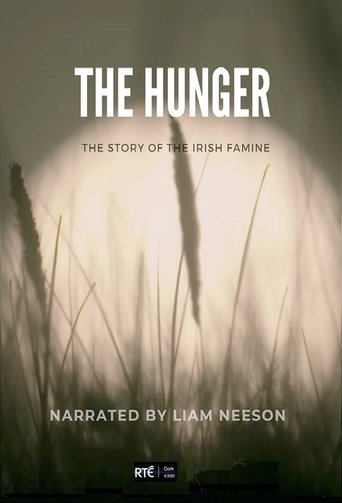
In the 1840s, a catastrophic famine brought about the decimation of Ireland’s poor and the exodus of millions from the island. This major, ground-breaking documentary, narrated by Liam Neeson, explores the famine’s international origins and development in Europe, Britain and Ireland and charts its long-term legacy as it plays out for much of the century that follows. Today the Irish famine is recognised as the worst humanitarian disaster of the 19th Century but what is less recognised is that the crisis impacted far beyond Ireland’s shores. The story of the Blight pathogen that killed the potato crop, starts in the Andes of South America and then reaches into the heart of northern Europe where the collapse of potato crops causes the deaths of 100,000 people adding further fuel to social tensions that lead to Europe’s year of revolutions in 1848.
The Late Late Tribute Shows are a series of special editions of the world's longest-running chat show, The Late Late Show broadcast on RTÉ One in Ireland each Friday evening. Over decades the shows has featured a broad range of well-known public figures including Micheál Mac Liammóir, Joe Dolan, Maureen Potter, Michael O'Hehir, Brian Lenihan, Jimmy Magee, Christy Moore, Mike Murphy and Paul McGrath. In 1999, there was a special programme marking six months since the Omagh bombing and there was also a special show in the wake of 9/11. There were also tribute shows celebrating Irish music and a Late Late Show special devoted to Irish comedians. Individual bands and musicians to have been given a tribute show include The Clancy Brothers and Tommy Makem, The Chieftains, The Dubliners, U2, Westlife and, most recently, Ronnie Drew himself. The Tribute Shows, along with the Toy Show, tends to be one of the few editions of The Late Late Show to require advance preparation before the week of broadcast.
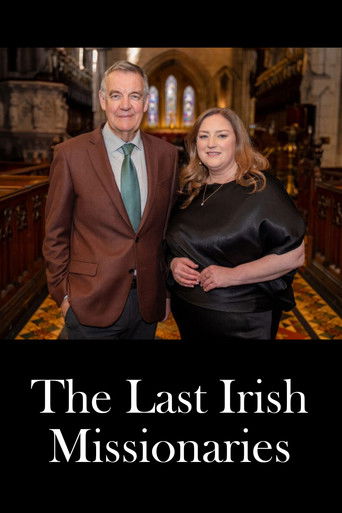
Bryan Dobson and Dearbhail McDonald chart the unique evolution of the Irish missionary movement, from religious colonialism to heroic acts of self-sacrifice and philanthropy.
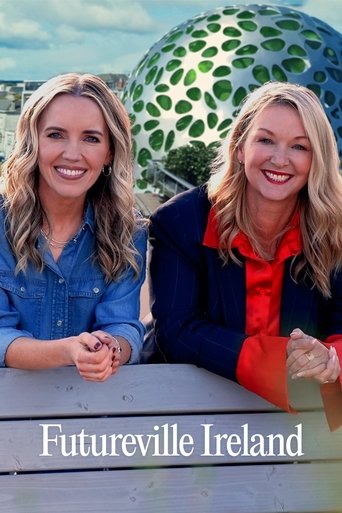
An ambitious new 3-part series that offers a vision of a new Irish City for 2050. Presented by Carla O’Brien and Dr. Lorraine Mancey.
Fame & Fortune is an Irish game show broadcast on RTÉ One on Saturday nights from 1996 to 2006. Hosted by popular Irish television and radio personality Marty Whelan, the show aired during the summer months of June, July, and August as a seasonal replacement for Winning Streak. It was preceded by Millionaire, also hosted by Whelan, and succeeded by The Trump Card in 2007, hosted by Laura Woods. Fame & Fortune had its production costs funded by RTÉ and its prize money funded by Ireland's National Lottery. Entry to the show was based on National Lottery scratchcards, and contestants could win cash, cars, holidays, and other prizes. Fame & Fortune had its final season in the summer of 2006. Its 2007 replacement, The Trump Card, was itself replaced a year later by The Big Money Game.
Tonight with Craig Doyle is an Irish chat show hosted by Craig Doyle that was broadcast on RTÉ One for one series in 2010. The show featured guest interviews, audience participation and live music. Tonight with Craig Doyle was broadcast every Saturday night during the spring season directly after the main evening news.
Hostage is a six-part Irish history documentary television series broadcast on RTÉ One in June 2008 each Friday at 20:30. The series spans a period from the 1970s to the 1990s and features footage from the RTÉ Archive Production Unit of bank raids and political kidnaps in remote locations such as Beirut and Clonmel. Amongst the more widely publicised cases featured on the show is the story of Mary Coen, a Galway nurse who was kidnapped by a liberation movement in Western Ethiopia in 1988. She was one of two Irish nurses who were working with the Irish charity Concern Worldwide. They had travelled to remote Western Ethiopia the year before Mary Coen's kidnap to work on a Concern project in the African country. The series is produced by the RTÉ Archive Unit.
Kennedy is an Irish chat show show hosted by Mary Kennedy. The show aired live on Saturday nights as a summer "filler" between 14 June and 23 August 1997.
Caught in a Free State was a dramatised television series made by RTÉ in 1983. This four-part series was about German spies in neutral Ireland during World War II, known in Ireland as "The Emergency".
Ryan Confidential is an Irish home-produced television programme which was broadcast on RTÉ One until 2010. It was presented by Gerry Ryan, until his unexpected death at the age of 53 on 30 April 2010. The programme was created by the producer David Blake Knox. The format placed Ryan and celebrity guests in restaurants and hotels, designed to provide a more intimate setting than a studio. Ryan then interviewed his guests. The programme, commissioned by RTÉ's Entertainment Department, proved popular, and ran for eight seasons.
Newsbeat was a Telefís Éireann television current and regional affairs programme presented by Frank Hall and broadcast in Ireland live on weekday evenings from 1964 until 1971.
Charlie Bird Explores is the title of a series of documentary films shot by RTÉ News and Current Affairs chief news correspondent Charlie Bird, in which the reporter sets off to explore some of the most beautiful and remote places in the far corners of the planet Earth and moans about having to do so. The series broadcast over a number of years features Bird's adventures in the Arctic, the Ganges and the Amazon. The documentaries are produced by Crossing the Line Films. For his Amazon journey, Bird crossed South America from ocean to ocean, tracing the course of the Amazon River and, somewhat annoyingly to many viewers, complaining about everything associated with the Amazon along the way. En route he tells the story of this region and how it plays a crucial role in global warming and environment change. For his Ganges trek, Bird took a path from the sea to the river's source, battling from the Bay of Bengal to the Himalayas along the river. In the Arctic, filmed in 2008, Bird met the Inuit community in Grise Fiord, Nunavut.
The Daily Show is a lifestyle magazine show which aired on the RTÉ One television channel in Ireland, and which debuted as part of RTÉ's autumn/winter season 2010. It followed Four Live (Irish TV series), presented by Maura Derrane. Presented by Dáithí Ó Sé and Claire Byrne, The Daily Show began on Monday 20 September 2010. It ended on 2 March 2012 due to budget cutbacks at RTÉ.
Four Live is a New Zealand topical entertainment show, airing weekday afternoons on FOUR. It is hosted by Shannon Ryan, Sharyn Casey, Tumehe Rongonui and Kanoa Lloyd. Many guests appear on the show to feature the latest in music, fashion, entertainment, gaming and film. FOUR Live encourages viewers to take part in the show through their Facebook and Twitter. The show asks the opinions from viewers on their daily topic post and the presenters address those opinions from viewers throughout the show. The show allows viewers to win prizes through live on air telephone competitions, text to be into win competitions and online competitions. The episode repeats on 7.30pm that same day on C4.
"Mission to Prey" is the title of an episode of the RTÉ programme Prime Time Investigates broadcast in May 2011. It was presented by RTÉ's Aoife Kavanagh. The programme contained allegations which defamed Fr. Kevin Reynolds, an Irish Catholic priest, and caused uproar across Ireland when the truth was later revealed. Kavanagh falsely accused Fr. Kevin Reynolds of raping a teenage girl and fathering her child in Kenya. As a result of the broadcast, Fr. Reynolds was removed from his home and from his parish ministry and his reputation was destroyed. It subsequently emerged that the allegations were baseless and that RTÉ had therefore defamed Fr. Kevin Reynolds. Director-General of RTÉ Noel Curran admitted the broadcasting of "Mission to Prey" was "one of the gravest editorial mistakes ever made" in RTÉ's history.
Guerrilla Gourmet is an Irish television series broadcast on RTÉ One. The series features professional chefs from various backgrounds, such as Dylan McGrath and Kevin Dundon, who each take on a new challenge. Each episode sees a different chef try to construct a temporary "guerrilla restaurant" out of nothing, taking on the task of locating a premises, composing a menu, cooking the food to serve to the customers and finding the actual customers themselves. The six-part series began broadcasting on 11 February 2008 at 20:30. Locations featured include Blackrock College, the Royal Hospital Kilmainham and the Rock of Cashel.
Garda ar Lár is an Irish television series, the second season of which was broadcast on RTÉ One throughout January and February 2009. It examines incidents where members of the country's Garda Síochána lost their lives since the foundation of the state. Over thirty members of the force have lost their lives in this time. The series was broadcast each Monday at 19:30.
Bertie is an IFTA-winning four-part miniseries documenting the life of former Taoiseach Bertie Ahern, which was broadcast on Irish television channel, RTÉ One in 3 November 2008. The series examined in close detail how he operated as leader of the country and what drove him through his political career. Interviews interwoven with archive footage formed the basis of series. The series featured contributions from over 70 people directly linked with Ahern, including family members, schoolfriends and national and international politicians. A central aspect of the programme was a "marathon" interview with Ahern. This interview was conducted shortly after he resigned as Taoiseach and leader of the Fianna Fáil political party in May 2008. Bertie features an interview with Tony Blair and contributions from former Cabinet colleagues Charlie McCreevy and Mary O'Rourke. His former wife Miriam Ahern and their daughters, Cecelia and Georgina were also interviewed. Amongst those declining an interview were Ahern's former partner Celia Larkin. Other Cabinet ministers and junior ministers interviewed included Dermot Ahern, Willie O'Dea, Brian Lenihan, Martin Cullen, Mary Harney, Conor Lenihan and Noel Ahern. Others interviewed included Des Richardson, Joe Burke, Barry English, David McKenna, Chris Wall, Paddy Duffy and Royston Brady. Ahern's successor as Taoiseach, Brian Cowen, did not contribute to the programme.
Tolka Row is an Irish soap opera set in a fictional housing estate on the northside of Dublin. Based on Maura Laverty's play of the same name, Tolka Row was first broadcast on 3 January 1964 and aired weekly for five series until it ended on 31 May 1968. As Telefís Éireann's first venture into soap operas, Tolka Row quickly became a staple of the new television station's schedule and set the pace for all future home-produced serials. Its popularity also resulted in the station developing a second soap opera, The Riordans, in 1965. Tolka Row is similar in format to the long-running British soap Coronation Street, from which it borrows its main premise. The show was centred around the Nolans, a typical working-class Dublin family, and their neighbours, the Feeneys. All episodes were filmed in studio at Telefís Éireann's Television Centre in Donnybrook, Dublin.
